
History
Discover The Red Lion Inn, which has existed as a colorful gathering place in Stockbridge for over 200 years.
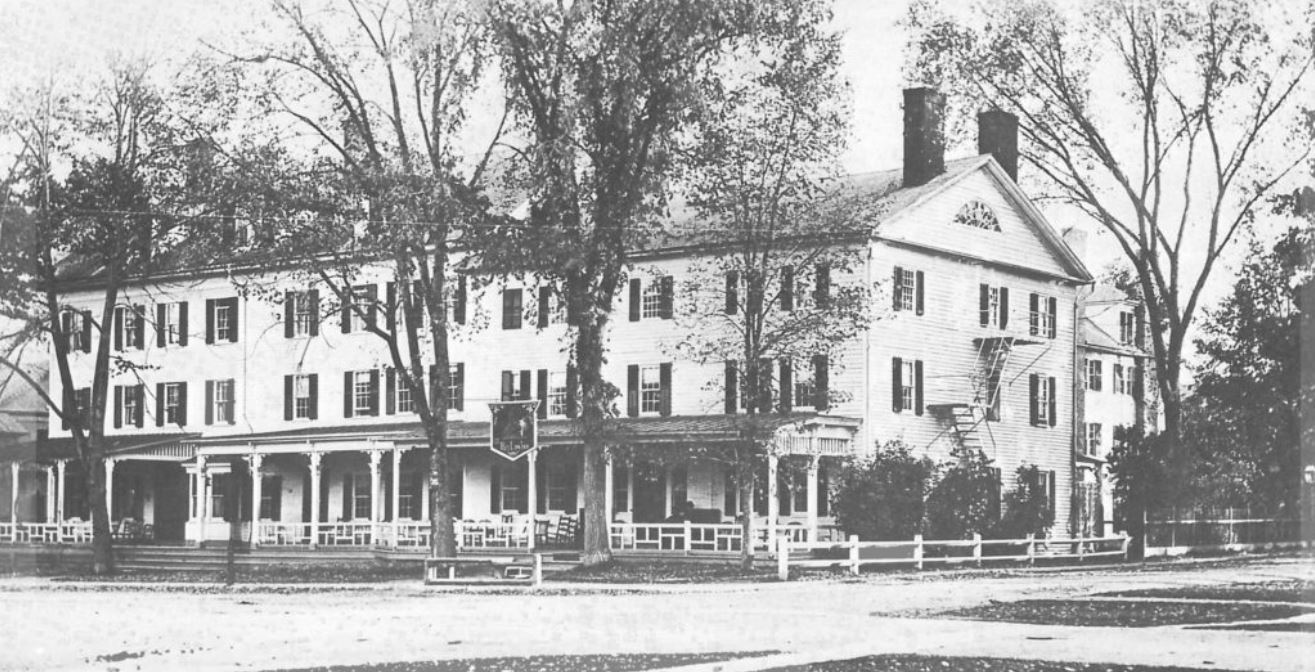
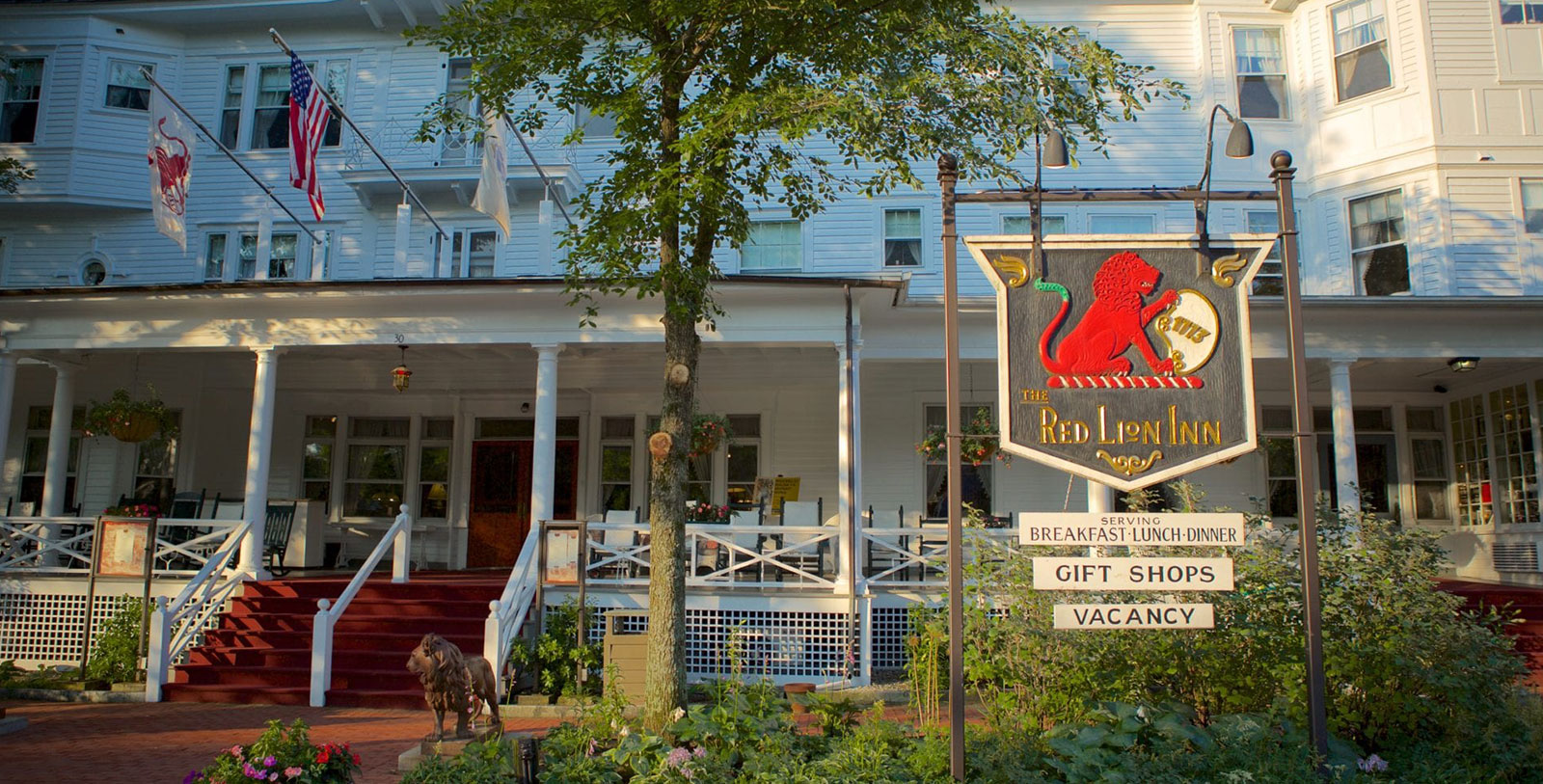
A founding member of Historic Hotels of America, The Red Lion Inn has been one of the most popular retreats in the Berkshires for generations. According to oral tradition, the inn first appeared on the corner of Pine and Main in downtown Stockbridge during the early 1770s. In 1773, Silas Pepoon had specifically constructed the building as a tavern, christening the new business as “The Red Lion Inn.” Pepoon’s quint inn prospered by occasionally entertaining various stagecoach passengers as they made the trek between Boston and Albany. Locals also flocked to The Red Lion Inn, who were charmed by its bucolic charm and services. Over time, this local popularity even helped the inn evolve into one of the region’s main communal meeting places. In fact, angry citizens from several towns gathered at the building to pass resolutions protesting the British Parliament’s Acts of Intolerance amid the buildup to the American Revolution. Furthermore, soldiers affiliated with the Continental Army visited The Red Lion Inn once the fighting had started. Some stories even attest that the inn’s original signage reflects Pepoon’s own devotion to American independence. (The green tail is said to represent the colonies breaking away from Great Britain, as embodied by the greater red lion.)
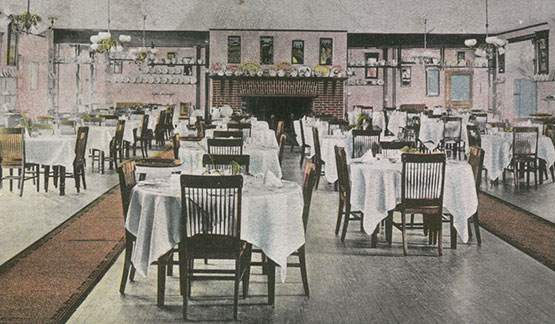
Following a series of various owners, Charles H. Plumb purchased The Red Lion Inn in 1862. Renaming the inn as the “Stockbridge House,” Charles and his family immediately set about renovating the site. They gradually developed new sections onto the building, which continued to add an ever-growing number of guestrooms. The Plumbs also introduced a wealth of new décor throughout the building as well, with Charles’ wife taking the lead. They frequently visited many nearby farmhouses and acquired numerous pieces that she found interesting. Many of the antiquities that Charles’ wife obtained harkened back to the colonial era, which brilliantly enriched the building’s already fascinating heritage. (Her efforts have since given rise to the magnificent collection of antique furniture and china that resides on-site to this very day.) By the height of the Gilded Age, the size of The Red Lion Inn had grown to such an extent that it could easily accommodate around 100 guests. The Plumbs subsequently operated the Stockbridge House seasonally, hosting guests during the summer months when the weather was the best. Their stewardship over the business saw its popularity reach new heights, with word of the inn’s grand accommodations and colonial furnishings attracting guests from across the nation.
But tragedy struck during the 1890s, when a structural accident compromised the Stockbridge House. While the actions of the Plumbs and their neighbors saved the inn’s historical memorabilia, the building itself required significant renovations. The Plumbs thus endeavored to restore their beloved inn and set about rehabilitating Stockbridge House. Amazingly, Stockbridge House was completely rebuilt in just a matter of months, with the business reopening triumphantly as one of the Berkshire’s finest retreats in 1897. Even some of America’s most prominent individuals visited over the following decades, including contemporary cultural icons like Nathaniel Hawthorne, William Cullen Bryant, Thornton Wilder, and Henry Wadsworth Longfellow. The inn even hosted several U.S. Presidents, including Grover Cleveland, William McKinley, and Theodore Roosevelt. (The inn would ultimately entertain two more U.S. Presidents years later—Calvin Coolidge and Franklin Delano Roosevelt.)
Stockbridge House remained with the Plumb family for the next nine decades, eventually falling under the ownership of their distant descendants, the Treadwell family. The building remained unchanged during that time, except for the installation of private baths and an outdoor pool in the 1960s. But the Treadwells eventually sold the Stockbridge House to Robert K. Wheeler, a staunch preservationist from Great Barrington. Despite his passion, Wheeler nonetheless found running the inn to be daunting and began looking for new owners. After searching for several years, Wheeler finally reached a deal with local Stockbridge residents Jack and Jane Fitzpatrick in 1968. The Fitzpatricks invested themselves dearly into the daily operations of the Stockbridge House, ensuring that it endured for years to come. They continued to thoroughly renovate the inn, too, outfitting its interiors with even more colonial décor. The Fitzpatricks even renamed the building as “The Red Lion Inn” in honor of its fantastic history. The Fitzpatrick family remains the stewards of this outstanding historic inn, as Nancy Fitzpatrick and her daughter, Sarah Eustis, continue to maintain Jack and Jane’s deep reverence for The Red Lion Inn.
Hotel Timeline
The Location
In 1734, a small group of English missionaries founded Stockbridge, Massachusetts, as a “praying town” for a band of local Mahican Indians. Known as the “Stockbridge Indians,” the English colonists had affirmed their rights to live in the area in recognition for their services against the French in America. The missionaries even went as far as to have the Massachusetts General Court formally recognize their territorial claims. Furthermore, the English also developed a rudimentary settlement called “Stockbridge” that sought to convert the natives to Puritanism. Nevertheless, Stockbridge—originally called “Indian Town”—was only inhabited by the Stockbridge Indians during the first few years of its existence, with the English missionaries being the only Europeans present. But even though Native Americans occupied the settlement, it was the missionaries who ultimately presided over its daily governance. The first person to thus supervise the community was Reverend John Sergeant, who was later followed by Johnathan Edwards—one of the most prolific preachers in the Thirteen Colonies at the time. (Edwards would have a profound influence on colonial life amid a series of religious revivals referred to as the “First Great Awakening.”)
The Stockbridge Indians subsequently lived in Stockbridge for many decades thereafter, even inhabiting the site amid the American Revolutionary War. Despite their support of the American cause—they had sided with the colonists—the Massachusetts General Court eventually rescinded their right to settle the land. In their absence, Euro-American settlers began to occupy the town. Stockbridge endured a pastoral hamlet inhabited by a few hundred people throughout the 19th century, gradually developing a reputation for its tranquil atmosphere and lush geography. In fact, by the 1850s, a beautification society called the “Laurel Hill Association” had formed to ensure that Stockbridge’s bucolic character remained perfectly preserved. This dedication to the town’s conservation eventually attracted vacationers from the coast, who found Stockbridge’s environment well-suited for a break from industrialized society. Those new visitors began to build their own seasonal homes throughout Stockbridge called the “Berkshire Cottages,” which recast the town’s identity as an upscale resort community.
Stockbridge has seen its fair share of special historical moments, too. In 1780, a local enslaved African American woman named Elizabeth Freeman would play an integral role in eliminating the institution of slavery from Massachusetts. Based on statements regarding slavery in the commonwealth’s new constitution, Freeman legally petitioned for her own freedom and that of another slave known as “Brom.” Attorney Theodore Sedgwick represented her case, arguing that the Massachusetts constitution explicitly stated that: “all men are born free and equal.” Both the county court and the State Supreme Court agreed with Sedgwick, resulting in the emancipation of both people. The case had an even greater impact on state law in the future, for it served as a precedent for slavery’s eventual abolition throughout all Massachusetts by 1783. Sedgwick himself would later have a prestigious political career, going on to serve as a U.S. Senator and Speaker for the U.S. House of Representatives.
Centuries later, Stockbridge would also become the home of a vibrant art colony. Many artists subsequently flocked to the town due to its serene ambiance, including the sculptor Daniel Chester French. But Stockbridge’s most famous artist was revered painter Norman Rockwell. In 1953, Rockwell decided to settle in Stockbridge so his second wife, Mary Barstow, could receive medical treatment from the nearby Austen Riggs Center. He then established his own studio within an upper apartment of a two-story building along Main Street. Rockwell would later paint a few of his most prolific works from inside his studio over the next couple of years, including The Connoisseur, The Rookie, and The Problem We All Live With. He even immortalized his adoptive home in a painting entitled Stockbridge Main Street at Christmas. Today, Norman Rockwell’s legacy is preserved at the renowned Norman Rockwell Museum in downtown Stockbridge. Located near The Red Lion Inn, it has over 570 original works of his on display—by far the largest single collection of Rockwell paintings in the United States.
The Architecture
The Red Lion Inn displays a brilliant array of Federal-style architectural influences. Historically speaking, Federal architecture dominated American cities and towns during the nation’s formative years, which historians best identify as lasting from 1780 to 1840. The name itself is a tribute to that period, in which America’s first political leaders sought to establish the foundations of the current federal government. Fundamentally, the architectural form had evolved from the earlier Georgian design principles that had greatly influenced both British and American culture throughout most of the 18th century. The similarities between the two art forms have even inspired some scholars to refer to Federalist architecture as a mere refinement of the earlier Georgian aesthetic. Oddly enough, the architect deemed responsible for popularizing Federal style in the United States—Robert Adams—was not an American. Adams was then the United Kingdom’s most popular architect, whose work was largely a personal interpretation of neoclassical and Georgian design principles. (This is also the reason some refer to Federal architecture as “Adam-style architecture.”) His new variation spread quickly across England, defining its civic landscape for much of the Napoleonic Era. Despite the bitter resentments that most Americans harbored toward Great Britain at the time, their cultural perceptions of the world were still influenced by the old mother country. Adams’ new take on Georgian aesthetics thus spread rapidly across the United States to become one of its most prolific architectural forms.
Unlike many other popular American architectural forms, Federal style is easily recognizable due to its unique symmetrical and geometric design elements. Most structures created with Federal architecture typically stand two to three stories in height and are usually rectangular in their overall shape. While the buildings normally extended to two rooms in width, larger structures would also contain several more apartments. In some cases, circular or oval-shaped rooms functioned as the center living space. The outside façade of a Federal-style building was simplistic in their appearance, although some detailed brass and iron decorations made their appearance, too. Perhaps the most common form the ornamentations assumed were elliptical figures and circular and fan-shaped motifs. Architects concentrated those features around the front entrance, where cornices, iron molding, and a beautifully sculpted fanlight resided. (Fanlights are a regular design element for Federalist buildings, appearing in other locations throughout the top of the structure.) The exterior walls were mainly composed of clapboard but could consist of brick in more urbanized areas. Palladian-themed windows also proliferated throughout the façade, too, installed in a way that conveyed a deep sense of balance. The roofing even contained simple gables and dormers that allowed for natural light to more easily infiltrate the upper portions of the structure.
Famous Historic Guests
- Nathaniel Hawthorne, author known for writing The Scarlett Letter and The House of the Seven Gables.
- Henry Wadsworth Longfellow, famed poet known for writing “Paul Revere’s Ride.”
- William Cullen Bryant, romantic poet and long-time editor of the New York Evening Post.
- Thornton Wilder, author and playwright known for such works like Our Town and The Skin of Our Teeth.
- John Wayne, actor known for his roles in The Man Who Shot Liberty Valance, True Grit, and The Longest Day.
- Tony Bennett, musician known for such hits as “Because of You,” “Rags to Riches,” and “I Left My Heart in San Francisco.”
- Bob Dylan, Grammy-Award musician known for such singles as “Blowin’ in the Wind,” and “The Times They Are a-Changin’.”
- Al Gore, 45th Vice President of the United States (1993 – 2001)
- Grover Cleveland, 22nd and 24th President of the United States (1885 – 1889; 1893 – 1897)
- William McKinley, 25th President of the United States (1897 – 1901)
- Theodore Roosevelt, 26th President of the United States (1901 – 1909)
- Calvin Coolidge, 30th President of the United States (1923 – 1929)
- Franklin Delano Roosevelt, 32nd President of the United States (1933 – 1945)
Guest Historian Series

For more than 246 years, The Red Lion Inn has been welcoming visitors to the Berkshires with traditional New England hospitality. Sometime in 1773, Anna and Silas Bingham opened a general store which became a stagecoach stop, tavern and the Stockbridge House. In 1786, Daniel Shays led a group of more than 100 local farmers and citizens to protest post-war taxation. Stockbridge was the headquarters for “Shays Rebellion.”
In 1807, Anna Bingham sold the eight-room inn to store owner Silas Pepoon. Over time, the Inn changed hands many times and in 1862 Charles and Mert Plumb began a ninety-year family ownership dynasty. The arrival of the Housatonic Railroad in 1842 and its extension to Pittsfield in 1850 made Stockbridge more accessible and attractive to wealthy families who built grand “cottages”. In 1884, the Inn was enlarged to accommodate 100 guests and the quality of food and amenities improved. Under Mert Plumb’s direction the Inn was renamed “Plumb’s Hotel” and became a museum-like repository of antique furniture, crockery, pewter and teapots.
Continue Reading