




Receive for Free - Discover & Explore eNewsletter monthly with advance notice of special offers, packages, and insider savings from 10% - 30% off Best Available Rates at selected hotels. 
history
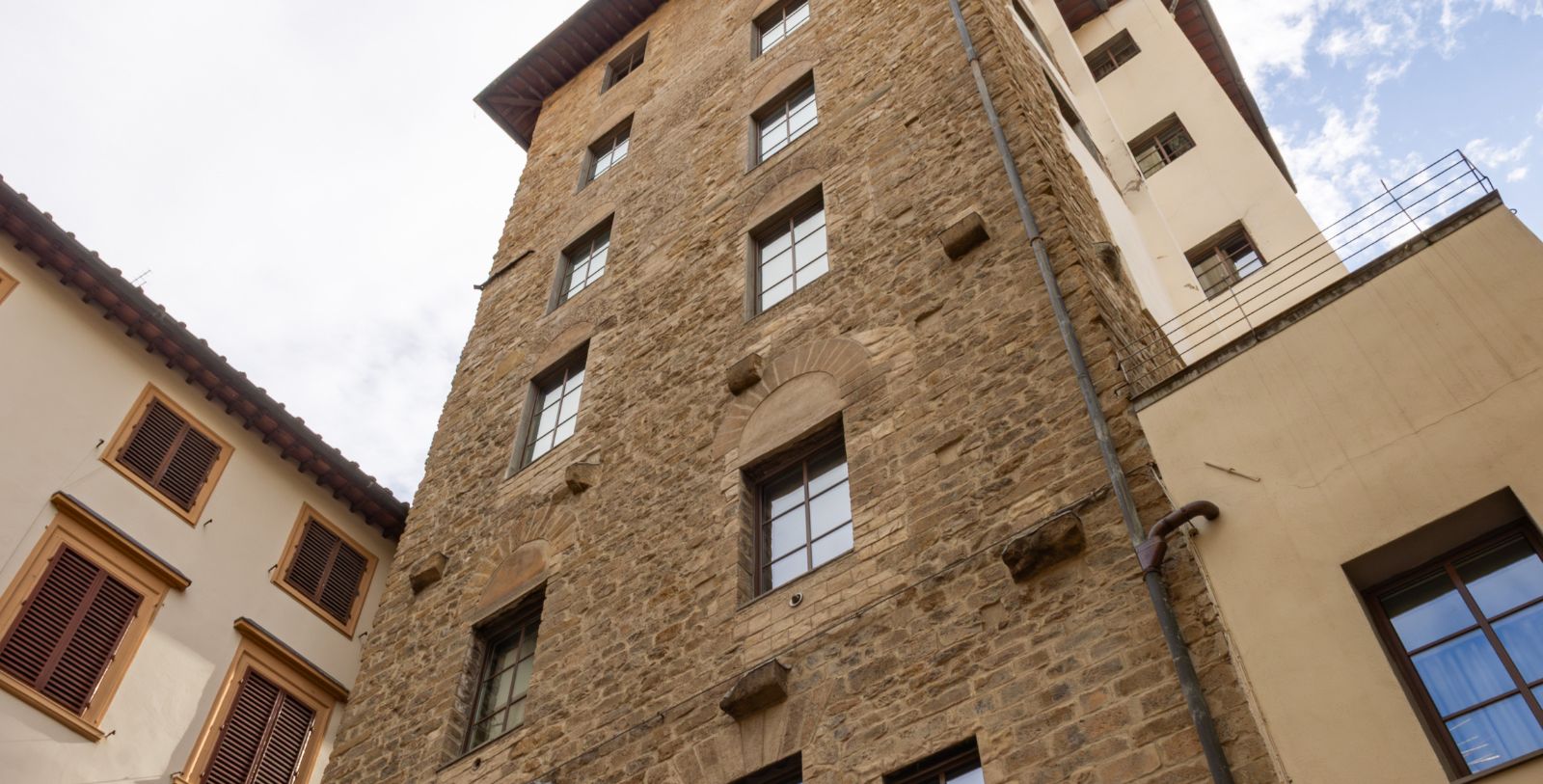
Discover Donati Luxury Tower Suites, which was once two medieval towers owned by rival noble families at the height of the Middle Ages.

Donati Luxury Tower Suites, a member of Historic Hotels Worldwide since 2026, dates back to the 11th century.
VIEW TIMELINEIn the heart of ancient Florence resides the Donati Luxury Tower Suites, a magnificent medieval structure that serves as a living monument to nearly a thousand years of Florentine history. Its walls have embodied a tale that started all the way back in the 11th century, long before the current hotel welcomed enthusiastic travelers inside its refined guestrooms. Originally, two towers, Torre Ricci (Tower Ricci) and Torre Donati (Tower Donati, stood less than a meter apart, owned by rival families whose influence shaped the political fabric of Florence. Those towers later merged two centuries later under the authority of a consortium of powerful nobles, with Torre Donati becoming its main identity. Among their numbers included the eponymous Donati family, who were inseparable from the city’s wider cultural landscape. Gemma Donati, the wife of Dante Alighieri, belonged to this prominent dynasty, and through her, the site was indirectly linked to the poet whose Divine Comedy shaped the character of Florence as much as its architecture. The Donati were subsequently at the center of the fierce contests between the Guelphs and Ghibellines, factions that had repeatedly vied for control over the city throughout the Middle Ages. Torre Donati experienced this constant fighting in turn, ultimately becoming an informal military base from which the Donati's sought to preserve their might.
The location endured and observed changing personal fortunes, shifting allegiances, and the general evolution of the streets surrounding it. Over the following decades, it passed into the possession of other aristocrats, including the Ghiberti, whose artistic legacy, embodied most famously in the bronze doors of the Baptistery, remains deeply tied to Florence’s past. By the Renaissance, the tower was not only a vestige of the previous medieval world but also as a spectator of the city’s rebirth in art, science, and civic grandeur. Torre Donati absorbed the sounds of new ideas, the shifting rhythms of commerce, and the vibrant intellectual life that radiated outward from places like the nearby Piazza della Signoria and the Duomo. However, as Florence modernized in later centuries, many of the neighboring towers vanished, lowered, dismantled, or absorbed into other expanding edifices. But the Donati Tower persisted, eventually emerging as one of the few remaining tower-houses still able to represent Florence’s past. Today, the tower stands in Piazza Santa Elisabetta, which is still remarkably close to major landmarks such as the Cathedral of Santa Maria del Fiore, the Uffizi Gallery, and Ponte Vecchio. Its location, central yet slightly tucked into its own intimate square, allows it to retain the aura of an architectural time capsule.
Torre Donati’s current form emerged after a meticulous, two-and-a-half-year restoration that sought to truly safeguard its authentic character creating the Donati Luxury Tower Suites guests can enjoy today. Tuscan artisans revived historic stonework, while integrating Italian marble, sustainable technologies, and contemporary design elements within a structure that remained true to its origins. This careful balance created 12 incredible suites, spaces that capture both the intimacy of a historical residence and the refinement expected of a five-star destination. Oak flooring and Renaissance-inspired details blended with state-of-the-art amenities, echoing the interplay of tradition and innovation that defined Florence’s greatest eras. Some suites offered private terraces, too, as others presented sweeping views of Brunelleschi’s dome or Giotto’s bell tower. Though the building’s function has changed, its role as a guardian of Florentine heritage has not. Guests who stay there do more than occupy a suite; they inhabit a structure that has borne witness to the city’s defining moments. They walk the same narrow lanes once traveled by famed merchants and intellectuals, pass under arches that survived generations, and sleep amid stones that have stood the test of time.
-
About the Location +
Founded as a Roman colony during the first century BC, the city of Florence was initially established to serve as a home for the veterans of Julius Ceasar’s legions. Those retired soldiers specifically located a strategic spot along the Arno River, which allowed the settlement to flourish rapidly as a center of trade and communication in northern Italy. Florence, originally called “Florentia”, was laid out according to classical planning principles, with a grid of streets and a forum that roughly corresponded to today’s Piazza della Repubblica. Though modest in its early centuries, the community benefited from its proximity to key land routes linking Rome to its neighboring provinces. Following the decline of the Western Roman Empire in the 5th century AD though, Florence experienced periods of conflict as control shifted among the Ostrogoths, Byzantines, and Lombards. Despite political instability, the city survived and gradually reasserted its importance during the early Middle Ages. By the 10th and 11th centuries, Florence was emerging as a self-governing commune, increasingly independent from feudal power structures. Its growing population was supported via textile production, particularly wool, which would remain the backbone of Florentine wealth for centuries to come. Merchant guilds gained influence shaping a culture that valued enterprise, education, and civic responsibility.
During the 12th and 13th centuries, Florence became one of the most powerful cities in Europe, though this success came with intense internal strife. Political factions known as the “Guelphs” and “Ghibellines,” who supported the papacy and the Holy Roman Emperor respectively, frequently clashed. But Florence managed to continue growing; its economy and cultural identity coming to flourish under its ever-expanding mercantile class. The introduction of the gold florin symbolized Florence’s growing financial dominance and reinforced its reputation as a commercial powerhouse. Although severe hardships would continue to affect the city periodically, including the outbreak of the Black Plague, the area continues to see its standing rise across Europe. Intellectuals like Dante Alighieri, Petrarch, and Giovanni Boccaccio laid the foundations of humanistic thought during this time, which emphasized the value of classical learning and individual experience. One of the most prosperous periods in the city’s history occurred amid the Renaissance, a period roughly spanning the 15th and early 16th centuries. Central to this golden age was the Medici family, who rose from successful bankers to de facto local rulers. Though never officially kings, the Medici exercised authority through wealth, political alliances, and patronage.
Under Cosimo de’ Medici and later Lorenzo de’ Medici, Florence emerged as a bastion for the arts. Leonardo da Vinci, Michelangelo, Sandro Botticelli, and Filippo Brunelleschi transformed art and architecture within Florence’s borders in consequence, creating works that embodied Renaissance ideals of balance, realism, and human potential. In the end, Medici’s control over the city had reached such a point that they were able to transform Florence into a mighty hereditary duchy. While artistic innovation slowed, Florence remained an important cultural center, preserving its artistic heritage and intellectual traditions. The Medici line eventually died out in 1737, and Florence passed to the House of Lorraine, ushering in a period of reform and modernization inspired by Enlightenment ideals. Florence played a renewed role during the movement for Italian unification, known to history as the “Risorgimento.” The ancient metropolis even served as the capital of the newly unified Kingdom of Italy in the decades following the end of the Risorgimento. In the decades since, Florence has remained a major bastion for art and science in Europe. Its numerous historic landmarks, like the Ponte Vecchio, Uffizi Gallery, Palazzo Vecchio, and the Cathedral of Santa Maria del Fiore, embody centuries of political ambition, artistic brilliance, and civic pride. Florence’s historical legacy truly continues to shape global understandings of art, culture, and human creativity, making it one of the most influential cities in history.
-
About the Architecture +
Romanesque architecture emerged in Europe during the late 10th and early 11th centuries, at a time when growing political stability and renewed monastic expansion encouraged large-scale building once again. Its development marked one of the first truly pan European architectural languages since the fall of the Western Roman Empire, and its very name reflects a conscious return to certain Roman precedents. Builders looked back to ancient forms not as exact models to be copied but as sources of inspiration for creating structures that embodied solidity, order, and spiritual grandeur. The result was an architectural style that spread across regions from northern Italy and Burgundy to England, Spain, and the German states, each adapting the style to local traditions while sharing a recognizable family of traits. At the heart of Romanesque design was the desire to construct churches capable of accommodating growing numbers of pilgrims and monastic communities. This ambition called for firmer and more fire‑resistant structures, which encouraged the widespread use of thick masonry walls and stone vaulting. Rounded arches defined doorways, arcades, and windows, echoing the engineering heritage of Rome and offering a dependable form that distributed weight evenly. Vaults began to replace wooden roofs, too, allowing churches to achieve greater height and fire protection.
Massive piers and sturdy columns supported these vaults, creating interiors with a rhythmic alternation of structural supports that guided the eye down the nave toward the altar. Romanesque exteriors conveyed an impression of weight and permanence, their walls often articulated by blind arcades, pilaster strips, and carefully carved portals rich with symbolic sculpture. Decorative programs typically intertwined biblical narratives, images of saints, and scenes of the Last Judgment, all designed to teach as much as to inspire. While the style could appear austere, especially when compared with later Gothic structures, many Romanesque churches originally gleamed with painted surfaces, colorful capitals, and elaborate frescoes. Over time, regional variations flourished. In France, the Cluniac monasteries championed ambitious vaulted structures; in Germany, builders favored multiple apses and imposing westworks; in England, after the Norman Conquest, the style became a tool of both spiritual and political authority, producing monumental cathedrals that reshaped entire towns. By the mid‑12th century, the structural experimentation of the Romanesque era paved the way for the pointed arches and soaring verticality of the Gothic style. Yet Romanesque architecture endures as a testament to medieval ingenuity, bridging the classical past with the architectural aspirations of a new age.