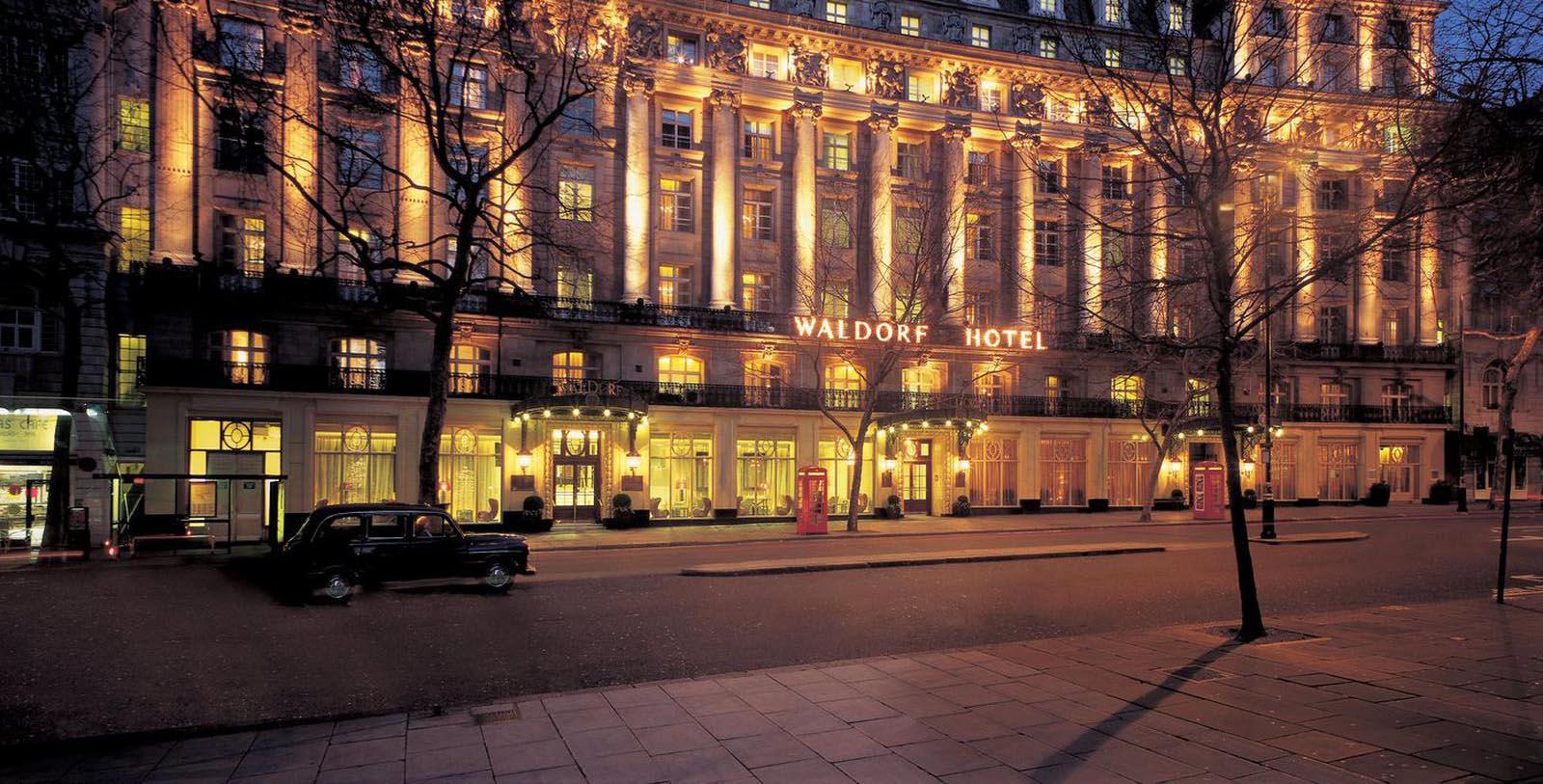
a building with lights on the front
The Waldorf Hilton, London

History

Discover The Waldorf Hilton, London, which has hosted countless travelers to the city ever since it first opened in 1908.

When the London City Council decided to widen the Strand in 1889, two British entrepreneurs saw a considerable opportunity for personal prosperity. The Strand served as a major thoroughfare in the center of London, with hundreds of travelers sojourning down the road every day. To alleviate the traffic, the council planned to demolish eight acres of buildings for the creation of a crescent-shaped boulevard named the Aldwych. Amid its construction, the two entrepreneurs, Edward Sanders and Thomas Wild, purchased real estate at the northern end of the Aldwych for the creation of a grand hotel. They both hoped that their hotel would enthrall the great flood of people that were certain to use the new boulevard. Sanders and Wild hired the young, talented architect Alexander Marshall Mackenzie to build the structure. Mackenzie traveled extensively throughout New York City, drawing his architectural inspiration from the American hotels he visited. Upon returning to London, he incorporated the latest aesthetics from America into his design, including three grand entrance halls, a marvelous grill room, and an ornate, marble terrace. Each one of the hotel’s guestrooms featured amenities considered modern for its time, such as electric lighting and telephones. Sanders and Wild named the building the “Waldorf Hotel” after the famous millionaire, William Waldorf Astor. The men hoped the Astor family name would affix great prestige onto the building.

The Waldorf Hotel opened with a glamourous Champagne reception in 1908. In a matter of years, the hotel became an illustrious venue filled with revelry. Exhilarating dance parties happened regularly at the Waldorf Hotel’s Palm Court ballroom, with the tango in particular becoming a popular pastime at the hotel. By the 1920s, the Waldorf was hosting special Tango Teas at its restaurant to accommodate the dance’s sheer popularity. Soon, a young musician named Howard Godfrey began coordinating the festivities at the hotel with his famous orchestra, The Waldorfians. Together, Howard Godfrey and The Waldorfians helped transform the Waldorf Hotel into a premier entertainment establishment in London. The hotel has maintained its prestigious status, hosting lavish celebrations and ceremonies ever since. For its stature, preservationists registered the Waldorf Hotel as a Grade II listed building during the 1970s. In 2004, Hilton Hotels acquired the building from the Le Méridien hotel group, who had operated it as the Waldorf Meridien since 1995. Known today as "The Waldorf Hilton, London," Hilton Hotels is proud to preserve the historic legacy of this wonderful building for a new generation of visitors. This fantastic historic destination has also been a member of Historic Hotels Wordwide since 2018.
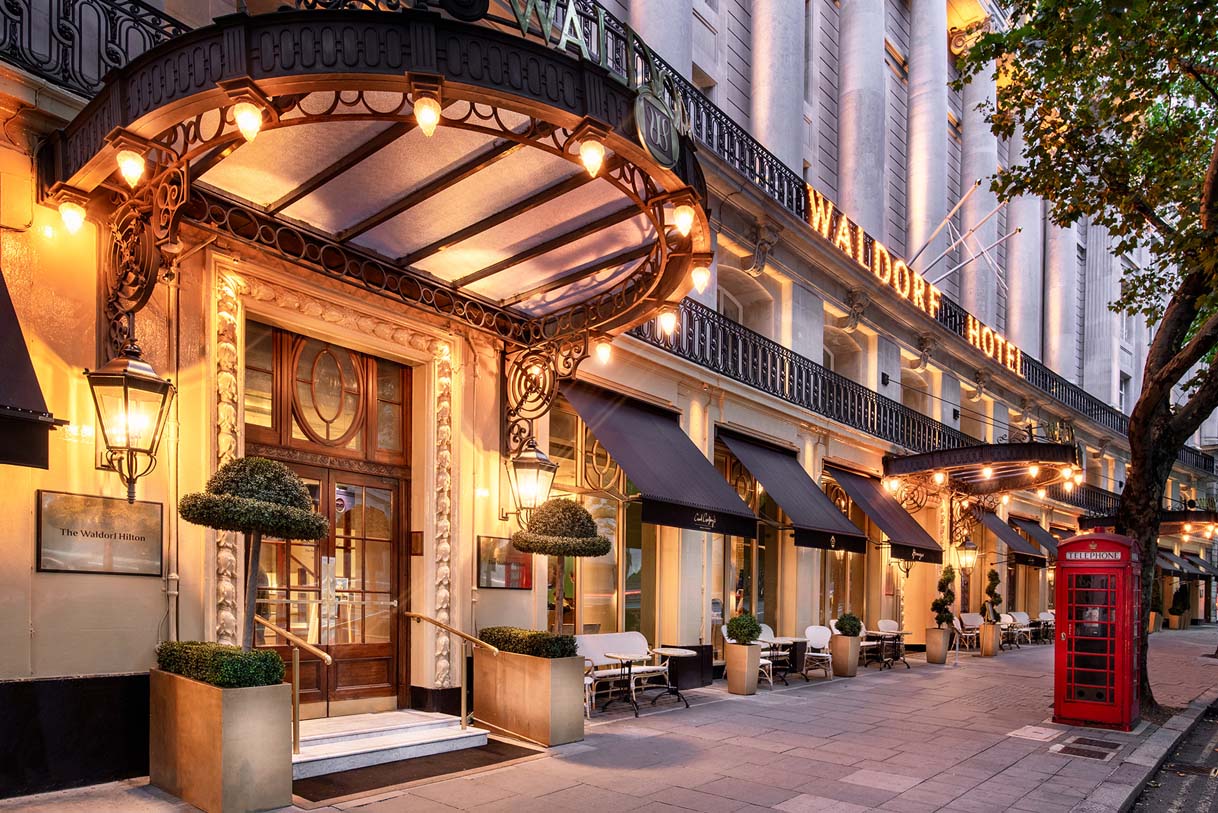
a building with awnings and a sign

Hotel Timeline

The London County Council began planning the widening of the Strand and the creation of the crescent-shaped Aldwych Boulevard. Entrepreneurs Edward Sanders and Thomas Wild recognized the commercial potential of the new district and pursued plans for a grand hotel. Sanders and Wild acquired property at the northern end of the planned Aldwych development and began raising funds for the hotel. The property was named after William Waldorf Astor to associate it with wealth, sophistication, and international hospitality.

Architect Alexander Marshall Mackenzie designed the hotel after studying leading American properties. The steel-framed building was reportedly completed in approximately 18 months.

Opened with a Champagne reception in January 1908, the Waldorf Hotel combined approximately 400 guestrooms and advanced modern amenities with elegant social spaces. Its curved granite façade, ornate entrance halls, grill room, marble terrace, and renowned Palm Court made it a fashionable destination for dining and entertainment.

The tango was performed in Palm Court in 1913, reportedly shocking portions of Edwardian society but beginning the hotel’s enduring association with dance.

The Waldorf hosted fashionable Tango Teas, combining afternoon refreshments with dancing. These events helped establish the hotel as one of London’s leading entertainment venues.

Bandleader Howard Godfrey led the resident orchestra, The Waldorfians, and recorded a series of “Live at the Waldorf” records with singer Al Bowlly.

At the beginning of World War II, the hotel advertised the safety of its structural frame. A nearby bomb later shattered the Palm Court roof, ending its Tango Teas, while parts of the property were adapted for staff accommodation.

Restaurant and hotel critic Egon Ronay launched his influential hotel guides at the Waldorf.

British music publication, Melody Maker hosted its music awards ceremony at the Waldorf.

Preservation authorities formally protected the Waldorf as a listed historic building, recognizing its architectural and cultural significance.

Scenes for the television film S.O.S. Titanic were shot in the hotel’s Palm Court.

The Waldorf revived its Tango Tea tradition, the first such events at the hotel since their wartime suspension in 1939.

Le Méridien assumed operation of the property and renamed it Le Méridien Waldorf.

Hilton Hotels acquired the property from Le Méridien and renamed it The Waldorf Hilton, London.

Hilton undertook a major refurbishment valued at approximately £35 million, updating the historic property for contemporary hospitality use.

The hotel received another significant refurbishment valued at approximately £13.5 million.

The Waldorf Hilton, London was inducted into Historic Hotels Worldwide. Historic Hotels Worldwide is a prestigious collection of historic treasures, including more than 300 legendary historic hotels including many former castles, chateaus, palaces, academies, haciendas, villas, monasteries, and other historic lodging spanning ten centuries.

1889
1906
1908
1913
1920s
1934
1939
1964
1969
1970s
1979
1982
1995
2004
2005
2015
2018