


WASHINGTON, D.C. — June 15, 2026 — The 2026 Top 25 Historic Hotels of America® Most Historic Golf Courses list has been released by Historic Hotels of America, the official program of the National Trust for Historic Preservation for recognizing and celebrating the finest historic hotels across America.
This listing of historic resorts chronicles the history of golf in the United States through many of the most beautiful, prestigious, and remarkable American golf courses that continue to attract both leisure seekers and serious athletes. They represent a variety of locations, from the first course built on a rocky Hawaiian lava flow, to courses built on mountains and alongside dramatic coastlines. Many of these golf courses were designed in the late 19th and early 20th centuries, often called the Golden Age of golf course architecture. The golf courses at these retreats and resorts were designed and renovated by influential golf course designers, ranging from Golden Age architects A.W. Tillinghast and Donald Ross, to more recent visionaries like Pete Dye. These courses have also earned an enviable reputation in part because of the remarkable achievements of the athletes and the famous hotel guests who played on them. Today, guests can make their own historic memories on these golf courses.
To be nominated and selected for membership and inducted into Historic Hotels of America, a hotel must be at least 50 years old and recognized for its historical significance. Visit HistoricHotels.org to learn more and sign up to receive Discover & Explore to stay up to date on news and special offers. View The 2026 Top 25 Historic Hotels of America Most Historic Golf Courses with images here.
The 2026 Top 25 Historic Hotels of America Most Historic Golf Courses, listed in order of the date the location was established:
The Omni Homestead Resort (1766) Hot Springs, Virginia
Travelers are invited to tee off at the most historic first tee in continuous use in the United States at The Omni Homestead Resort in Hot Springs, Virginia. The Omni Homestead Resort was established in 1766, and its first tee is part of the aptly named Old Course, which opened in 1892 as a six-hole course. Extended to nine holes by 1898, the Old Course ultimately reached a full 18 holes during a 1913 expansion by famed golf course designer Donald Ross. The Old Course is long associated with U.S. presidents. William McKinley was the first U.S. President to play golf while in office (1897–1901), and he did so on the Old Course, teeing off at the Old Tee in 1899. Former President (1909–1913) and former U.S. Supreme Court Chief Justice (1921–1930) William Howard Taft adored the Old Course, making time to play in the middle of a Virginia State Bar Association conference in 1908. Today, the presidential favorite is open to guests and members alike. The Omni Homestead Resort also offers travelers a fantastic game on The Cascades course. For over 103 years, The Cascades course has challenged golfers with links set against the backdrop of Virginia's breathtaking Allegheny Mountains. PGA Tour record-holder Sam Snead launched his career on this fabled Virginia golf course. Designed by legendary course architect William S. Flynn in 1923, The Cascades uses its varied terrain to influence play rather than dictate it. Nationally ranked, The Cascades frequently tops lists of the best mountain courses, including Golfweek magazine's "Best Courses You Can Play” in each state, where it earned the #1 spot in Virginia. The Omni Homestead Resort was inducted as a Charter Member of Historic Hotels of America in 1989.
Tubac Golf Resort and Spa (1789) Tubac, Arizona
Tubac Golf Resort and Spa, located on the Santa Cruz River in Tubac, Arizona, was established in 1959 by a group of investors–including entertainer Bing Crosby–who purchased a historic Spanish Colonial Revival-style ranch dating to 1789 to be the site of a luxury resort. Its first 18-hole golf course opened the same year. The mid-century course was designed by renowned golf course architect Robert “Red” Lawrence. The original course has been hailed as the "Jewel of Southern Arizona Golf Courses." Red was a founding member of the American Society of Golf Course Architects and designed several famous courses throughout the country. The architectural beauty of the resort, set with the backdrop of the distant Santa Rita Mountains and the local cattle ranch, gives the game played there its unique charm. The Santa Cruz River provides a surprisingly lush landscape, with plenty of ponds and tall cottonwood trees. In 1996, its beauty was recognized by Hollywood as the setting for iconic scenes in the Kevin Costner-led golf movie, Tin Cup. In 2006, the resort expanded to 27 holes in total. The historic 18-hole course transformed into three distinct nine-hole courses: the Otero Course, the Anza Course, and the Rancho Course. Today, the resort invites golfers from across the country to play its three desert oasis courses. The design allows golfers to choose two nine-hole courses for an 18-hole game, for three different golfing experiences on the grounds of the historic course. Tubac Golf Resort and Spa was inducted into Historic Hotels of America in 2008.
Woodstock Inn & Resort (1793) Woodstock, Vermont
Golf at the Woodstock Inn & Resort, founded in 1793 in Woodstock, Vermont, dates to 1895 when a distinguished guest lamented to the general manager about the lack of a golf course, having brought his clubs all the way from Boston. The inn obliged, and the first course was built that year. The resort’s current golf course, the oldest public golf course in Vermont, dates to 1906, when Scottish golf professional Alex Findlay designed the original nine-hole layout in the scenic Kedron Valley. In the early 1960s, the course was redesigned by renowned golf course architect Robert Trent Jones Sr. under the direction of the inn’s owner, Laurance S. Rockefeller. A passionate golfer, Rockefeller and his wife, Woodstock native Mary French, frequently enjoyed the course during their time in Vermont. Today, surrounded by the lush Kedron Valley and featuring stunning views of Mount Peg, the Woodstock Country Club offers a picturesque and memorable golf experience. The 18-hole, par-70 course welcomes players of all abilities to enjoy one of New England’s most historic golf destinations. Woodstock Inn & Resort was inducted into Historic Hotels of America in 2016.
Omni Bedford Springs Resort & Spa (1806) Bedford, Pennsylvania
Omni Bedford Springs Resort & Spa was established in 1806 and, naturally, was an early adopter of golf in the United States. The resort is home to one of the nation’s first golf courses, with 18 holes—considered very large for a golf course at that time—first designed by Spencer Oldham in 1895. Aptly named, the Bedford Springs Old Course was redesigned by A.W. Tillinghast in 1912 and reimagined by Donald Ross in 1923. Giants of the Golden Age of golf course architecture, both Tillinghast and Ross are honored by the World Golf Hall of Fame. Ross had trained at St Andrews in the 1890s and then spent most of his career and life in the United States, where he designed many of the country’s championship courses. Overlooking breathtaking views of the Allegheny Mountains and Cumberland Valley, this remarkable course spans the work of three golf architectural masters. Renovated in 2007 by architect Ron Forse, early-20th-century documentation of the Bedford Springs Old Course was used to restore lost holes and other historical features contributed by Oldham, Tillinghast, and Ross. Preserved and updated, this remarkable palimpsest course can be enjoyed today by 21st-century players eager to experience the game as it was designed by leading architects of the game’s Golden Age. Omni Bedford Springs Resort & Spa was inducted into Historic Hotels of America in 2007.
French Lick Springs Hotel (1845) French Lick, Indiana
and West Baden Springs Hotel (1901) West Baden Springs, Indiana
Golf and history enthusiasts are in for a treat at French Lick Resort in French Lick, Indiana, which boasts courses designed by three greats of 20th-century golf course design. The resort’s most historic golf course—on account of its age, closeness to the original form, and the distinction of its designer—is The Donald Ross Course. Designed in 1917 by Donald Ross, considered one of the greatest and most influential golf course architects of the game’s Golden Age, this namesake course was an immediate success. The resort hosted the PGA Championship in 1924 won by Walter Hagen, who played a major role in popularizing golf as a professional sport, and was the first golfer to become a millionaire playing the game. In the years since, the course has hosted LPGA championships and Senior PGA events. Along with the greats of the game, scores of celebrities have golfed at French Lick over the years, including singer Bing Crosby, comedian Bob Hope, business magnate Howard Hughes, former Secretary of State Condoleezza Rice, and professional football player Peyton Manning. Before he became basketball’s “Larry Legend,” French Lick native Larry Bird worked and played on the local course in his youth. French Lick Resort encompasses two historic hotels, French Lick Springs Hotel (1845) and West Baden Springs Hotel (1901), where guests have access to The Donald Ross Course, as well as courses designed by Pete Dye (2009) and Tom Bendelow (1907) plus a new type of golf experience at Sand Creek (2025), a 9-hole short course. French Lick Springs Hotel was inducted into Historic Hotels of America in 2000, and West Baden Springs Hotel was inducted into Historic Hotels of America in 2009.
Grand Hotel Golf Resort & Spa (1847) Point Clear, Alabama
Golf course architect Perry Maxwell designed an 18-hole championship golf course for the Grand Hotel Golf Resort & Spa in Point Clear, Alabama, in 1947, just in time for the Grand Hotel’s centennial, as it was established in 1847. After World War II, a long-awaited retreat to the Mobile Bay resort offered weary Americans a chance to play Maxwell’s brand-new 7,104 yards of oak-lined links. Unsurprisingly, it was a grand success. Another nine holes were added, first in 1967 and again in 1983. Today, there are two 18-hole golf courses at the resort’s Lakewood Club: the Dogwood Course and the Azalea Course. Since 1947, the Lakewood Club has hosted former President Gerald Ford, European royalty, movie stars, and sports legends, along with legions of local and visiting golfers. The Kenny Stabler Charity Golf Classic was held at the Lakewood Club for several years and hosted a who’s who of professional football players and other celebrities, as well the Pro Rivals Open in 2025. It also played host to the U.S. Senior Women’s Amateur Championship in 1974, 1986, 2021 and will again in 2029, one of 14 championship tournaments run by the United States Golf Association. Despite its impressive age, the Dogwood Course is well-kept and cared for. It was renovated in 2005 by the Robert Trent Jones Golf Trail team and again in 2018, all to give it a fresh and modern feel while retaining Maxwell’s vision for the course. Grand Hotel Golf Resort & Spa was inducted into Historic Hotels of America in 2011.
Jekyll Island Club Resort (1887) Jekyll Island, Georgia
Jekyll Island Club Resort on Jekyll Island, Georgia, began as an exclusive Gilded Age private retreat for America’s wealthiest families in 1887. Today, the barrier island resort community is open to all, and welcomes golfers to play on the Jekyll Island Golf Club’s three grassy, windswept courses, owned and managed by the Jekyll Island Authority, as they have for over 120 years. The first golf course on Jekyll was constructed in 1898. The most historic golf course still in play on the island is the Great Dunes Course, designed by Walter “Old Man” Travis in 1926. Travis was a championship amateur golfer and Australian immigrant to the United States who worked as a writer between winning British, U.S., and Cuban tournaments. Summoned to the island by some of the nation’s most elite families during the island’s Club Era, Travis created the best course that money could buy. Honoring the legacy of Travis, the Great Dunes Course recently underwent a multimillion-dollar restoration in 2025, combining the nine historic Great Dunes holes with nine reimagined holes from the former Oleander Course. The result is a cohesive 18-hole course that blends history with modern playability. In golf history, Jekyll Island is significant not only for hosting notable figures and golf championships, but also for being chosen by the United States Golf Association (USGA) as the site for equipment testing. In 1924, the USGA tested new steel clubs against the traditional hickory clubs, as well as golf ball sizes and densities. These tests on Jekyll Island’s courses changed the game of golf. Jekyll Island Club Resort was inducted into Historic Hotels of America in 1994 and was designated by the U.S. Secretary of the Interior as a National Historic Landmark.
Grand Hotel (1887) Mackinac Island, Michigan
The Grand Hotel on Mackinac Island, Michigan, provides guests of “America’s Summer Place” with a stunning 18-hole golf course. The Jewel, comprised of the Grand Nine and the Woods Nine, is the only course in the country with horse-drawn carriage rides between nines. The Grand Nine, located across from the hotel with views of the Straits of Mackinac, was designed in 1901 by golf links artist Tom Bendelow and then redesigned during Grand Hotel’s centennial in 1987 by golf course architect Jerry Matthews. In 1994, Matthews enlarged the golf course with the Woods Nine, located in the interior of Mackinac Island, with views of the Mackinac Bridge and the Upper Peninsula. Among the many sports champions and notable figures who have played The Jewel include 1987 U.S. Open Championship winner Scott Simpson, sports announcer Jim Nantz, and former U.S. President Gerald Ford. Ford himself was fond of Mackinac Island throughout his life, with his first visit taking place all the way back during his youth in the 1920s. As such, Ford returned frequently while on vacation, engaging in activities like sampling fresh candy at May’s Fudge, touring Fort Mackinac, and playing a round or two at The Jewel. Grand Hotel dates to 1887 and was inducted into Historic Hotels of America in 2001.
Pinehurst Resort (1895) Pinehurst, North Carolina
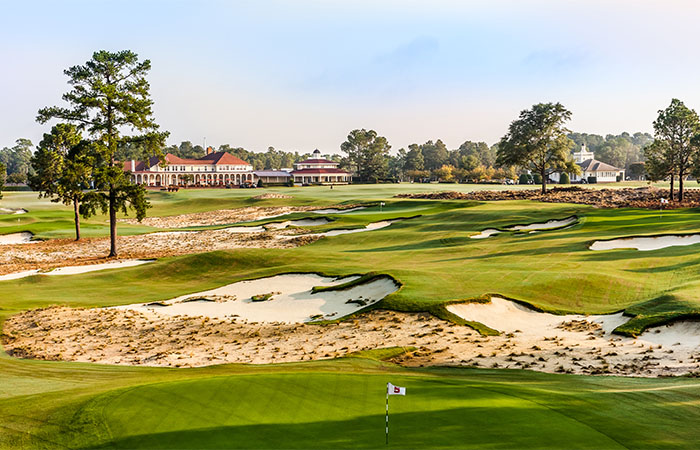
From humble beginnings as a pasture to one of the premier golf courses in the country, Pinehurst Resort is steeped in the sport’s history and tradition. Historians and golfers today celebrate Pinehurst Resort for its role in popularizing golf and providing blueprints for what a golf course should look like during the Gilded Age. Pinehurst Resort’s founder, James Walker Tufts, hired renowned golf course architect Donald Ross to oversee the day-to-day operations of its golfing services. Ross went on to design four of Pinehurst Resort’s nine championship golf courses in play today, including its most famous course, Pinehurst No. 2, which was constructed in 1907. Pinehurst No. 2 has served as the site for more championship tournaments than any other golf course in the United States. Among the many well-known competitions held at Pinehurst No. 2 are the PGA Championship, the Ryder Cup, and the U.S. Open, as well as the North and South Open Championship. Dozens of famous professional golfers have graced its fairways, including Sam Snead, Ben Hogan, and Jack Nicklaus. The historic greens of Pinehurst No. 2 also saw the legendary duel between Payne Stewart and Phil Mickelson during the closing round of the 1999 U.S. Open. The two were neck-and-neck heading into the last two holes of the tournament. Stewart stuck his approach to four feet on 17 for birdie, then holed a dramatic 15-foot putt on the 72nd hole to win the championship, beating Mickelson by one shot. Pinehurst Resort dates to 1895 and was inducted into Historic Hotels of America in 1991.
Omni Mount Washington Resort & Spa (1902) Bretton Woods, New Hampshire
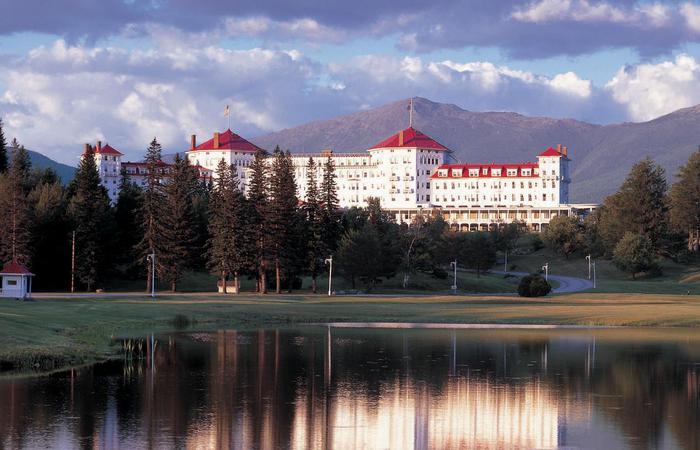
Omni Mount Washington Resort & Spa is located at the base of stunning Mount Washington: at 6,288 feet, the highest peak in the Northeast. The resort is surrounded by nearly 800,000 acres of the White Mountain National Forest and is home to Bretton Woods, New Hampshire’s largest ski destination. The resort offers two golf courses: the award-winning 18-hole Mount Washington Course and the challenging 9-hole Mount Pleasant Course. Meticulously restored to Donald Ross’s original 1915 design, the 18-hole Mount Washington Course reopened in August 2008 and has been named New Hampshire’s “Best Course You Can Play” since 2009 by Golfweek magazine. It has played host to prominent golf enthusiasts and professionals, including U.S. pro golfer Gilbert Nicholls, golf course designer Alex Findlay, British golf champions Harry Vardon and J.H. Taylor, and U.S. Open winner Willie Anderson. The 9-hole Mount Pleasant Course, which opened in 1895, is a par-35 course running 3,215 yards alongside the Ammonoosuc River with gorgeous mountain views. The course was restored and upgraded by Cornish and Silva golf course architects in 1989. The full-service clubhouse features lessons, clinics, and merchandise, and The Grille is open seasonally and offers indoor and outdoor dining for lunch and libations. Omni Mount Washington Resort & Spa dates to 1902 and was inducted as a Charter Member of Historic Hotels of America in 1989.
The Mansion at Ocean Edge (1907) Brewster, Massachusetts
The Mansion at Ocean Edge, which was once a Gilded Age summer estate and is today part of a luxurious resort in Brewster, Massachusetts, offers guests access to a private 18-hole golf course that dates to the 1980s. It is among the region's most beautiful golf experiences and the only course on Cape Cod created by the Nicklaus Design firm, founded and run by American professional golfer Jack Nicklaus. The course is set across more than 400 acres of tree-lined, coastal terrain, and—true to Nicklaus’ signature design—it features generous fairways and subtle doglegs. Guests have access to the Ocean Edge Resort & Golf Club clubhouse pro shop, practice facilities, and the Linx Tavern & Bar that overlooks the course’s 18th hole. Built in 1907, The Mansion at Ocean Edge was listed in the National Register of Historic Places in 1986 and inducted into Historic Hotels of America in 2022.
The Otesaga Resort Hotel (1909) Cooperstown, New York
Located in historic Cooperstown, New York, Leatherstocking Golf Course opened alongside The Otesaga Resort Hotel resort in 1909 on the shores of scenic Otsego Lake. Featuring naturally contoured terrain, sweeping views, and diverse elevations, this championship par-72 course will inspire a player’s best game. Among many standout features are two great finishing holes: #17 par-3 playing up to 195 yards over water, and #18 par-5 with an island tee and the fairway along the lake. What began as a nine-hole course was transformed in 1919 by golf course architect Devereux Emmet, who expanded the course to 18 holes across 90 acres. This classic, Northeast-style course has changed little since then, though the late 1990s brought some upgrades, including expanded tee boxes, a state-of-the-art drainage system, restructured cart paths, and reshaped bunkers. With its location in Cooperstown, home to the National Baseball Hall of Fame and Museum, the course has played host to some of the legends of the game. In 1936, the inaugural class of inductees was enshrined, including Ty Cobb and Babe Ruth, whose golf game that weekend started a long tradition of Hall of Famers playing Leatherstocking during Induction Weekend. Leatherstocking has also hosted the New York State Four-Ball Championship, as well as the New York State Junior Championship. The award-winning course offers an unforgettable experience for both guests of The Otesaga Resort Hotel and locals. The Otesaga Resort Hotel was inducted into Historic Hotels of America in 1994.
Keswick Hall (1912) Charlottesville, Virginia
Located amid the rolling Blue Ridge Mountains of Virginia, Keswick Hall began as an Italianate-style estate built in 1912 before evolving into a refined retreat in the heart of Virginia’s wine country. Golf was introduced to the resort in the mid-20th century, when new ownership reimagined the estate as a world-class golf destination. Since its debut, the course has earned a reputation for excellence. It continues to evolve while maintaining its challenging and artistic design, undergoing redevelopments in the 1990s by Arnold Palmer and in the 2010s by Pete Dye, the architect of the present-day Full Cry championship golf course. A captivating and rewarding course, it is a favorite destination of the Virginia State Golf Association and other regional golf championships. Recent tournaments held at Full Cry include the 100th VSGA Women's Amateur Championship in July 2025 and the U.S. Men's Open Golf Championship local qualifying event in May 2026. It is also preparing to host the Middle Atlantic PGA Senior Championship, the Senior Open of Virginia, the Southern Amateur Qualifier, and the University of Virginia Women's Collegiate Event. But the course is not only for professional and amateur athletes; guests of the resort can experience the scenic 18-hole course set against the dramatic backdrop of the Blue Ridge Mountains. Designed to challenge both seasoned golfers and casual players, the course features strategic tee shots, surprising bunkers, and fast greens. The experience comes with luxury amenities, including GPS-equipped golf carts, a clubhouse with locker rooms and saunas, a pro shop with premium apparel and equipment, dining at The Club Grill, and instruction from PGA professionals. Keswick Hall was inducted into Historic Hotels of America in 2015.
Omni Grove Park Inn & Spa (1913) Asheville, North Carolina
The historic Grove Park Golf Course at the Omni Grove Park Inn & Spa in Asheville, North Carolina, has been described as the only rival to Pinehurst No. 2 in a ranking of the state’s Donald Ross courses. The 18-hole, par-70, 6,400-yard course clears a bright green path through the rolling hills of the Blue Ridge Mountains, and elevated points give players spectacular views of the mountains and the magnificent Arts and Crafts-style historic hotel. The course opened in 1899 and was beautifully redesigned in 1926 by golf course architect Donald Ross. Ross was a Scottish-born immigrant who trained as a young man with the great “Old” Tom Morris at St Andrews during the 1890s. He then spent much of his career and life in the United States, where he designed many of the world’s championship courses during the Golden Age of golf course architecture. His iteration of the Grove Park Golf Course was a stop on the PGA Tour between 1933 and 1951. It was played by PGA stars Bobby Jones, Ben Hogan, and Jack Nicklaus, and more recently by former President Barack Obama—one of ten U.S. presidents to stay at the resort. The Grove Park Golf Course was updated in 2001 and retains master designer Donald Ross’s vision. The Omni Grove Park Inn & Spa dates to 1913 and was inducted into Historic Hotels of America in 2000.
The Broadmoor (1918) Colorado Springs, Colorado
Set at the base of Cheyenne Mountain, The Broadmoor offers two historic and magnificent golf courses: The East Course and the West Course, designed by Donald Ross and Robert Trent Jones Sr. Located in Colorado Springs, Colorado, golfers enjoy challenging terrain and amazing mountain vistas while surrounded by red rocks and white peaks in the Pikes Peak region. The Broadmoor opened in 1918, and golf was part of its glamour from the very beginning. The resort’s original 18-hole course was designed by legendary golf course architect Donald Ross in 1916 at the behest of Spencer Penrose, who envisioned turning his new mountain getaway into a world-class resort. Ross, who had designed golf courses for several of the top clubs in the country (including Pinehurst No. 2, which opened in 1907), declared that The Broadmoor's golf course in Colorado Springs, Colorado, was his best work. When The Broadmoor Golf Club opened for a Red Cross fundraiser on July 4, 1918, it was the highest golf course in the United States at 6,400 feet in elevation. The course was split into two, the East Course and the West Course, by renowned landscape architect Robert Trent Jones Sr. between 1952 and 1964. Today, both courses feature holes designed by both Jones and Ross. The Broadmoor has hosted many major golf tournaments, including Jack Nicklaus’s first major win at the 1959 U.S. Amateur championship, and Annika Sörenstam’s first major title at the 1995 U.S. Women's Open, as well as the 1962 Curtis Cup and recently the 2025 U.S. Senior Open. Today, guests are invited to play the courses and to visit The Broadmoor Golf Club’s Heritage Hallway, an exhibition of golf history in the Rockies. The Broadmoor was inducted as a Charter Member of Historic Hotels of America in 1989.
The American Club (1918) Kohler, Wisconsin
Guests at The American Club, which was established in 1918 in Kohler, Wisconsin, are invited to experience championship golf on any of the four Kohler courses, which have been rated among the world’s greatest. All designed by the legendary golf course architect Pete Dye in the 1980s and 1990s, these courses have hosted many championships, including two PGA Championships, two U.S. Women's Opens, and the 2020 Ryder Cup. Two courses were constructed at Blackwolf Run (the River course and the Meadow Valleys Course) and two at Whistling Straits (the Straits course and the Irish course). At Blackwolf Run, the original 18 holes featured two nine-hole layouts, River and Valleys, that opened in 1988. They were both later expanded by an additional nine each. Each hole on both courses at Blackwolf Run is bestowed with a name that reflects the natural features of the glacier-carved land. The Sheboygan River separates the River course and the Meadow Valleys course and cuts a seven-mile path that divides the resort. Whistling Straits opened in 1998. This wild, windswept coastal links-style course was sculpted along the grass-topped dunes of the Wisconsin coastline. In late September 2021, the 43rd Ryder Cup was held at Whistling Straits. It was the first public course in a quarter-century to host the Ryder Cup. The Blackwolf Run layouts are fun and remarkable for their unique characteristics, which include Pete Dye’s signature design features, especially on the River course, and two railroad car bridges found on the Meadow Valleys course. The American Club was inducted into Historic Hotels of America in 1991.
Ojai Valley Inn (1923) Ojai, California
Ojai Valley Inn, in Ojai, California, provides guests with the opportunity to play golf on a historic, award-winning, 18-hole par-70 championship golf course that actually predates the inn itself. Glass industrialist Edward Drummond Libbey began constructing a country club and an 18-hole golf course near the resort in 1923; the two-story inn was completed in 1934. The golf course was part of Libbey’s decades-long effort to improve the appearance of the town of Ojai as a prominent resort community. Libbey supposedly gave landscape architect George C. Thomas Jr. free rein to design the course in whatever way he liked, instructing the engineer to “Go ahead and build me the finest course that can be built . . . and use whatever land you wish. Give me the best. Money will be no object.” Upon its completion, the press described the fairways as some of the most beautiful in the state. The Los Angeles Times reported that the golf course’s geography was “designed to look as if it had been there forever.” The course was hailed as a marvel of golfing architecture and was one of the first great golf courses in Southern California. Over the last century, the course at Ojai has hosted seven Senior PGA Tour Champions events, including players Arnold Palmer and Gary Player, and its proximity to Los Angeles has made the course a favorite of Hollywood celebrities. Ojai Valley Inn was inducted into Historic Hotels of America in 1991.
The Vinoy Resort & Golf Club, Autograph Collection (1925) St. Petersburg, Florida
The Vinoy Resort & Golf Club, Autograph Collection, emerged in the early 1920s following a golf bet made during a house party. A wealthy businessman named Aymer Vinoy Laughner hosted parties to entertain his friends and community, including famed professional golfer Walter Hagen. During a party at Laughner’s St. Petersburg home, the business magnate engaged in a good-natured dispute with Hagen over the power of his drive. According to one story, Laughner attested that Hagen’s swing, while powerful, had no chance of damaging the crystal within his pocket watch. The haggling reached its crescendo when Hagen wagered a bet of $170,000 that he could, indeed, smash its glass casing. Placing the watch firmly on the ground, Hagen proceeded to forcefully launch golf balls several dozen yards away on a distant neighbor’s lawn. But much to the golfer’s surprise, the watch had somehow survived the contest unscathed. Honorably, Hagen surrendered the money to Laughner. (Hagen could afford it: considered one of the greatest golfers of the 20th century and a leader in the growth of professional golf in the 1910s and 1920s, he was the first player to make a million dollars at the game.) Party guests mused that Laughner ought to use that money to build a spectacular holiday destination in downtown St. Petersburg—and that is exactly what he did. The hotel’s golf club opened in 1927, and guests played the game on the 18-hole Snell Isle Golf Course, designed by landscape architect John R. Van Kleek. In 1992, the championship Vinoy Golf Course was redesigned by Ron Garl. Garl designed courses with the philosophy that a golf course should “sit softly on the land," and the Vinoy Resort & Golf Club, Autograph Collection, course at Snell Isle is a beautiful testament to that concept. The Vinoy Resort & Golf Club, Autograph Collection, dates to 1925 and was inducted into Historic Hotels of America in 1991.
Benbow Inn (1926) Garberville, California
Celebrating a century of hospitality and sport this year, the historic golf course at Benbow Historic Inn debuted alongside the inn in 1926, and remains a remarkable example of early-20th-century golf course design set within Northern California’s dramatic landscape. Reaching an elevation of 540 feet, the course has stayed true to its original layout, including a distinctive natural water feature that emerges along the 2nd fairway during the winter months. The course was originally designed by renowned architect William Watson, a St Andrews native celebrated for shaping more than 100 courses across Europe and the United States. His original nine-hole course reflects Watson’s commitment to strategic sightlines and thoughtful play, balanced by the presence of towering redwoods that define the terrain. Over the decades, the course has welcomed notable guests such as Spencer Tracy, Clark Gable, and President Herbert Hoover. Today, the course carries forward its rich legacy as a cherished community asset, hosting a variety of local charity tournaments throughout the season, and offering a playing experience that honors both its storied past and timeless design. Benbow Inn was inducted into Historic Hotels of America in 2014.
The Inn at Death Valley (1927) Death Valley, California
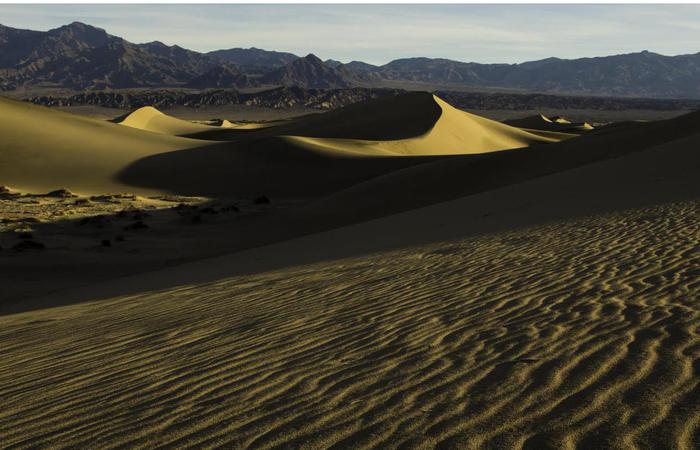
Guests can experience a round of golf at the lowest elevation golf course in the world during a stay at The Inn at Death Valley. Located 214 feet below sea level within the vast desert of Death Valley National Park, the resort’s Furnace Creek Golf Course features palm and tamarisk trees framing the fairways. The high peaks of the Sierra Nevada range are visible from all areas of this 18-hole, par-70 course. The Pacific Coast Borax Company built the Furnace Creek Inn in 1927, hoping to attract business to its Death Valley Railroad. The railroad was in dire need of additional revenue and began running passenger trains for tourists who wanted to experience the natural beauty of Death Valley at the comfortable new inn. Golf at Death Valley dates to the same year, when a date palm caretaker set up a three-hole golf course for local borax miners. In 1931, a nine-hole course was developed around the ranch land and date palm orchards. It was the first grass golf course in the California desert. In 1968, noted designer William F. Bell expanded the course to 18 holes. Golf course designer Perry Dye reworked the course in 1997, and a state-of-the-art irrigation system was installed to allow it to remain open all year. Athletes familiar with the course include basketball champion Bill Walton and Australian golf champion Steve Elkington—who played the course for his television show, Secret Golf. Future golf champion Phil Mickelson received his first set of clubs at the Furnace Creek Pro Shop, purchased for him by his father. To young Mickelson’s delight, the shop sold clubs for left-handed players. He went on to win six major PGA Tour championships, including three Masters titles, two PGA Championships, and one Open Championship. The Inn at Death Valley was inducted into Historic Hotels of America in 1999.
The Hotel Hershey® (1933) Hershey, Pennsylvania
Guests at The Hotel Hershey® in Hershey, Pennsylvania, enjoy access to the nearby West Course, a golf course built with support from chocolate magnate and philanthropist Milton S. Hershey in 1930 for the brand-new Hershey Country Club. This par-73 course was designed by golf course architect Maurice McCarthy. McCarthy was an active golf course designer in the 1920s and 1930s, primarily working in the Mid-Atlantic region. In 1934, Henry Picard was hired as Head Golf Professional. Nicknamed the "Hershey Hurricane" and “Chocolate Soldier,” his on-course skills led to 26 wins on the PGA Tour, including the 1936-1937 Hershey Open. After Picard, legendary professional golfer Ben Hogan—considered one of the greatest players of all time—served as Head Golf Professional at Hershey. Of his 63 tournament wins, 52 occurred during his tenure as Hershey’s Head Golf Professional, including six majors. Hershey Country Club celebrates this legacy through the Hogan Grill and the McCarthy Deck, both named in their honor. The club has a rich history of hosting premier national events, including the 1940 PGA Championship and the Lady Keystone Open, which was held there from 1978 to 1994. Notable individuals, including players like Arnold Palmer, Nancy Lopez, Jan Stephenson, and former Pennsylvania Governor Tom Ridge, have walked its greens. The Hotel Hershey® dates to 1933 and was inducted into Historic Hotels of America in 1991.
Williamsburg Lodge, Autograph Collection (1939) Williamsburg, Virginia
Set within the acclaimed Golden Horseshoe Golf Club, Colonial Williamsburg Resorts continues to build on a golf legacy that has defined the destination for generations. In addition to its immersive historical experiences in Virginia’s Colonial capital, Colonial Williamsburg Resorts has offered championship-caliber golf since 1947, when a nine-hole course designed by Fred Findlay first opened to guests. Soon after, Colonial Williamsburg commissioned legendary architect Robert Trent Jones Sr. to design an 18-hole championship course, leading to the debut of the Golden Horseshoe Golf Club in 1963. The club’s name dates to 1716, when Colonial Governor Alexander Spotswood gifted jeweled golden horseshoes to the men who joined him on an expedition across the Appalachian Mountains and Shenandoah Valley. During the golf expansion of the 1990s, the resort added the Green Course, designed by acclaimed architect Rees Jones, son of the Gold Course architect. Most recently, Colonial Williamsburg introduced The Shoe, a new nine-hole, par-3 course designed by Rees Jones that debuted in summer 2025. The addition expanded the Golden Horseshoe portfolio to 45 holes of play, complementing the celebrated Gold Course and Green Course, which wind through rolling terrain lined with mature hardwood trees and pines. Williamsburg Lodge, Autograph Collection, dates to 1939 and was inducted into Historic Hotels of America in 2000.
Alisal Ranch (1946) Solvang, California
Set across Alisal Ranch’s 10,500 acres in California’s Santa Ynez Valley, the Ranch Course offers guests one of the region’s most scenic historic golf experiences. Opened in 1955 as a private course for resort guests and club members, the Ranch Course was designed by renowned golf architect William F. Bell Jr., whose work helped define championship golf across the American West. Framed by ancient oak trees, rolling foothills, and sweeping views of the Santa Ynez Mountains and River Valley, the Ranch Course is celebrated for both its playability and natural beauty, with standout holes including the fifth, which offers panoramic vistas across the surrounding countryside. Alisal Ranch’s second course, the River Course, opened in 1992 and expanded the ranch’s golf legacy with a public-facing championship experience. Together, the courses have hosted Southern California PGA and Southern California Golf Association tournaments, along with local championships and charity events for decades. Alisal Ranch dates to 1946 and was inducted into Historic Hotels of America in 2021.
Mission Resort + Club (1964) Howey-in-the-Hills, Florida
Mission Resort + Club's historic El Campeón golf course has challenged golfers since 1917 and remains one of the most distinctive and celebrated layouts in the Southeast. As a partner on the Florida Historic Golf Trail and a past recipient of the Florida Golf Course of the Year award from the National Golf Course Owners Association, El Campeón continues to honor its rich legacy while evolving to meet the expectations of today's golfer. Recent investments include a significant irrigation enhancement project designed to preserve the long-term health and playability of the historic course, along with improvements to cart paths, bunkers, and strategic tree management that have enhanced course conditions and visibility. Guests also enjoy a refreshed clubhouse experience at Grove House, thoughtfully designed to celebrate the resort's history, as well as new GPS-equipped Yamaha golf carts that elevate the overall playing experience. Together with the scenic Las Colinas course, these ongoing enhancements ensure Mission Resort + Club continues to offer a golf experience that respects its past while investing in its future. Mission Resort + Club dates to 1964 and was inducted into Historic Hotels of America in 2023.
Mauna Kea Beach Hotel (1964) Kohala Coast, Hawaii
Mauna Kea Golf Course was the first resort golf course on the Island of Hawai‘i and the first course built on an ancient lava flow. This newly renovated award-winning championship course at Mauna Kea Beach Hotel has defined golf course beauty and design in Hawai‘i since its debut in December 1964, just before the hotel officially opened in 1965. Introduced in a special made-for-television event by golf’s legendary “Big Three”: Arnold Palmer, Jack Nicklaus, and Gary Player, the course quickly established itself as one of the world’s most iconic oceanfront golf destinations. Since that premiere, the course has welcomed celebrities, professionals, and amateur golfers alike who recognize Mauna Kea as a true bucket-list golf experience. Now newly renovated as part of Mauna Kea Beach Hotel’s nearly $240 million transformation, the course enters a new era while preserving the spirit of its historic legacy. Originally designed by Robert Trent Jones Sr., later refined by his son Rees Jones, and most recently reimagined by acclaimed architect Robert Trent Jones Jr., Mauna Kea Golf Course holds the unique distinction of being the only golf course in the world shaped by the collective vision of the Jones family. Upgrades include redesigned bunkers, enhanced sustainability, and modern amenities, ensuring a world-class experience for a new generation of players. Mauna Kea Beach Hotel was inducted into Historic Hotels of America in 2016.
“Congratulations to the golf courses named to The 2026 Top 25 Historic Hotels of America Most Historic Golf Courses list. These courses are beautiful historic sites where visitors can play a game they love, teach someone the game, or view championship golf tournaments—history in the making. Families gather on them to make their own memories,” said Lawrence Horwitz, Executive Vice President, Historic Hotels of America and Historic Hotels Worldwide. “Historic Hotels of America offers golf destinations in desert oases, on tropical islands, between mountain peaks, along vineyards, and parallel sandy coastlines. Travelers will be eager to take home a golf tee, golf ball, scorecard, or other souvenir from the first time they played at any of these iconic golf courses.”
About Historic Hotels of America
Historic Hotels of America is the official program of the National Trust for Historic Preservation for recognizing and celebrating the finest historic hotels from across the United States of America. The National Trust for Historic Preservation was chartered by U.S. Congress in 1949 and is a private 501(c)(3) nonprofit organization. The National Trust for Historic Preservation is leading the movement to save places where our history happened. To be nominated and selected for membership in this prestigious program, a hotel must be at least 50 years old; designated by the U.S. Secretary of the Interior as a National Historic Landmark or listed in or eligible for listing in the National Register of Historic Places; and recognized as having historical significance. Of the more than 300 historic hotels inducted into Historic Hotels of America from 44 states, the District of Columbia, Puerto Rico, and the U.S. Virgin Islands, all historic hotels faithfully preserve their authenticity, sense of place, and architectural integrity. For more information, please visit HistoricHotels.org and sign up to receive future news, highlights, and advance notice of special offers from Historic Hotels of America.
MEDIA CONTACT:
Katherine Orr
Director, Marketing Strategy and Communications
Historic Hotels of America │ Historic Hotels Worldwide
korr@historichotels.org
###