




Receive for Free - Discover & Explore eNewsletter monthly with advance notice of special offers, packages, and insider savings from 10% - 30% off Best Available Rates at selected hotels. 
history
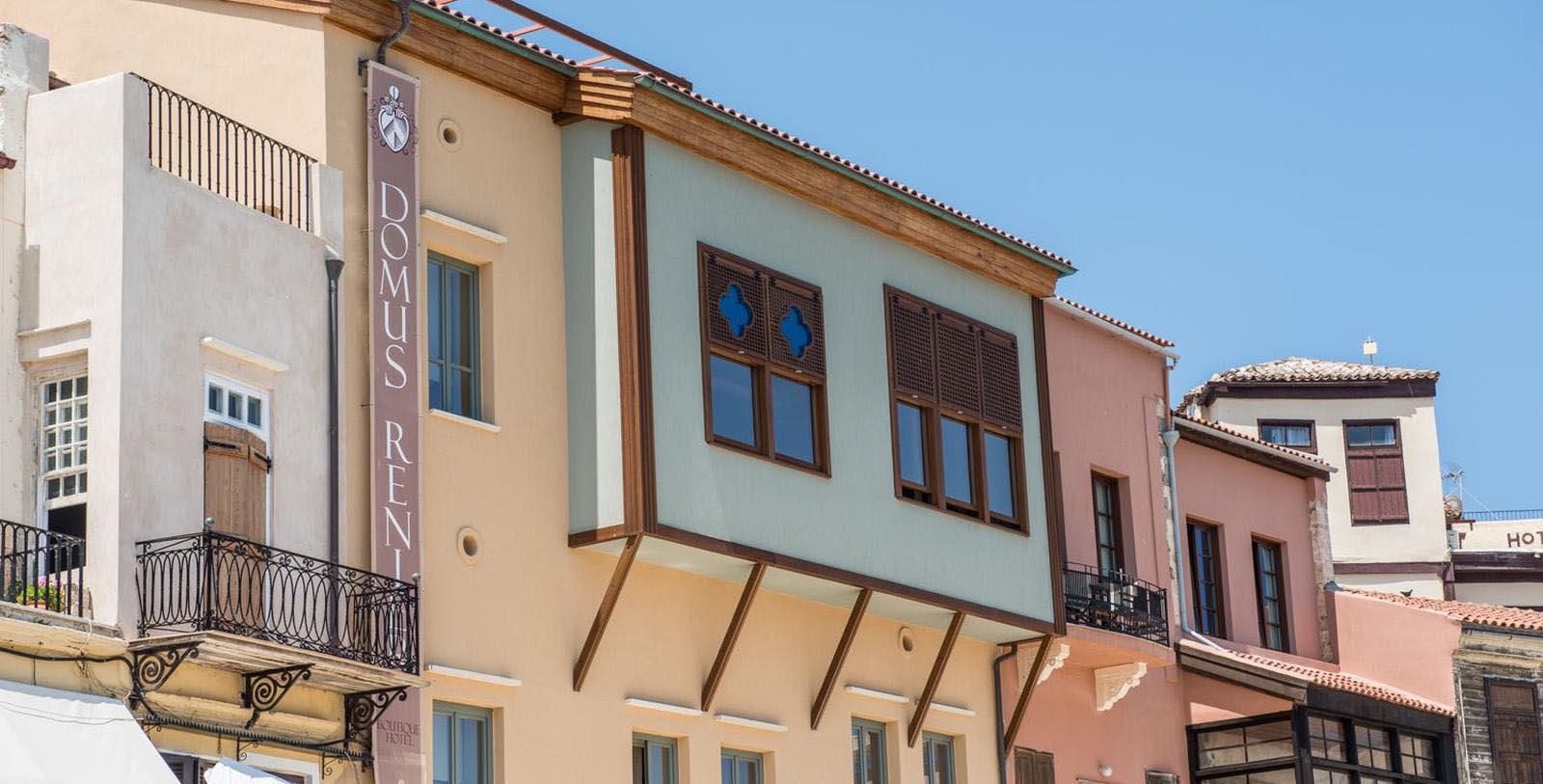
Discover the Domus Renier Boutique Hotel, which was once private residence for the Renier family during the 17th century.

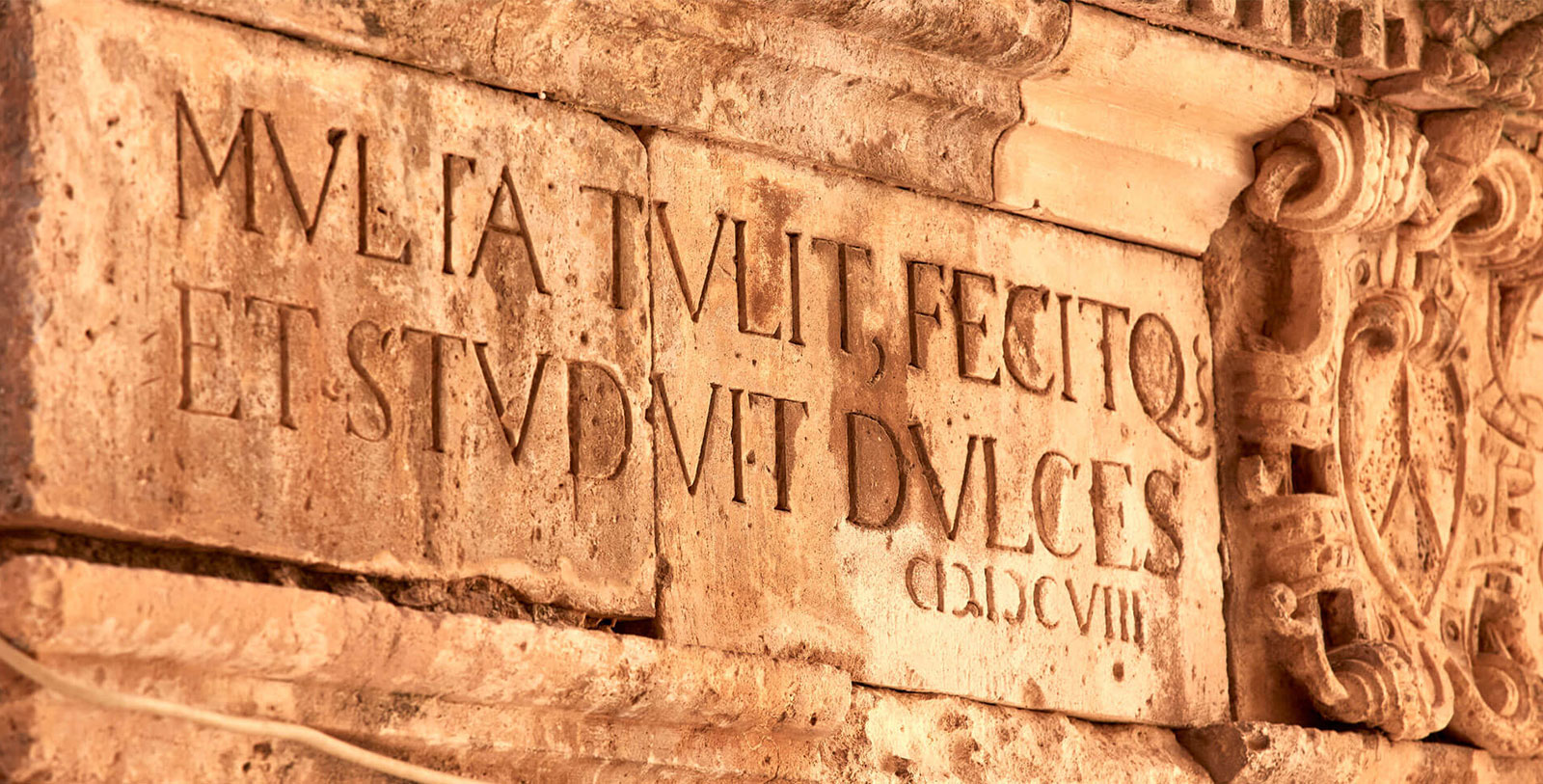
Domus Renier Boutique Hotel, a member of Historic Hotels Worldwide since 2016, dates to 1608.
VIEW TIMELINERegarded for its remarkable beauty and historical importance, this exceptional historic hotel stands among the most distinguished heritage destinations in Crete. The building was originally constructed as a private residence for the Renier family, one of the most influential noble dynasties to rule the island during the Venetian era. The origins of the family can be traced to Dandolo Renier, who settled in Crete after the Republic of Venice granted him the island as a dukedom in 1207. He was permitted to retain his noble titles on the condition that he maintain a military force to defend the island from frequent pirate incursions. Remaining true to these feudal obligations, the Renier family quickly rose to prominence, establishing themselves as one of the most powerful and enduring clans in Crete.
The Renier Mansion—part of which is incorporated into the present-day hotel—was constructed some four centuries later, in 1608, and served as a symbol of the family’s authority and presence for generations. In 1644, just one year before Chania fell to Ottoman rule, only 27 families retained titles of Venetian nobility. The Reniers were the only members of that distinguished group to endure, preserving their name and lineage to this very day. As noted by hotel historians, “doges, politicians, diplomats, army commanders, and countesses have lived and died, loved and hated, shaped political affairs, and ruled from the rooms of this very townhouse.”
The transformation of the mansion into a refined luxury destination began in late 2013 and was completed over the course of three years. Under the direction of architects Aristomenis and Giorgos Varoudakis, the restoration carefully reimagined the historic residence into an elegant boutique hotel while preserving its architectural integrity. Particular attention was given to safeguarding original features, ensuring that the building’s rich heritage would be retained for future generations. The names of significant historical figures associated with Crete were thoughtfully incorporated into the identity of each suite, while period frescoes remain visible within the entrance lounge.
Today, Domus Renier Boutique Hotel operates as an exclusive luxury hotel featuring ten individually designed suites, each distinct in size and character. Beautifully restored and sensitively renovated, the hotel retains its authentic architectural elements, reflecting the centuries during which members of the Renier family resided within its walls. Its privileged seafront location along Chania’s historic harbor offers guests a direct connection to the city’s layered past, a site that once served as a defensive point against successive civilizations, including Roman, Byzantine, and Ottoman forces. As a proud member of Historic Hotels Worldwide, Domus Renier Boutique Hotel remains a place where history, culture, and refined hospitality are seamlessly brought together.
-
About the Location +
Located on the island of Crete, Chania is among the most historic metropolises in the entire world. Founded over a thousand years ago, this fantastic historic city possesses a rich heritage that has enchanted travelers for generations. Indeed, Chania was actually the original site of an ancient Greek settlement known as “Kydonia,” which emerged as one of the moist powerful Grecian city-states in antiquity. But in the 1st century BC, the Romans managed to conquer Kydonia and the rest of Crete, thus, absorbing them into their sprawling Mediterranean empire. Allowed to operate with a certain level of autonomy, the Kydonians wielded significant influence in the region for many years thereafter. In fact, the Romans even granted Kydonia permission to mint its own coinage. Unfortunately, this era was not destined to last, as the Saracens eventually seized all of Crete following Rome’s collapse. Historical evidence is scant as to life in Chania under Arab rule, although the written record that do exist attest that the city was ultimately destroyed at the beginning of the 9th century AD. In its wake, the Byzantines succeeded in rebuilding the city following their own invasion of the island several decades later. Using leftover materials from the ruins of the previous settlement, they managed to construct a brilliant new city that they called “Chania.” To protect the revitalized community, the Byzantines even developed a massive fortress called the “Kasteli” atop a prominent local hill.
Bonifacio, the Marquess of Montferrat, received control over Crete as a reward for his service against the Byzantine Empire during the tumultuous Fourth Crusade. He, in turn, sold the island to the Republic of Venice, which hoped to integrate it into its already vibrant maritime trading network. At first, the Venetians struggled to govern Crete, with resistance manifesting in cities like Chania. Over time, those partisans struck an alliance with Venice’s rival, the Genoans, who helped drive it from the region. Undeterred, the Venetians eventually returned in 1285, and vengefully subjugated the defiant Cretans. Law became oppressive in order to discourage any further revolts. The Venetians subsequently reinforced the island’s medieval fortifications, with Chania emerging as their main administrative center. But the Venetians gradually softened their policies toward the native Cretans, which ushered in another prolonged period of prosperity. Chania in particular became the island’s main seaport and flourished at an unprecedented rate due. The local culture of Chania also adopted aspects of Venetian society, forming a unique regional identity that was well-regarded throughout Europe. Nowhere was this cultural intermingling more apparent than the city’s outstanding architecture, which spawned a variety of uniquely beautiful neighborhoods in just a short amount of time.
Chania remained under the authority of Venice for generations, until the Ottomans captured the island during the mid-17th century. The Ottoman Empire then ruled over Chania for the next three centuries, save for a brief moment when the Viceroy of Egypt directly governed the site in the 1830s. Then, in 1898, several of Europe’s leading nations sponsored the creation of the semi-autonomous Cretan State, with Chania serving as its capital. Chania once again started to independently monitor its own internal affairs and even entertained a few international embassies. The era also experienced a great construction boom that produced some of the city’s most beautiful historical structures. Many of those buildings were especially notable for their architectural variety, which ranged from Neoclassical to Renaissance-inspired. But the Cretan State was short-lived, as Chania and the rest of Crete eventually joined the newly formed nation of Greece in the aftermath of the Balkan Wars. Chania has since remained a part of Greece and continues to be one of its most successful communities. It also hosts many cultural heritage travelers from across the globe, too, who adore visiting its numerous historical landmarks. Among the attractions that continues to allure people each year include the statuesque Egyptian Lighthouse, which stands guard over Chania harbor. And due to its outstanding history and preserved heritage, downtown Chania is even pending a designation as a combined UNESCO World Heritage Site from the United Nations!
-
About the Architecture +
Once the home of the mighty Renier family, the Domus Renier Boutique Hotel was originally constructed toward the end of the European Renaissance. As such, the Reniers used a variety of late Renaissance architectural motifs to design the impressive manor. Renaissance architecture itself can trace its roots to the late 1400s, in which it largely replicating the motifs spawned from the earlier “Gothic” designs principles that had defined Europe in the Middle Ages. But the architects at the time decided to incorporate elements of Classical architecture into their structures, placing a greater focus on such features like the dome, the tunnel vault, and the round arch. Columns also became ubiquitous throughout buildings created amid the Renaissance, providing a rich source of architectural detail. Yet, the leading architects of the period placed the greatest emphasis on proportion. As such, many professionals utilized an increasing amount of precise mathematical ratios to achieve perfect symmetry, and ultimately in their view, harmony. Visually, buildings constructed during the Renaissance showcased clearer internal spaces that were both far less complex than the Gothic structures that had preceded them.
The desire to embrace the principles that would become “Renaissance-era architecture” first emerged in Italy, specifically the merchant city of Florence. In Florence, local architects began to draw greater inspiration from the Greco-Roman ruins that proliferated throughout the Mediterranean basin. Those accomplished craftsmen also began to review historical texts from antiquity for guidance, specifically the works of the great Roman architect Vitruvius. The eclectic blend of Classical and Gothic design aesthetics that characterized Renaissance architecture appeared all over Florence, before spreading across the rest of the Italian Peninsula. Among the greatest intellectuals that helped to establish the form were the likes of Sebastiano Serlio, Donato Bramante, Leon Battista Alberti, and Filippo Brunelleschi (often regarded as the “father” of Renaissance architecture). Many engineering masterpieces debuted, including Florence’s Cattedrale di Santa Maria del Fiore, the Basilica di Sant'Andrea in Mantua, and of course, The Papal Basilica of Saint Peter within the Vatican. Soon enough, Italy’s great architectural revolution spread throughout the continent, reaching other places like Germany, England, Spain, Russia, and even the Greek archipelago.