History
Discover Sofitel Legend Santa Clara Cartagena, which was once a historic convent that served as the home for the Order of the Poor Clares.
The building that today stands as the Sofitel Legend Santa Clara Cartagena has passed through many eras, each chapter leaving an indelible imprint on its very identity. Its origins trace back to a grand, 17th-century convent that once housed the nuns of the Order of the Poor Clares. In 1621, the prominent landowner Doña Catalina de Cabrera determined that the religious organization required much needed patronage, given the life of contemplation and prayer that its members observed. She proceeded to donate a sizeable plot of land right in the heart of Cartagena for the creation of a convent that could provide a comfortable haven for the Order of the Poor Clares. Master builder Simón González subsequently began constructing the gorgeous complex, blending a rich combination of Spanish Colonial aesthetics and vernacular motifs to craft a unique, sprawling façade. The nuns themselves quickly came to adore the facility upon its completion, ultimately living within its walls for generations. The complex was multi-faceted, allowing space for the nuns to cultivate fruit orchards and making and selling baked goods. For nearly 250 years, the convent stood as a renowned community landmark, anchoring Cartagena’s skyline while the rest of the city around the compound grew.
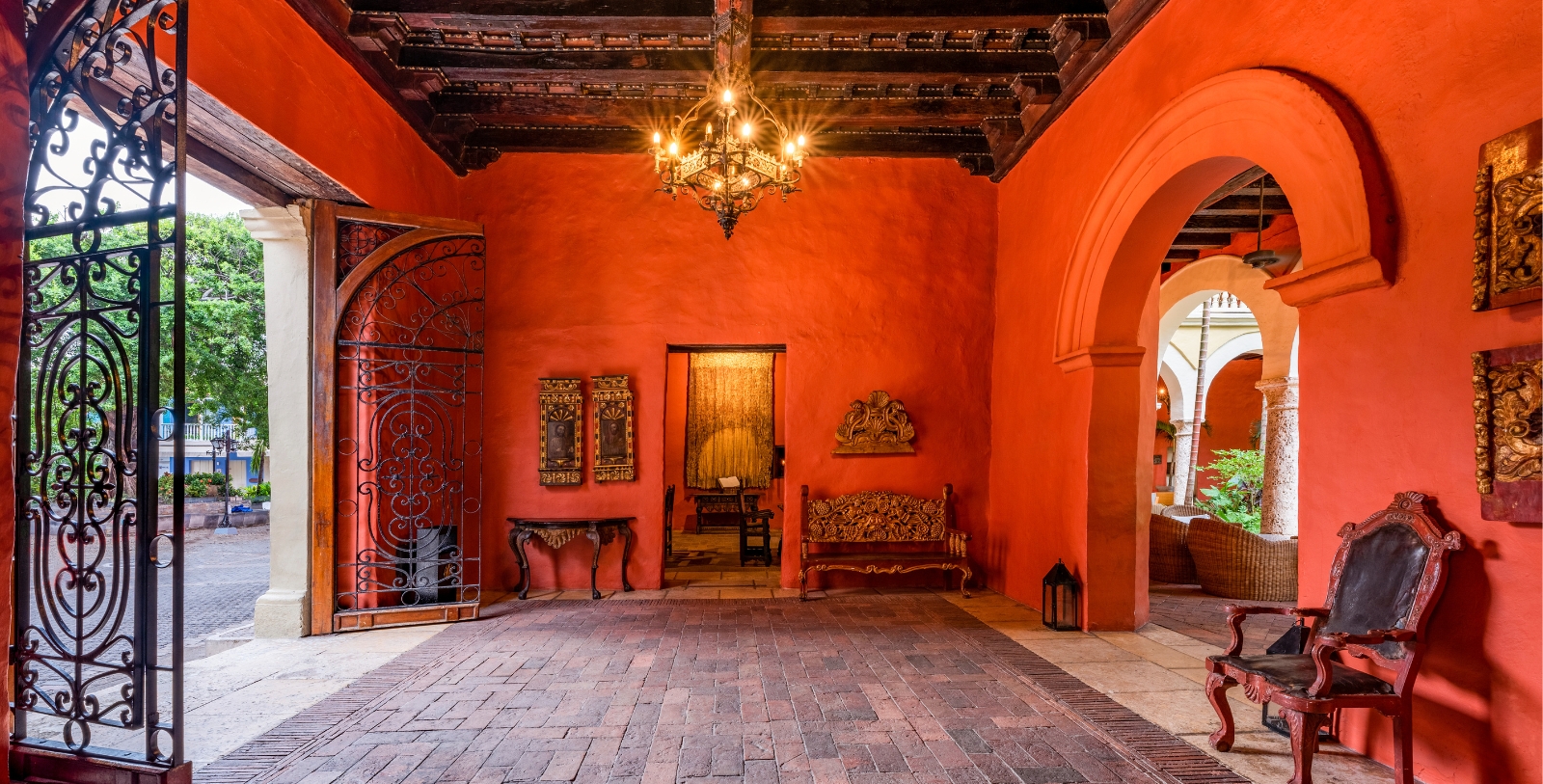
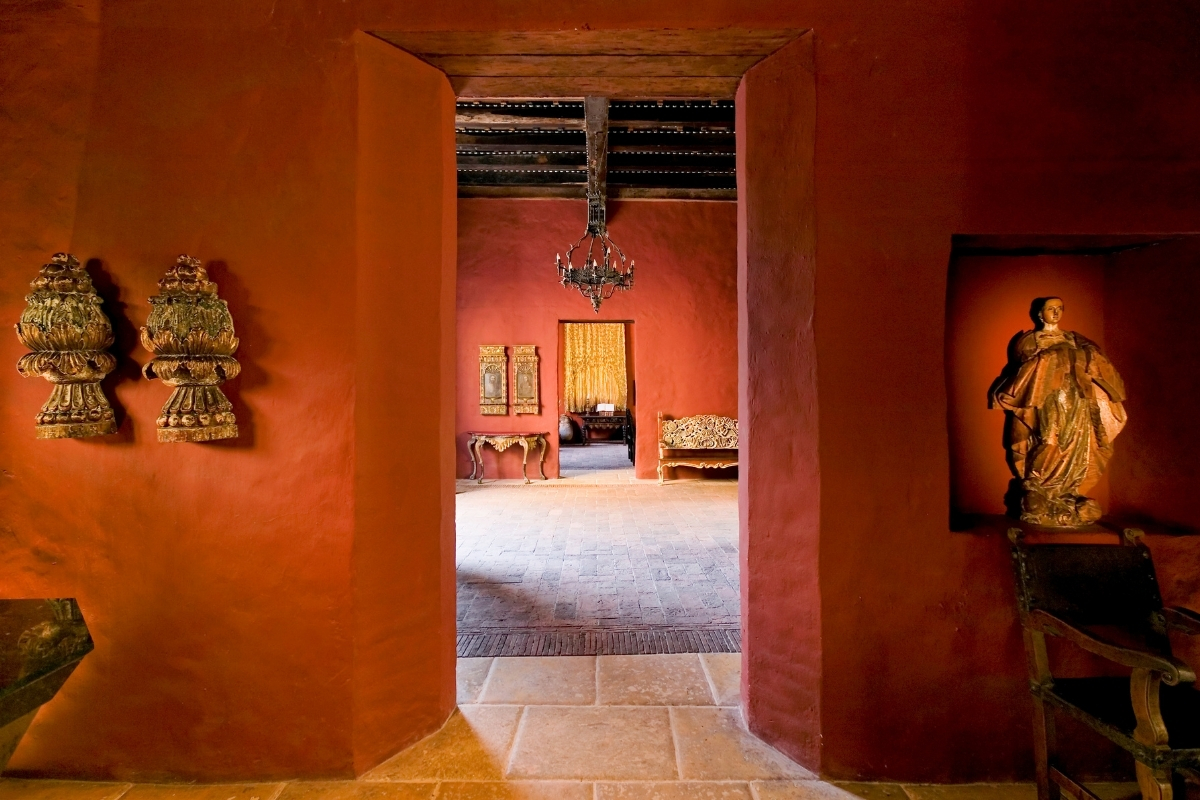
A series of religious reforms eventually swept across Latin America during the 19th century, leading to the closure of the convent in 1861. Local officials opted to open several different facilities at the location including a charity hospital, a medical school, and a prison. But despite those changes, the convent’s architecture fortunately remained largely intact. The high arches, imposing columns, and intricate stonework conveyed a sense of solemnity even as their purpose shifted. Then, in the late 20th century, ambitious hoteliers acquired the historic complex and began a comprehensive renovation that sought to revitalize it as a brilliant upscale hotel. The work was meticulously executed over three years, which melded the structure’s contemporary amenities with the surviving historical details. The newly christened “Santa Clara Hotel” earned significant praise for its delicate balance of architectural authenticity and modern luxury when it finally opened in 1998. Walking through its doors today, guests can still sense that the passage of time has not diminished the building’s grandeur. The elaborate entryway, preserved since its completion during the 18th century, led to cloistered courtyards where ancient round arches framed a central well that originally supplied the entire convent. Underfoot and overhead, tiles and beams maintained their historic craftsmanship—one lintel even continued to read: “This roof was built on April 5, 1788.”
Beneath the El Coro Lounge, the hoteliers built a hidden staircase that descends toward a crypt that a team of archeologists had first uncovered in the 1940s. A glass panel in the floor of the venue was installed to grant guests the ability to view one of its mysterious tombs and pay their respects. Throughout the hotel, traceable artifacts such as confessional booths, hidden windows, and ceramic fragments were thoughtfully left or tastefully displayed, each offering a glimpse of the building’s layered history. The proprietors retained the convent’s cloister gardens, converting what was at one point the nuns’ orchard into a tranquil recreational area. Luxury rooms occupied former residential apartments, reconfigured to showcase themes connected to the convent’s heritage, as well as that of the surrounding city. Now known as the “Sofitel Legend Santa Clara Cartagena,” this fascinating historic hotel serves as a bridge between epochs. It is both a relic and a resort—a monument to history as much as a sanctuary for travelers. In every corner of its ornate yet intimate spaces, the past breathes alongside the present. Guests can sip a cocktail in El Coro Lounge and contemplate the crypt below. They can float in the courtyard pool under arches that have seen centuries of devotion and hope. The Sofitel Legend Santa Clara Cartegena is more than a hotel; it is a living chronicle that continues to inspire all who wander its halls.
Hotel Timeline
The Location
Long before the modern foundation of Cartagena was ever laid, the land where the city would rise was already steeped in millennia of human activity. Around 7,000 B.C., hunter-gatherer bands of the Puerto Hormiga culture roamed the coastal plains between the Sinú River delta and the future Cartagena Bay. As centuries passed, societies like the Monsú developed along waterways, too, shaping economies built on agriculture and fishing. By the early 16th century, the region hosted Carib-descended tribes known as “Mokaná,” who lived in a settlement called “Calamarí.” Then in 1533, Spanish conquistador Pedro de Heredia founded Cartagena atop the village, which had been abandoned some time before. The fledgling settlement, home to only a couple hundred residents, soon developed a strong connection to the sea. More specifically, its neighboring bay quickly became a magnet for Spanish treasure fleets bound for Europe. Personal ambitions and local fortunes intertwined while gold and silver flowed through Cartagena, leading to the creation of grand homes and city streets. A fire incinerated most of the structures in 1552 though, prompting a dramatic architectural shift tostone and tile replacingwood, setting the foundation for the city’s enduring visage. However, prosperity invited danger. In 1568, John Hawkins besieged Cartagena, followed by Francis Drake’s assault in 1586, which exposed the city’s vulnerabilities. Those attacks led to a monumental transformation, with the Spanish Crown embarking on a colossal fortification project.
Ramparts and bastions gave shape to what is now known as “La Ciudad Amurallada”—"the walled city”—and included imposing sub-structures like the Castillo San Felipe de Barajas. Cartagena had emerged as Spain’s most fortified stronghold in South America when the construction finally concluded at the beginning of the 17th century. Yet it was the city’s resilience that would define its legacy for years to come. In 1741, a formidable British armada led by Admiral Edward Vernon descended upon the area during the War of Jenkins’ Ear. With only 3,000 defenders and a handful of ships, Cartagena mounted a spirited defense under Blas de Lezo and repelled the British, sealing a triumph that has since been deeply woven into the city’s very identity. The victory not only protected the flow of minerals to Spain but haunted the aspirations of potential invaders, rendering Cartagena “La Heroica”—the Heroic City. Then in 1811, Cartagena took its place at the vanguard of the Spanish American independence movement by defiantly declaring itself liberated from Spanish authority. It became the first territory in present-day Colombia and one of the earliest in Latin America, to proclaim full sovereignty and inspired other colonies to proclaim their freedom. While briefly retaken by royalist forces, the city’s independence endured, nonetheless.
The discovery of petroleum in the Magdalena River valley during the 20th century saw Cartagena’s character further evolve. New industries debuted in Cartagena as a result, including textiles, cosmetics, and most notable, oil refining. As the city’s skyline morphedw ith skyscrapers in Bocagrande and elegant modern resorts alongside the ancient walls, it retained a deep sense of place. In fact, the downtown core is currently a UNESCO World Heritage Site, recognized as the “Port, Fortresses and Group of Monuments, Cartagena.” Furthermore, Cartagena’s historic center enlivened by Spanish plazas, cannons, and cobblesi s an open-air museum, too. The Clock Tower marks the entrance to a maze of balconies draped in bougainvillea, where salsa and champeta continue to pulse through cafés. Meanwhile, horse-drawn carriages share the streets with electric buggies, evoking a timeless relationship between past and present that coexist in perfect harmony. Travelers today flock to Cartagena to experience this rich cultural heritage, visiting such iconic places as the Castillo San Felipe, the Plaza de Bolívar, and the artistic Getsemaní district. Even a simple stroll along the city’s azure shoreline has enthralled thousands of people, many of whom have been allured by the grand tales of the Spanish treasure fleets that once anchored out in the neighboring bay. Cartagena’s legacy is truly one of the global importance that serves to represent the wider history of South America as a whole.
The Architecture
Sofitel Legend Santa Clara Cartagena displays the same Spanish colonial architectural aesthetics that first defined it centuries ago when it was first a convent. Also known today as “Spanish Eclectic,” Spanish colonial architecture dates back centuries and is one of the most prolific design aesthetics seen throughout the Americas today. The form itself emerged when the first generations of Spanish colonists began arriving from Europe at the start of the 16th century. Seeking to establish similar settlements to the ones found in their native Spain, the pioneers began to recreate European cities across Latin America. Many of the earliest settlers crafted buildings that combined elements of architectural motifs popular in Spain at the time, including Renaissance, North African, and Byzantine forms. Over time, though, those beautiful and extravagant styles were complemented by other, newer forms, such as Neoclassical and Baroque architecture. The amalgamation of all those unique styles eventually produced structures that were incredibly decorative and ornate. But despite the variety in their appearance, they mostly shared the same general layout and qualities. For instance, the buildings typically featured a central courtyard, as well as thick stucco walls that could endure diverse climate of both North and South America. Among the other recognizable features that they possessed included heavy carved doors, spiraled columns, and gabled red-tile roofs, as well. This new stunning architectural form soon defined the landscape of countless Spanish cities in the “New World,” such as Mexico City, Lima, and Cartagena. Many of those buildings still survive this day, too, with some even preserved as recognized UNESCO World Heritage Sites.
Famous Historic Guests
- Queen Sofia of Spain (1975 – 2014).
- King Don Juan Carlos I of Spain (1975 – 2014).