


Receive for Free - Discover & Explore eNewsletter monthly with advance notice of special offers, packages, and insider savings from 10% - 30% off Best Available Rates at selected hotels. 
The 2026 Top 25 Historic Hotels of America® Most Magnificent Gardens List Is Announced
The 2026 Top 25 Historic Hotels of America® Most Magnificent Gardens List Is Announced
WASHINGTON, D.C. — May 11, 2026 — Historic Hotels of America®, the official program of the National Trust for Historic Preservation for recognizing and celebrating the finest historic hotels from across the United States of America, is pleased to announce The 2026 Top 25 Historic Hotels of America Most Magnificent Gardens list.
From the Green Mountains of New England to Death Valley National Park, the destinations of Historic Hotels of America offer travelers a chance to wander through some of the nation’s most magnificent and diverse gardens. Many of the hotels feature extensive grounds designed by renowned landscape architects, such as Frederick Law Olmsted and his sons. Several historic hotels on this list keep apiaries, which ensures their gardens thrive and supplies honey for restaurants or house-made mead. More than a few hotels recognized adhere to a seed-to-table or garden-to-table philosophy, growing their own vegetables and herbs next door to their signature restaurants and bars. These gardens also set the scene for guests’ life-long memories of special occasions celebrated in them, from romantic getaways and honeymoons to weddings and reunions. Whether sharing a meal, a vow, or a stroll, these magnificent gardens of Historic Hotels of America will make the next stay one guests will never forget.
The 2026 Top 25 Historic Hotels of America Most Magnificent Gardens list is an invitation to discover the bounty of travel in the beautiful gardens of Historic Hotels of America, the official program of the National Trust for Historic Preservation for recognizing and celebrating the finest historic hotels from across the United States of America. To be nominated and selected for membership and inducted into Historic Hotels of America, a hotel must be at least 50 years old and recognized for its historical significance. Visit HistoricHotels.org to learn more and sign up to receive Discover & Explore to stay up to date on news and special offers. View The 2026 Top 25 Historic Hotels of America Most Magnificent Gardens List Press Release here.
The 2026 Top 25 Historic Hotels of America Most Magnificent Gardens, listed in order of date established:
Williamsburg, Virginia
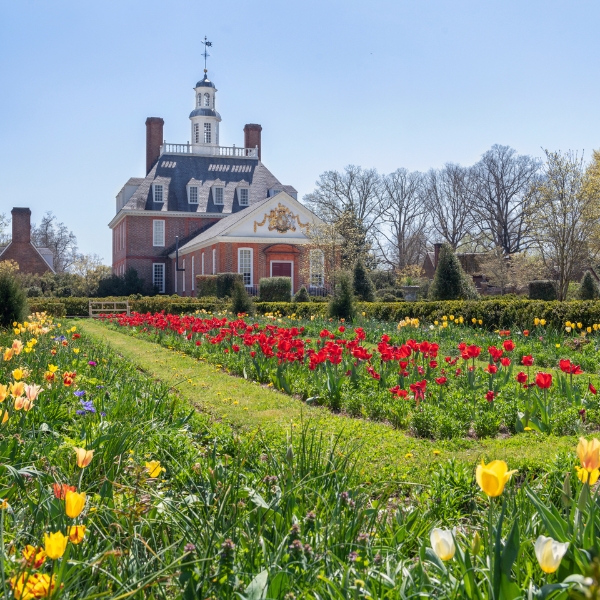 |
Located mere blocks away from the historic Williamsburg Lodge, Autograph Collection, is the Colonial Williamsburg Historic Area. Within this 301-acre living history museum in Williamsburg, Virginia, visitors can discover more than 30 meticulously researched and maintained gardens. Both the historic Williamsburg Lodge and the Williamsburg Historic District gardens date to the time of the Historic Area’s restoration in the 1930s. Most of the Colonial Houses in the Williamsburg Historic District are from its period of historical significance, the most historic of which dates to 1750. The restoration planners designed the Historic Area so that trees and shrubs would act as a screen from modern intrusions inconsistent with the world of 1770s Virginia. They also restricted plantings in the Historic Area to native species or those imported before 1800. While meandering through the quaint, historical village and its many nature paths, visitors can access the extensive research on the plantings at Colonial Williamsburg by capturing the QR codes found on labels. For those who want to learn more, Colonial Williamsburg offers a garden workshop for floral centerpieces, as well as a guided walk down the Bassett Trace Nature Trail and a Meet the Gardener tour. The Williamsburg Lodge, Autograph Collection, and Colonial Houses were inducted into Historic Hotels of America in 2000. In 2026, the restored historic destination of Colonial Williamsburg is celebrating 100 years of welcoming visitors. |
The Inn at Montchanin Village (1799)
Wilmington, Delaware
Wilmington, Delaware
 |
The Inn at Montchanin Village was founded around historic structures in Montchanin, Delaware, the oldest of which dates to 1799, and boasts both decorative European-style and kitchen gardens that have been cultivated for centuries. The inn has a full-time horticulturist and its own off-site greenhouses, which provide exquisite, colorful landscaping on the grounds. The gardens at the inn today were designed by Anthony Motolla, who was invited by the inn’s owners in the 1970s to redesign the historical gardens. Tulips, dahlias, and other perennials, and locally prevalent trees help define spaces and create private garden nooks for guests to enjoy. The restaurant at the inn, Krazy Kat’s, offers dishes with herbs and vegetables grown in the gardens of this historic hotel. Guests can access the historic buildings via a maze of ornate gardens featuring beautiful flowers and fragrant herbs. The gardens today are enjoyed by guests walking to their guestrooms and suites, as well as the setting for outdoor weddings and private gatherings. The Inn at Montchanin Village and its gardens are associated with the nearby historical Longwood Gardens and the Winterthur Museum, Garden & Library as part of former du Pont estates. The Inn at Montchanin Village was inducted into Historic Hotels of America in 1999. |
Bedford, Pennsylvania
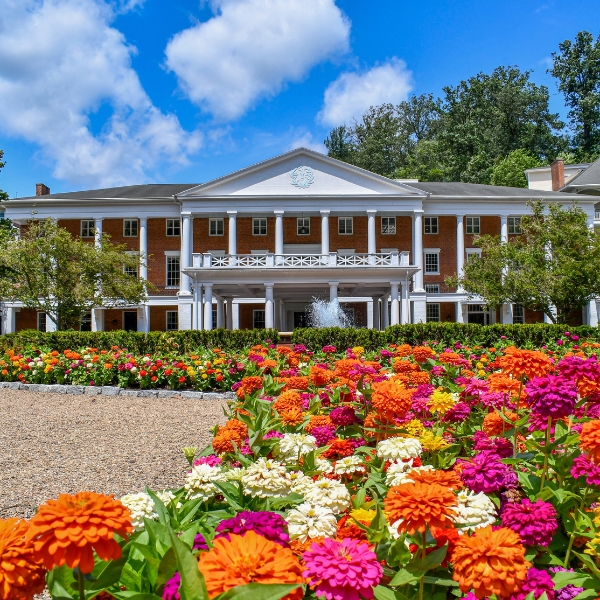 |
Spanning the full breadth of the historic resort, the gardens at Omni Bedford Springs Resort & Spa in Bedford, Pennsylvania, offer guests opportunities for exploration and relaxation. Highlights include a bountiful chef’s garden supplying fresh herbs and vegetables, a whimsical children’s garden alive with wildflowers, and the tranquil spa and Serenity Garden designed for quiet reflection. Vibrant seasonal plantings frame the front of the historic hotel and create a memorable first impression. In 2026, the gardens will feature a patriotic palette of red, white, and blue blooms in celebration of America’s 250th birthday. Guests can engage more deeply through the guided Grounds and Gardens Tour led by the resort’s grounds manager or wander the meandering pathways at their own pace. Garden explorers will discover kitchen and bar ingredients grown on-site, and apiaries where the resort sources honey, alongside beautiful blooms and shrubs. Complementing the natural mineral springs that have drawn visitors for centuries, the gardens blend sustainability, sensory experiences, and historic character, creating moments of discovery and calm that linger long after the visit ends. Designated a National Historic Landmark by the U.S. Secretary of the Interior, Omni Bedford Springs Resort & Spa dates to 1806 and was inducted into Historic Hotels of America in 2008. |
Point Clear, Alabama
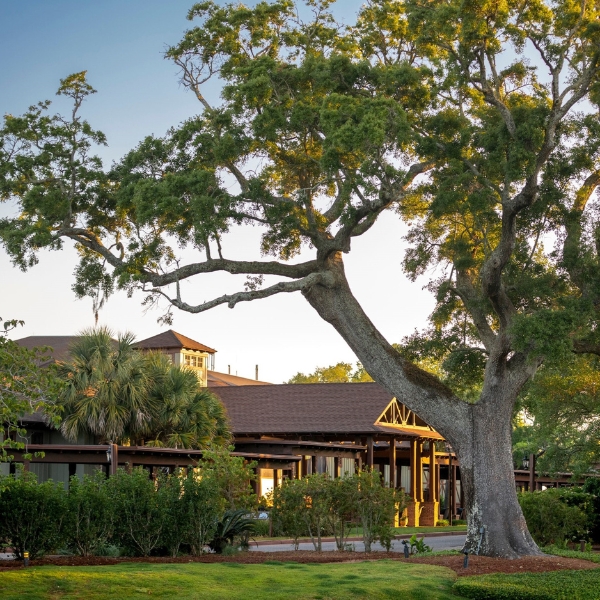 |
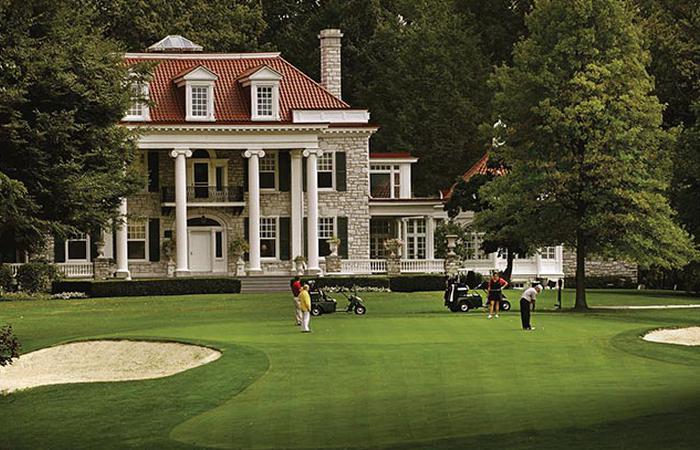
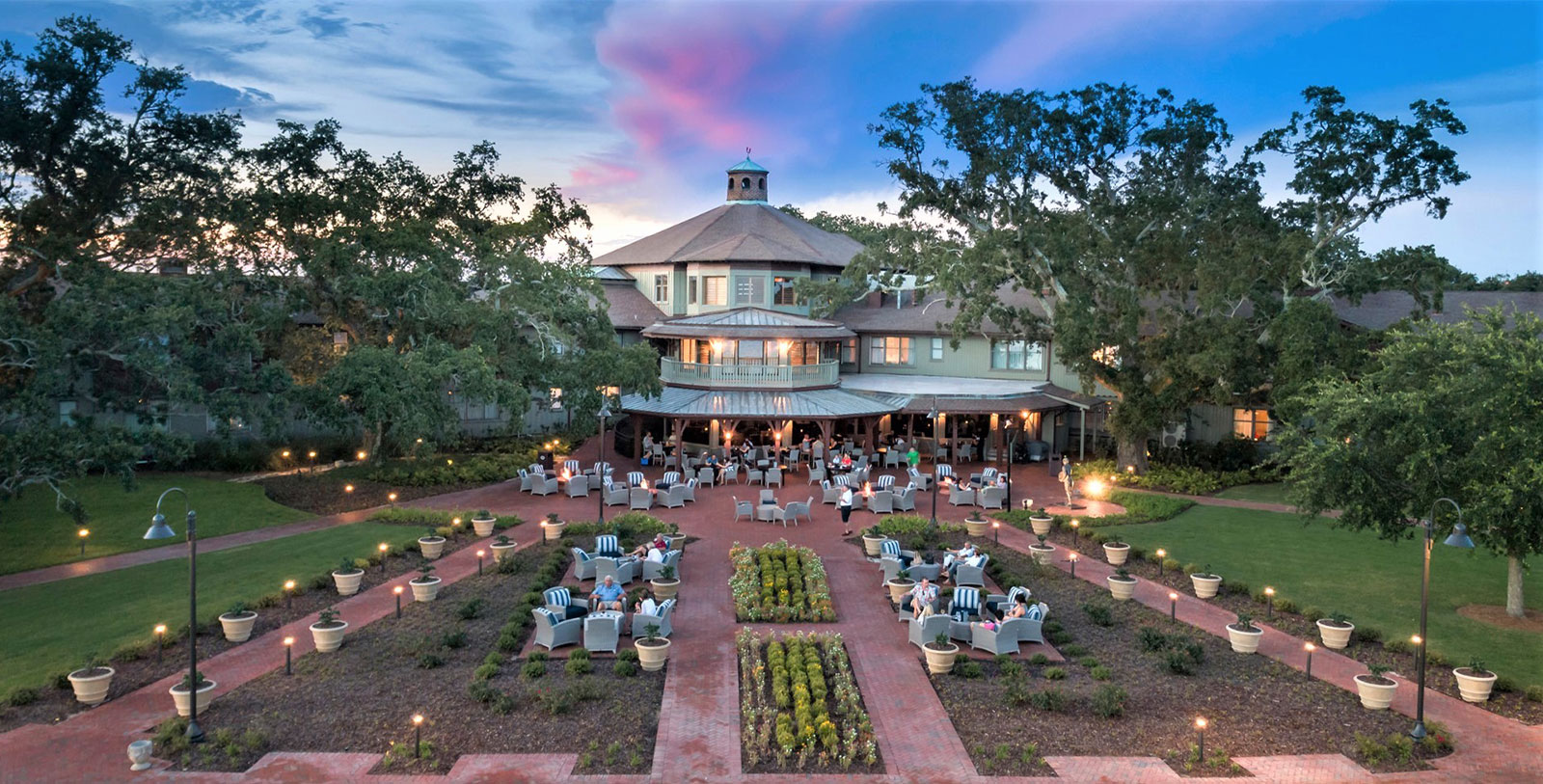
The Grand Hotel Golf Resort & Spa's gardens stretch across 550 pristine acres, featuring a stunning selection of colors. The expanded estate garden offers beautiful flowers and fresh ingredients for use by the Grand Hotel Golf Resort & Spa’s chefs. Stunning azaleas, ornamental grasses, camellias, ferns, four varieties of bottlebrush plants, plum and Japanese yew, succulents, tea olives, banana shrubs, hydrangeas, hawthorns, palms, canna lilies, ivy, and fragrant jasmine add color and life to the resort grounds. Many of the plantings, like milkweed, appeal to the monarch butterflies that stop at the Grand Hotel Golf Resort & Spa on their way to Mexico each October. These beautiful black and orange butterflies, a threatened species, rest and refuel at the resort before heading farther south. The Grand Hotel Golf Resort & Spa’s oaks, dripping with Spanish moss, and fresh mint for cocktails are the most beloved garden elements by guests, and add to the resort's Southern charm. Over 150 stunning live oak trees dripping in Spanish moss are a highlight of the Grand Hotel Golf Resort & Spa’s lush historic landscape. Mixologists from the bar visit the resort's own mixology garden each day to create their handcrafted cocktail of the day, and the resort’s culinary team uses an adjacent grand garden, with over 70 varieties of edible plants, for their delicious seasonal cuisine. Guests are invited to tour the grounds on their own, reading labels and self-identifying plantings, or meet with the historian for a presentation on the resort’s natural wonders. Grand Hotel Golf Resort & Spa dates to1847 and was inducted into Historic Hotels of America in 2011. |
New Paltz, New York
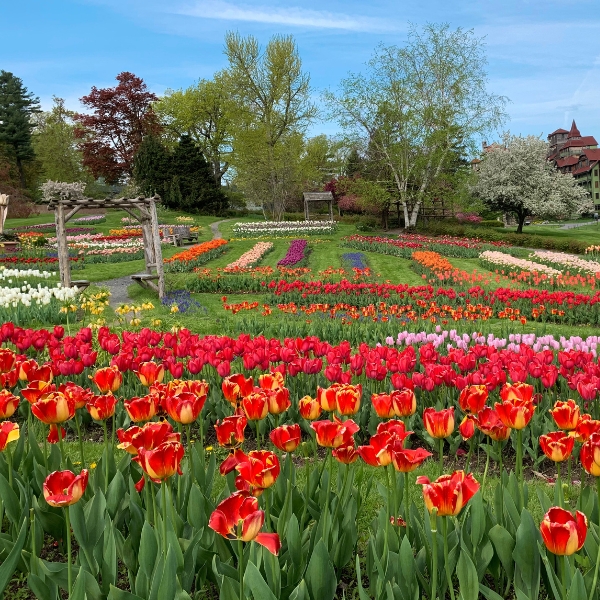 |
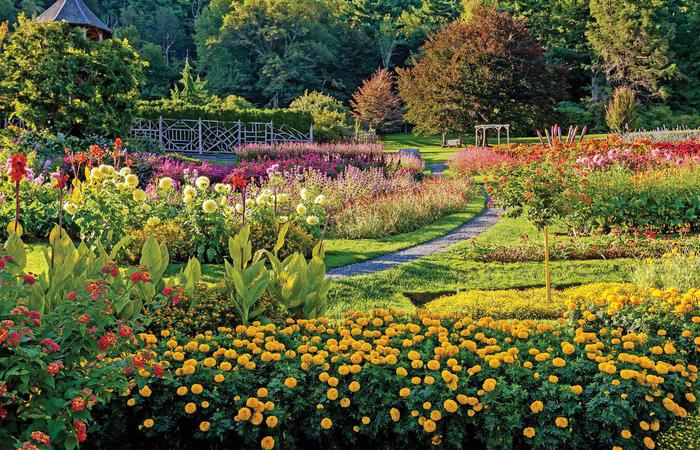
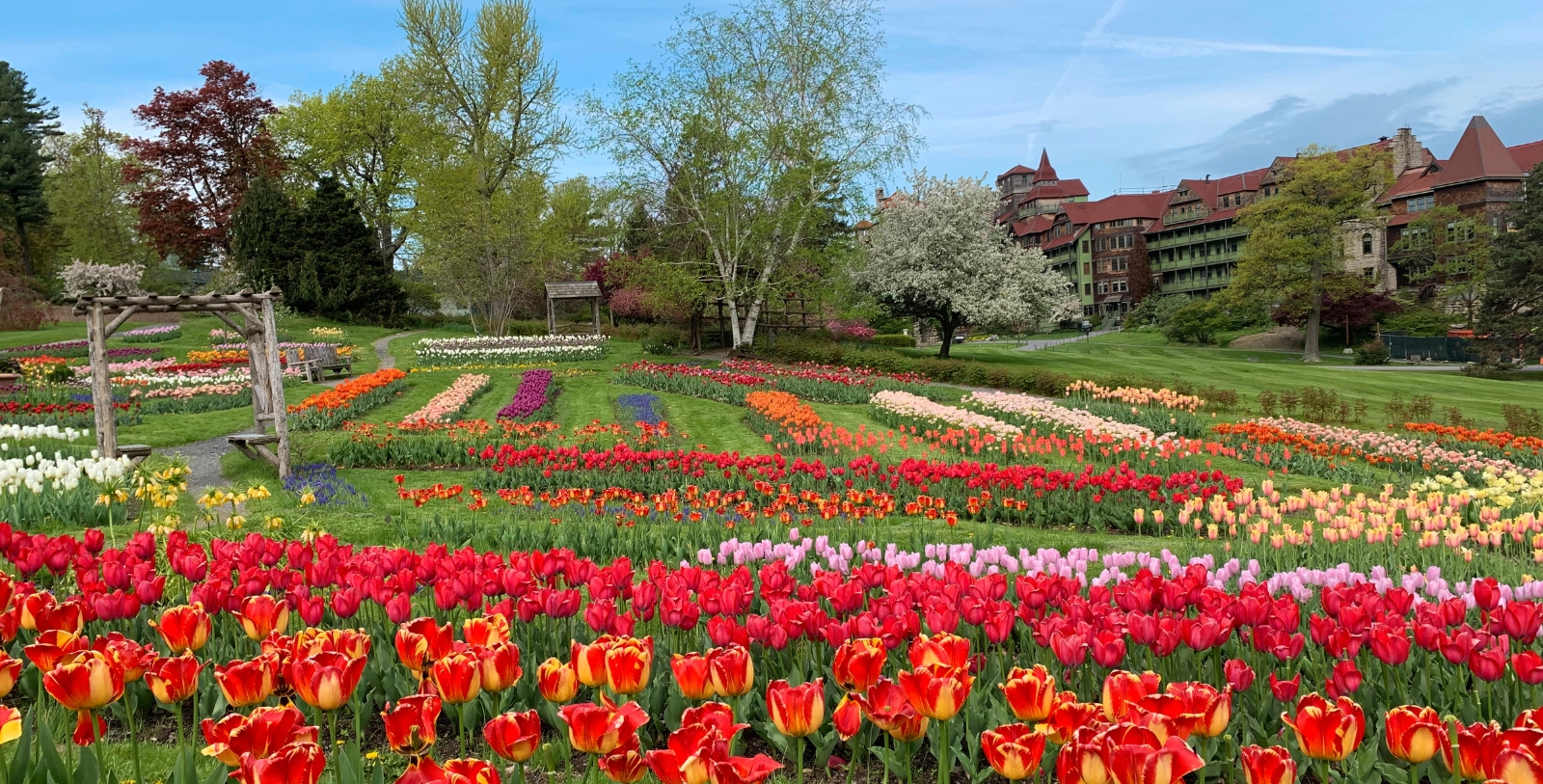
At Mohonk Mountain House in New Paltz, New York, the Victorian Show Garden offers a timeless expression of beauty, wellness, and harmony with nature. This is a legacy passed down to generations of the resort’s stewards, as well as its guests, by founder Albert Smiley, who designed the first gardens here in the 1880s. Set against sweeping lawns, stately trees, and dramatic rocky cliffs, the gardens create a graceful transition from cultivated elegance to the surrounding woodlands. Spanning approximately 5 acres, the gardens include a celebrated annual Victorian Show Garden of 72 themed garden beds that changes each year, a historic rose garden, perennial borders, and seasonal displays, such as the spring Tulip Festival featuring more than 30,000 tulips. Dotted with rustic summerhouses and benches, the gardens invite guests to linger, reflect, and take in expansive views, or attend guided tours, garden talks, and signature events like the spring Tulip Festival and August’s weeklong Garden Holiday. Designed to draw the eye from vibrant flowerbeds toward the forests beyond, Mohonk Mountain House’s gardens embody the resort’s mission of renewal for the body, mind, and spirit through beauty, craftsmanship, and a profound connection to the natural world. Overnight guests and visitors alike are encouraged to explore the grounds. The resort’s beautiful greenhouse, near the gardens, offers plants and gifts that are available for purchase. Guided tours through the gardens are offered at special events throughout the year. Designated a National Historic Landmark by the U.S. Secretary of the Interior, Mohonk Mountain House opened to guests in 1869 and was inducted into Historic Hotels of America in 1991. |
Mackinac Island, Michigan
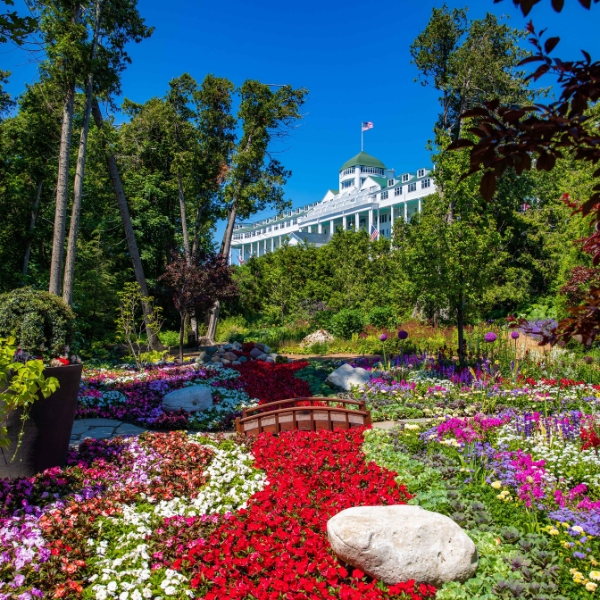 |
Tucked within a cedar forest just below the celebrated Grand Hotel, the Secret Garden is a breathtaking seasonal destination that has become one of Mackinac Island, Michigan’s most renowned floral experiences. Reimagined in 2015 from a former composting area, winding paths lead guests to dramatic “rivers” of flowers inspired by the movement of water, framed by sweeping views of the hotel above. Each spring, more than 50,000 grape hyacinths and 30,000 tulips create a vivid ocean of color, transitioning in summer to flowing displays of impatiens and other annuals layered with tropical flowers, perennials, and ornamental trees. Guests are invited to wander at their leisure, cross a charming wooden bridge that has become a favorite proposal spot, and discover hidden artistic details along the way. Alive with pollinators and constant reinvention, the Secret Garden offers an ever-changing landscape that blends Grand Hotel’s historic elegance with inspired horticultural creativity, and invites guests to return to see something new, year after year. Designated a National Historic Landmark by the U.S. Secretary of the Interior, Grand Hotel dates to 1887 and was inducted into Historic Hotels of America in 2001. |
San Francisco, California
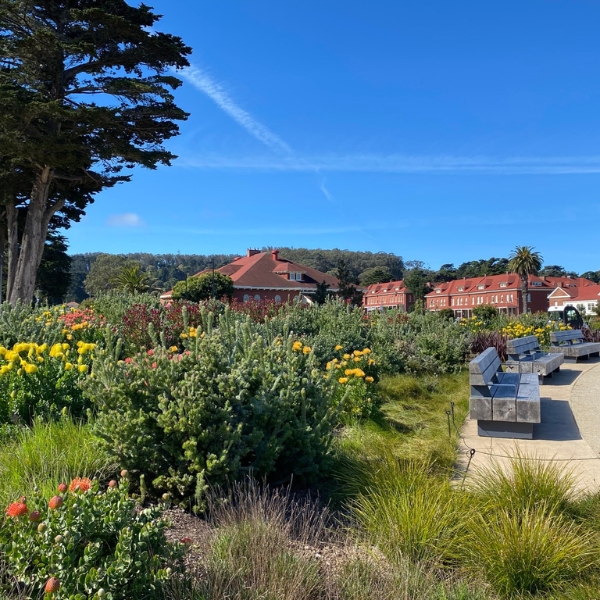 |
Atop the Presidio Parkway tunnels, the gardens of The Lodge at the Presidio combine ecological design and history with stunning vistas. Spanning approximately 14 acres, the landscape connects the historic Main Post of the Presidio of San Francisco to the San Francisco Bay through immersive pathways and panoramic overlooks of the Golden Gate Bridge. Throughout, there are more than 200,000 plants of 200 different species, with roughly half being native to the Presidio itself and grown locally in the Presidio Nursery. These native species—"living heirlooms"—include coast live oak, California buckeye, toyon, and Douglas iris. In addition to native flora, the gardens incorporate a curated selection of drought-tolerant and climate-resilient species from similar Mediterranean-like environments around the world. As for the gardens’ landscape design, it varies. Throughout the 14 acres, the gardens transition from naturalistic landscapes to more ornamental plantings that complement the historic Main Post, reflecting the layered history of the Presidio. Rooted in sustainability and stewardship, the gardens invite guests to explore a living landscape that celebrates both the Presidio’s natural heritage and its evolution as one of the nation’s most significant historic settings. The Lodge at the Presidio is a beautiful boutique hotel located in the former Montgomery Street Barracks, dates to 1894 and was inducted into Historic Hotels of America in 2018. |
Warrenton, Virginia
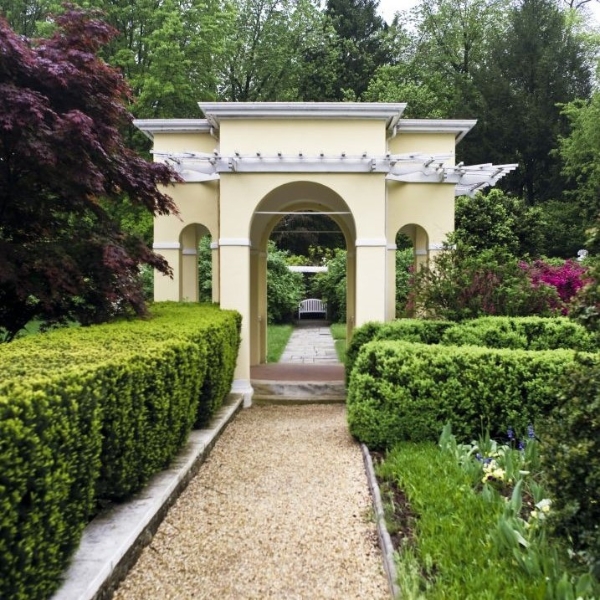 |
At the Airlie hotel and countryside retreat, established in 1899 in Warrenton, Virginia, the formal gardens are over 120 years old, and have remained unchanged since their initial plantings. Inducted into Historic Hotels of America in 2015, Airlie was the recipient of the Historic Hotels of America Sustainability Champion for the 2021 Historic Hotels of America Annual Awards of Excellence. This award is presented to a hotel that best implements and practices innovative green initiatives and programs. In addition to rows of luscious boxwood hedges, original fixtures at the hotel include an Italian bird bath basin, birdhouse, and sundial. Located in a secluded corner of Airlie's front lawn is the Peterson Butterfly Garden, featuring 46 varieties of butterfly-attracting plants native to the region. It also serves as a base for the annual butterfly count, a conservation program of The Clifton Institute in association with the North American Butterfly Association. In addition to these two gardens, the Organic Garden has been producing vegetables, flowers, and herbs in a 4-acre organic plot for 27 years. The Organic Garden, with its rows of fragrant herbs, provided the best possible ingredients for the hotel’s kitchens long before the phrase “farm-to-table” became popular.. |
Castle Hill Resort and Spa (1905)
Cavendish, Vermont
Cavendish, Vermont
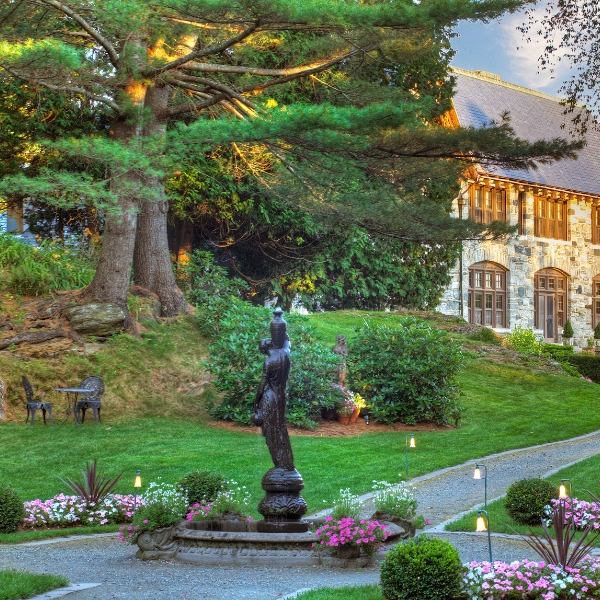 |
Castle Hill Resort & Spa in Cavendish, Vermont, is surrounded by beautiful historic gardens and the majestic pine forests of the Green Mountains. Inducted into Historic Hotels of America in 2007, this storybook retreat traces its origins to 1905, when banker and future Vermont Governor, Allen Miller Fletcher, commissioned European craftsmen and renowned landscape architect Frederick Law Olmsted Jr. to create his grand English Cotswold–style estate and grounds. Today, guests are first greeted by those same beautiful gardens, preserved and maintained for over a century. Visitors are encouraged to explore the grounds at their leisure, enjoying quiet walks through the landscaped areas, shaded lawns, and scenic overlooks. The gardens contribute to the resort’s reputation as one of Vermont’s most romantic and timeless destinations, enhancing the overall sense of escape and connection to nature. Famous as a wedding venue, guests at Castle Hill Resort & Spa will be enchanted by how the English Cotswold-style architecture complements its bucolic surrounds. |
San Francisco, California
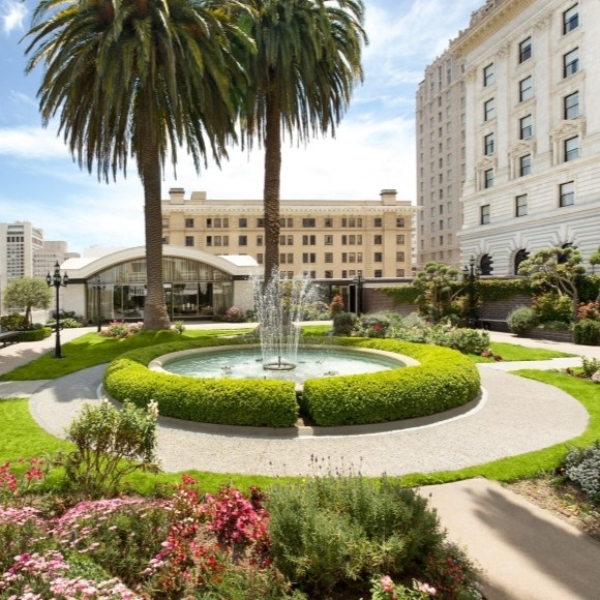 |
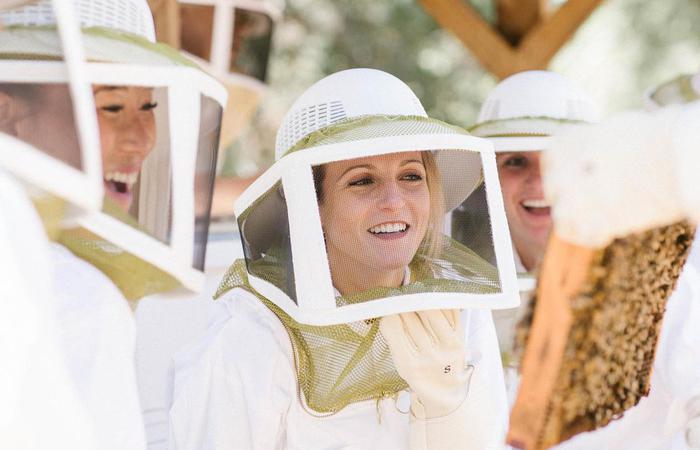
The rooftop gardens at the historic Fairmont San Francisco are an oasis in the heart of Nob Hill. Busy bees, edible herb planters, citrus trees, and a breathtaking view can all be found in this hidden gem of a rooftop garden, which has been part of the iconic hotel since it opened nearly 120 years ago, and was expanded in recent decades. The public inner garden, surrounded by a sitting area, is a manicured lawn with flowerbeds. The entire yard sits under the shade of three 30-foot-tall date palm trees. The ring-shaped fountain in the middle erupts at intervals and is surrounded by meticulously trimmed hedges. The rooftop garden is also home to the hotel’s apiaries and an edible garden, which grows citrus trees and classic Mediterranean herbs in dozens of raised beds that are used by the hotel’s culinary team. Honey from the hives, which were installed by Marshall’s Farm in 2010, is used at Afternoon Tea at the hotel, served alongside heavy cream and mixed in scones. Although accessible only from inside the hotel, the rooftop garden is open to the public. The rooftop gardens have appeared in several movies and have also been the backdrop for countless marriage proposals. Fairmont San Francisco dates to 1907 and was inducted into Historic Hotels of America in 2001. |
St. Paul, Minnesota
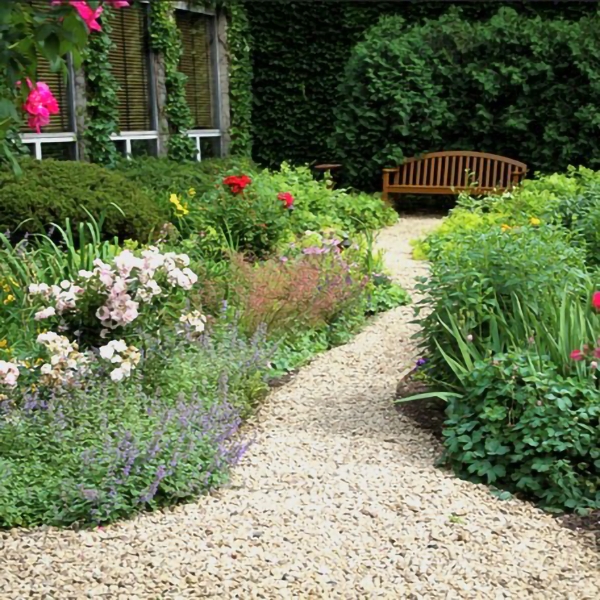 |
The Saint Paul Hotel’s English garden is an oasis of year-round natural beauty. Established in 1910 and inducted into Historic Hotels of America in 1991, the hotel is a landmark in downtown St. Paul’s cultural corridor. It’s now-famous English garden was installed in 1994 and covers 6,500 sq ft, with its charm extending upward and outward through nearly 30 window boxes placed around the hotel grounds. Diners in The St. Paul Grill enjoy panoramic views of the hotel’s English garden, complete with vines that drape the walls of the building. With the local ecosystem and environment in mind, the hotel incorporates more pollinator-friendly native flowers and limits the use of chemicals. The hotel opts for natural or organic products and encourages natural predators to control unwanted bugs. Head Gardener Robyn Wefel approaches her work as an artist, changing the garden landscape several times a year with different blooms and greenery. Wefel, a recipient of The Garden Club of America's Club Horticulture Award, celebrates 15 years at the hotel this year. Alongside rose bushes and fragrant herbs, Wefel tends to bright annuals and perennials each year. In summer 2026, guests can expect to see red, white, and blue flowers in honor of America’s 250th anniversary. The Saint Paul Hotel offers garden tours for its Afternoon Tea guests, Master Gardener talks for gardeners, and it plays an important role as a destination for weddings, engagements, and photo shoots. |
Colorado Springs, Colorado
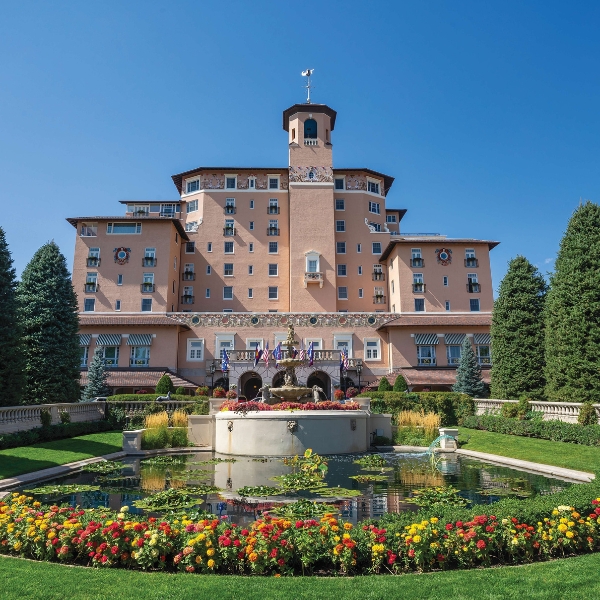 |
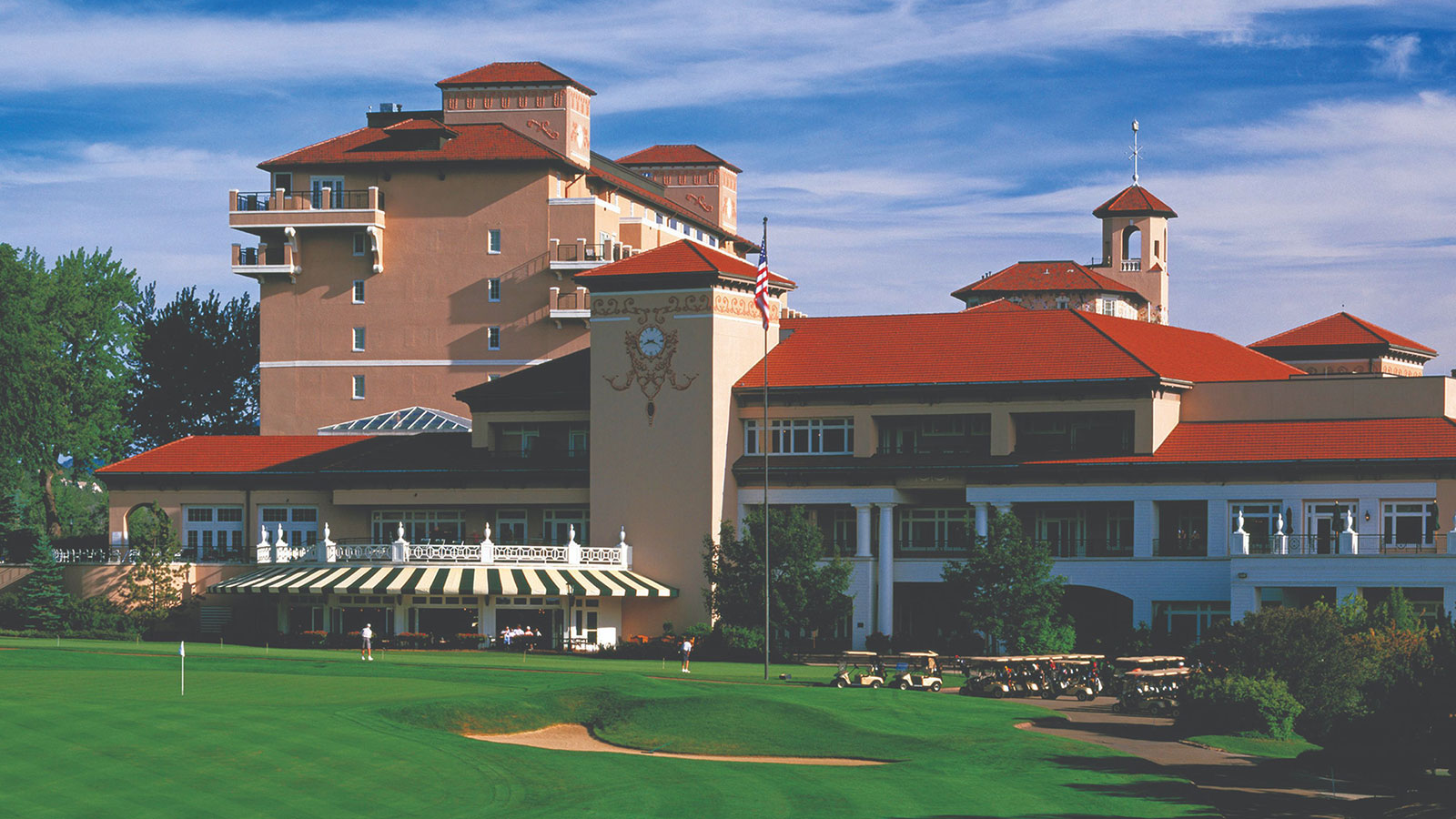
Discover the gardens of the Grand Dame of the Rockies, where landscaped flowers, trees, shrubbery, and kitchen plantings cover 35 acres at over 6,000 feet above sea level at this luxury resort. The Olmsted Brothers, John Charles Olmsted and Fredrick Law Olmstead Jr., were the original designers of the resort grounds. As guests drive up the entrance to the main hotel, they view a formal garden with hedged boxwood and junipers and a water feature, with water lilies blooming on top of the water, surrounding the 10-acre lake. In the springtime, over 47,000 daffodils and tulips bloom, and 25,000 pansies are planted in flowerbeds and baskets. In the summer, there are over 48,000 bedding annuals planted on the grounds, and 17,000 planted in hanging pots and baskets around the resort. In addition to the flowers throughout the resort, Broadmoor Farms grows organic vegetables, herbs, edible flowers, and fruits for the award-winning Penrose Room and other restaurants. Honey is produced on-site by The Broadmoor bees. Notably, the 19th-century writer and activist Helen Hunt Jackson drew inspiration from nature on land that is now part of the resort: Seven Falls in South Cheyenne Cañon. While not a formal garden, wildflowers flank the one-mile walk to the falls in the summer. Alongside her more overtly political works, Jackson wrote A Calendar of Sonnets (1891), which described flowers throughout a year, and Bits of Travel at Home (1878) that included “The Procession of Flowers in Colorado.” Established as a premier mountain resort in 1918, The Broadmoor was inducted as a Charter Member of Historic Hotels of America in 1989. |
Huntington, New York
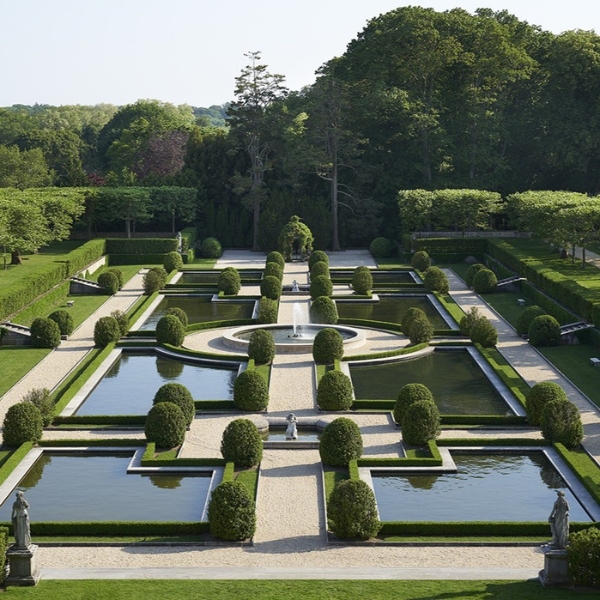 |
The Formal Gardens at the historic OHEKA CASTLE in Huntington, New York, were originally designed by the renowned Olmsted Brothers in the 1920s, and were restored in recent decades to their original grandeur. Today, the Formal Gardens offer a breathtaking vision. Spanning nearly three acres, the sunken gardens unfold with nine elegant reflecting pools, three flowing fountains, classical statues, curved stone benches, balustrades, and an ivy-draped gazebo, all framed by manicured hedges and more than 2,500 boxwoods. The gardens are visible from the castle’s Library, Addie Kahn Room, Charlie Chaplin Room, OHK Bar & Restaurant, and the Carnegie Suite. OHEKA CASTLE offers guided tours of the estate and gardens with professional docents. Additionally, there are photos of the prerestoration of the Formal Gardens hanging just inside the estate. Guests of the hotel and OHK Bar & Restaurant are free to meander through the Formal Gardens, unless they are closed for a private event. Meticulously maintained by a dedicated landscaping team, these gardens have become an enduring backdrop for celebrated films, television productions, and cultural moments, embodying OHEKA’s legacy of elegance, craftsmanship, and cinematic romance. Established in 1919 as a private home, OHEKA CASTLE was inducted into Historic Hotels of America in 2004. |
Death Valley, California
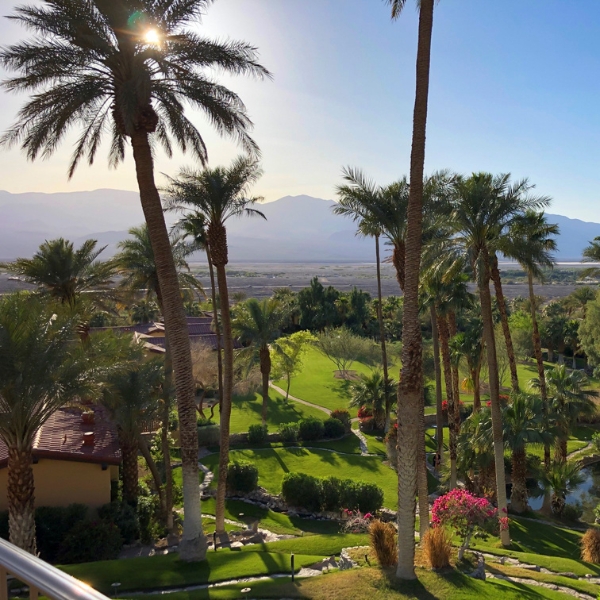 |
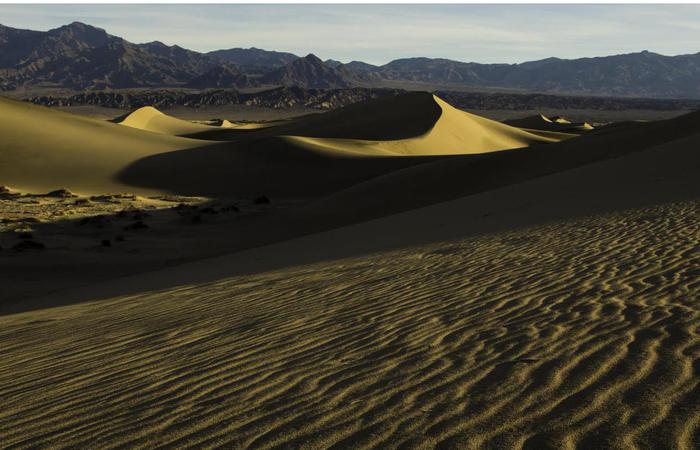
Located within the famously inhospitable Death Valley National Park–3.4 million acres of desert–there is an oasis that is full of life. This oasis is no mirage, but an incredibly special place where one million gallons of fresh, glacial water gurgles from the ground every day and makes The Inn at Death Valley’s Xanadu Gardens flourish. The first formal gardens appeared in 1934, when the inn’s gardens were landscaped with grass and flowers. Thanks to the greenery, streams, and pools, the landscaping added a magnificently lush quality to the grounds. In 2017, the gardens were expanded with additional date palm trees, colorful landscaping, and ponds, and renamed the Xanadu Gardens. Since water is precious in the desert, the historic resort ensures that every drop of spring water is carefully and purposefully managed. Any extra water is released so that it replenishes the aquifer beneath the valley floor, keeping the gardens lush and the resort conservation friendly. Before Europeans colonized the region, the ancestors of the Timbisha Shoshone Tribe drew water from the springs at the oasis. Today, visitors benefit from these life-giving springs. The Inn at Death Valley dates to1927 and was inducted into Historic Hotels of America in 1999. |
Hawley, Pennsylvania
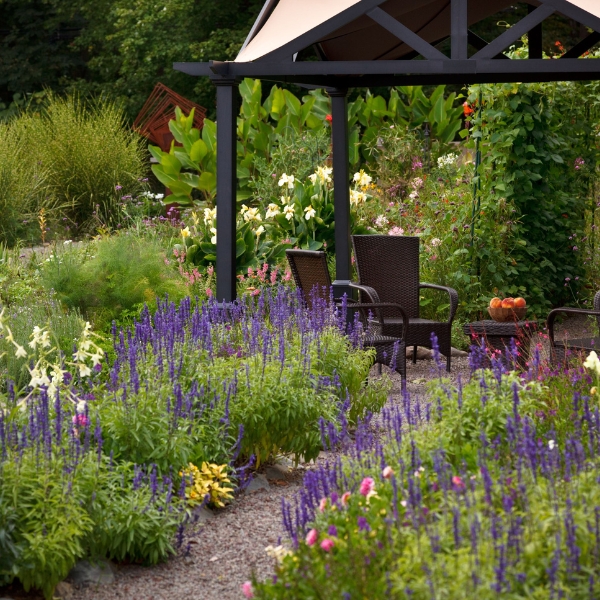 |
Tucked behind The Settlers Inn at Bingham Park, an Arts and Crafts-style hotel that dates to 1927, visitors can encounter an intimate cottage garden rich in history, family legacy, and horticultural excellence. First planted in 1981 on the site of a former in-ground pool, the garden was inspired by, and named for, Muriel Genzlinger, the mother of inn co-founder Grant Genzlinger. Grant had collaborated with his mother on the original design, drawing from her award-winning experience as a gardener and flower show judge in Philadelphia and Maine. Now maintained and expanded by gardeners Judy Mauer and Thomas McGinnis, Muriel’s Garden includes native trees and shrubs, flowering perennials such as mountain laurel, lavender, irises, black-eyed Susans, and hydrangeas, as well as berry-producing and fruit-producing trees that support birds and butterflies. A Chef’s Demonstration Garden, added in 2019, reinforces the inn’s long-standing farm-to-table philosophy, with organic produce as well as more than 20 varieties of edible flowers used in the restaurant. Visitors are welcome to stroll the gardens year-round, enjoy weekly guided tours in warmer months, and attend the annual May Perennial Exchange. There are also garden paths, shaded benches, patio seating, and a gazebo overlooking the Lackawaxen River, where guests can stop and enjoy seasonal blooms from late spring to early fall. The Settlers Inn at Bingham Park in Hawley, Pennsylvania, dates to 1927 and was inducted into Historic Hotels of America in 2010. |
Tucson, Arizona
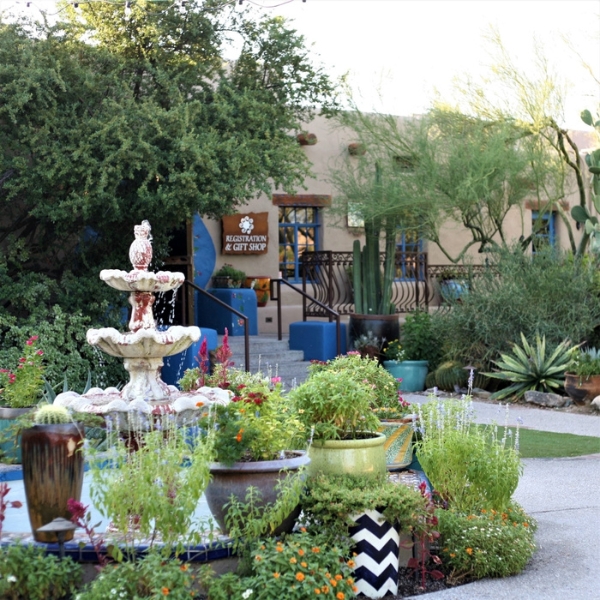 |
Spanning six acres, the gardens at Hacienda Del Sol Guest Ranch Resort envelop the entire resort in a living celebration of the Sonoran Desert, showcasing native desert flowers and cacti, desert-adapted shrubs and trees, and integrated culinary gardens. Established in 1929, the resort was originally a preparatory school for girls and featured a small garden for students to enjoy. In fact, many of the original cacti and trees observed in historical photos from its days as a school can be seen at the ranch today, albeit taller and fuller. Many plantings are clearly labeled, and guests are invited to explore the grounds at their own pace or join a guided interpretive nature walk on Saturday mornings. A chef’s garden, established in 2010 with the guidance of Dr. Andrew Weil, reflects a commitment to organic practices. It is complemented by a bartender’s herb garden and citrus trees used by the culinary team, with surplus fruit shared for guests to enjoy. Designed with xeriscaping principles in mind, the gardens feature plants chosen for their exceptional drought and heat tolerance, creating a vibrant, water-conscious landscape that supports butterflies, hummingbirds, songbirds, and local wildlife, while honoring the beauty and ecology of the desert environment. Hacienda Del Sol Guest Ranch Resort was inducted into Historic Hotels of America in 2009. |
Washington, District of Columbia
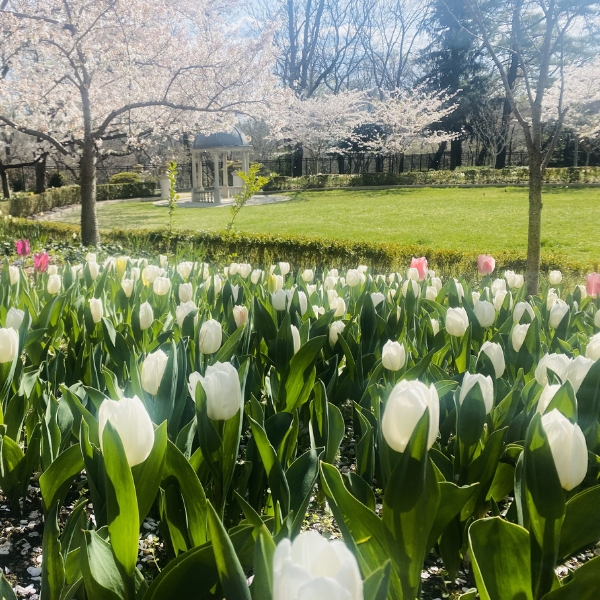 |
The historic Omni Shoreham Hotel in Washington, D.C., is located in a prime location for travelers looking for urban gardens. Established in 1930, the hotel is close to the Washington National Cathedral and its gardens, Rock Creek Park, and the Smithsonian's National Zoo, the latter two of which were originally laid out by prominent 19th-century landscape architect Frederick Law Olmsted and his family firm. The hotel itself offers visitors 13 acres of gardens to enjoy, including 3 acres of back gardens that are available as a private event space. The back gardens were developed and planted in 1999. Previously, this area was a tennis court. The back gardens and front gardens together boast 40,000 tulips every spring. When the gardeners uproot the tulips to prepare for the fall planting season, the bulbs are offered to Omni Select Guest members at the hotel and Omni associates. The hotel also cares for a host of cherry trees throughout the grounds. Visitors are invited to walk around the grounds and can reserve the back gardens for large group events, including weddings and live shows. The Omni Shoreham Hotel was inducted into Historic Hotels of America in 2005. |
Winston-Salem, North Carolina
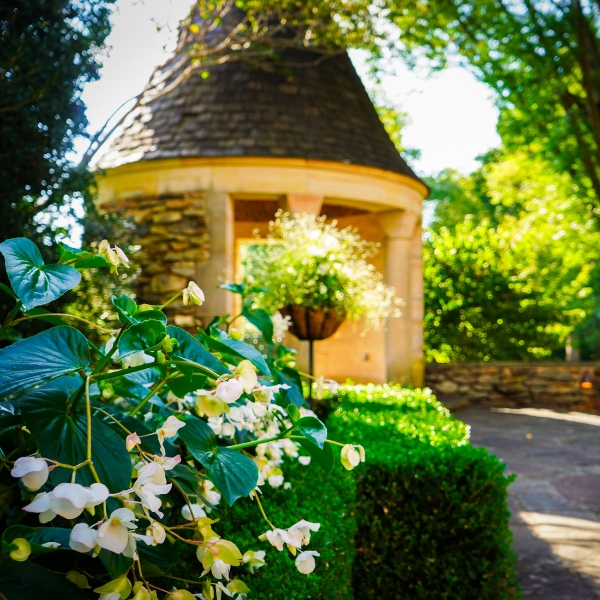 |
At The Graylyn Estate, the historic White Garden has been a defining feature of the estate since the grand home was established in 1932, offering a serene landscape just beyond the Rear Terrace, beside the former indoor pool. Designed by renowned landscape architect Thomas Warren Sears, the 2,400-square-foot garden today blooms exclusively in white in memory of Gordon Gray. Gray, the son of the estate’s original owners, helped preserve The Graylyn Estate for future generations by donating it to Wake Forest University. The garden was restored and dedicated to him in 1984. Today, seasonal highlights in the White Garden include thousands of white tulips and allium in spring, and white coneflowers and begonias in summer. Anchored by a stone gazebo that overlooks a charming pond and bridge, the White Garden is the estate’s signature setting for weddings and gatherings. It remains open to guests for leisurely strolls when not reserved for private events. Complemented by the Rose Garden and a chef’s garden supplying herbs for the estate’s culinary program, The Graylyn Estate’s gardens are thoughtfully maintained to support biodiversity, and offer an elegant blend of history and sensory experiences. The Graylyn Estate was inducted into Historic Hotels of America in 2016. |
Hershey, Pennsylvania
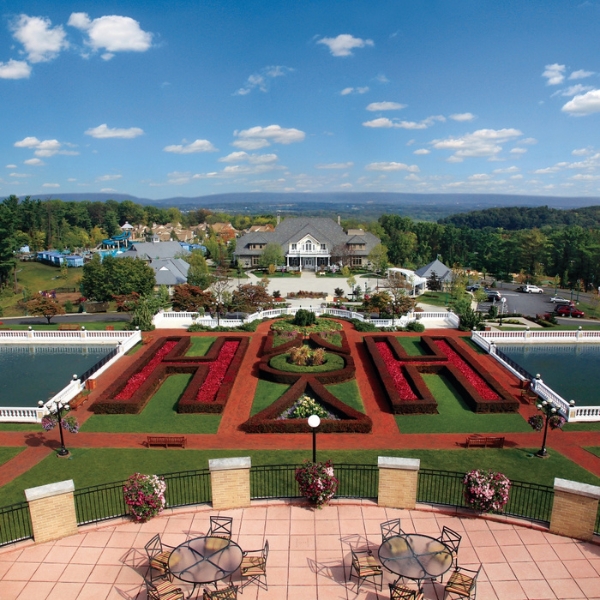 |
The Hotel Hershey® opened in 1933 to share a hilltop with the Highland Park gardens, now known as the Formal Gardens. The Highland Park flowerbeds that hold The Hotel Hershey®’s Formal Gardens today were laid out in 1915, following construction of the Highland Park reservoirs. On April 29, 1915, two concrete water reservoirs with a capacity of 1 million gallons were completed on Pat’s Hill to serve the growing Hershey, Pennsylvania community. The grounds were extensively landscaped with flowerbeds and hundreds of rose bushes cascading down the slopes of Highland Park. This area was a popular picnic spot at the time. Harry Erdman, who began his career with Hershey Estates as head of the Hershey Nursery and Greenhouses in 1928, oversaw the landscaping of The Hotel Hershey®’s Formal Gardens in 1933. After nearly 60 years of growth and use, the garden’s gazebos, walkways, and fountains were restored in the early 1990s. Today, guests can find tulips, hyacinths, daffodils, and pansies from mid-April to early May; summer annuals from July to August; flowering trees from April to May, and flowering shrubs from April to June. Nearby, the Hershey Gardens are a 23-acre botanical display garden that features 11 themed gardens, including a historic rose garden with 3,500 rose bushes representing 115 varieties. In addition to the themed gardens, there is also a seasonal display garden with over 20,000 tulips in the spring, colorful annuals in mid-summer, and vibrant chrysanthemums in the fall. Guests of the hotel receive complimentary tickets to the Hershey Gardens. The Hotel Hershey® was inducted into Historic Hotels of America in 1991. |
Paradise Valley, Arizona
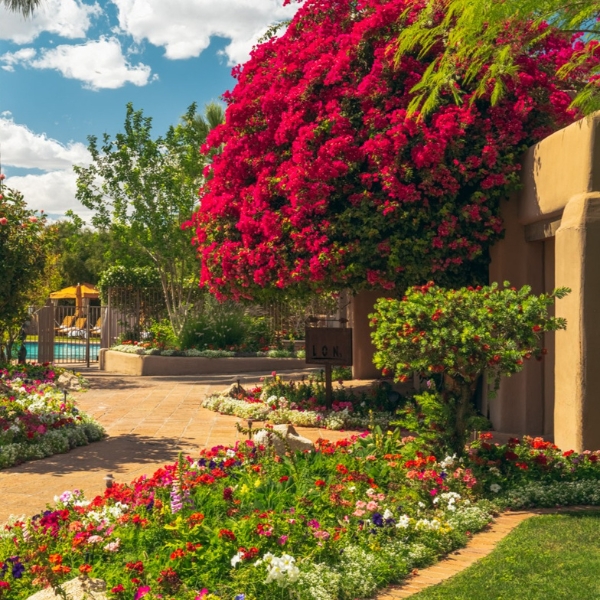 |
Cultivated across six lush acres in Paradise Valley, Arizona, the gardens at The Hermosa Inn are a natural extension of the desert landscape, from vibrant flowerbeds that welcome guests upon arrival, to bloom-lined pathways that lead past casitas. Designed to be experienced up close, the grounds feature abundant seasonal color and textures: cascading bougainvillea, sculptural agaves, and over 40 cacti representing upwards of 10 varieties, all thriving within a naturally sheltered microclimate. Among the garden’s most extraordinary elements is a 125-year-old champion Lysiloma tree, the largest of its kind in Arizona, alongside a mature mimosa that anchors the restaurant’s courtyard with a sense of heritage and permanence. A dedicated herb garden supplies rosemary, thyme, mint, and basil for garden-to-glass cocktails at LON’s, the inn’s signature historic bar, allowing guests to literally taste the landscape. Closely maintained by an expert in-house gardening team led by certified Master Gardener Miles Riggs, the gardens reflect both the artistic legacy of founder Lon Megargee and The Hermosa Inn’s enduring reputation for desert beauty and seclusion. Originally established as an artist’s residence in 1935 before evolving into a guesthouse and inn, The Hermosa Inn was inducted into Historic Hotels of America in 2011. |
CWakulla Springs, Florida
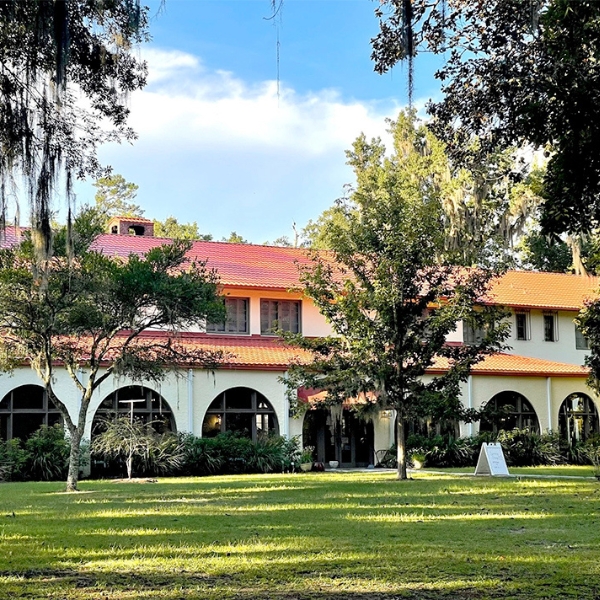 |
The Lodge at Wakulla Springs in Florida’s Edward Ball Wakulla Springs State Park combines natural beauty, historical depth, and ecological importance, making it a truly special destination. The garden at the lodge, a historic hotel established in 1937, was designed to complement the surrounding wilderness, creating a haven for wildlife and a serene setting for exploration. It is landscaped with native plants, including magnolias, live oaks, palmettos, camellias, and azaleas. Shaded walking paths and interpretive elements invite guests to engage with the landscape, while sweeping views of one of the world’s largest and deepest freshwater springs connect the garden to centuries of natural and human history. The spring itself supports a diverse ecosystem, home to manatees, alligators, and many bird species, making it ideal for wildlife observation. The garden surrounding the hotel was part of the vision of industrialist Edward Ball, who championed preservation and conservation. When Ball set out to create a leisure destination at Wakulla Springs, he envisioned a hotel that would make minimal disruptions to the environment and would showcase the natural beauty of Wakulla Springs. Today, the garden and grounds continue to reflect Ball's legacy by maintaining a lush, scenic environment. The Lodge at Wakulla Springs was inducted into Historic Hotels of America in 2016. |
Stowe, Vermont
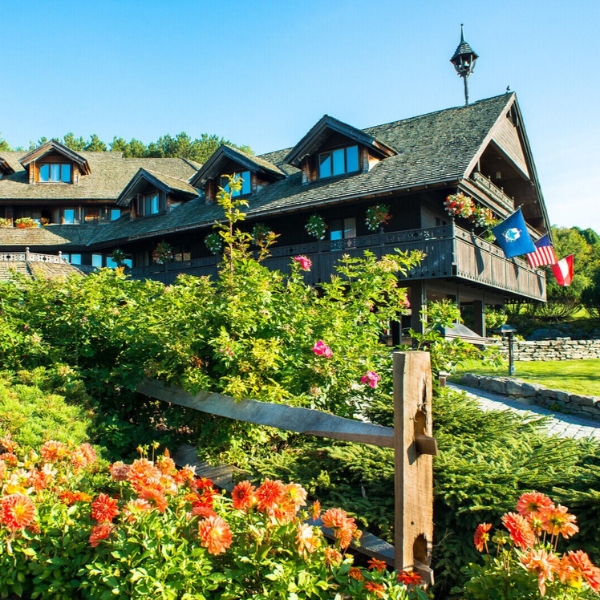 |
In the Green Mountains of Vermont, the gardens at the von Trapp Family Lodge and Resort offer a richly personal expression of history and horticulture. Designed by Maria von Trapp herself when the family founded the lodge in 1942 after escaping wartime Europe, the gardens that surround the lodge with winding paths, alpine plantings, and flower-filled terraces, reflect Austrian traditions carried across generations. At the heart of the landscape is a generous cutting garden behind the greenhouse, where peonies, pollinator-friendly blooms, annuals, and perennials supply fresh floral arrangements for the lodge. Guests are invited to wander through the paths, linger by the frog pond, and relax in the shade of the pergola or gazebo. Nearby, a 12,000-square-foot vegetable garden provides produce, herbs, and microgreens for the kitchens, reinforcing the resort’s deep connection to the land and seasonal living. The gardens also hold profound meaning as the setting of the von Trapp Family cemetery, where flowerbeds honor a European tradition of remembrance and storytelling. With edelweiss thriving in the mountain air, and Alpine-inspired plantings throughout, this magnificent garden remains a living tribute to Maria von Trapp’s vision, and the family’s legacy that the lodge shares with guests to this day. von Trapp Family Lodge and Resort was inducted into Historic Hotels of America in 2024. |
Phoenix, Arizona
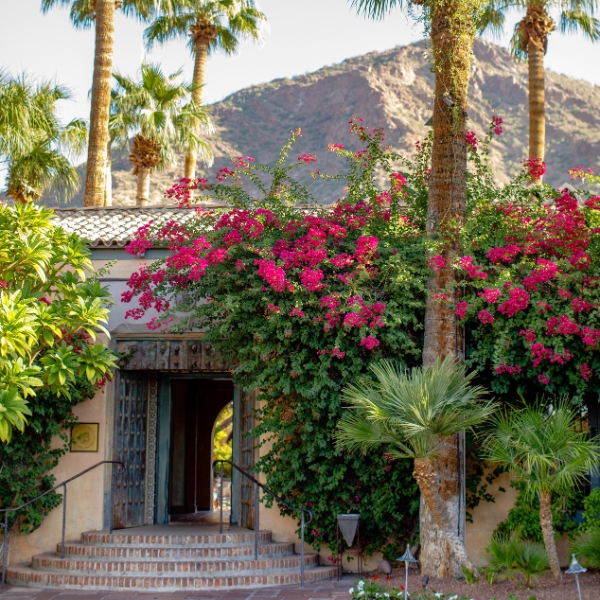 |
Set within a serene desert oasis northeast of Phoenix, Arizona, and named for the regal, towering trees lining each side of the entryway, the historic Royal Palms Resort and Spa features whimsical stone walkways, manicured courtyards, several hidden gardens, and bubbling fountains. Once a thriving citrus orchard nourished by early irrigation canals, the landscape has evolved to support a destination resort and to charm its visitors. Today, there is an eclectic tapestry of flora, from plumeria, oak, and ficus trees, to colorful hibiscus, sage, and flowering Tecoma varieties, accented by desert plants, cacti, and seasonal blooms. Quiet retreats, such as the Arcadia Garden, centered around a circular fountain with shaded seating; and Florence’s Alcove, featuring a Little Free Library, cushioned benches, and birdsong; provide secluded spaces for guests to pause throughout the day. Traditional medicinal plantings like rosemary and aloe add another sensory layer, enhancing the feeling of renewal and calm. Together, these gardens—many with views of Camelback Mountain—complement the resort’s heritage, character, and sense of place. Royal Palms Resort and Spa dates to 1948 and was inducted into Historic Hotels of America in 2000. |
Fajardo, Puerto Rico
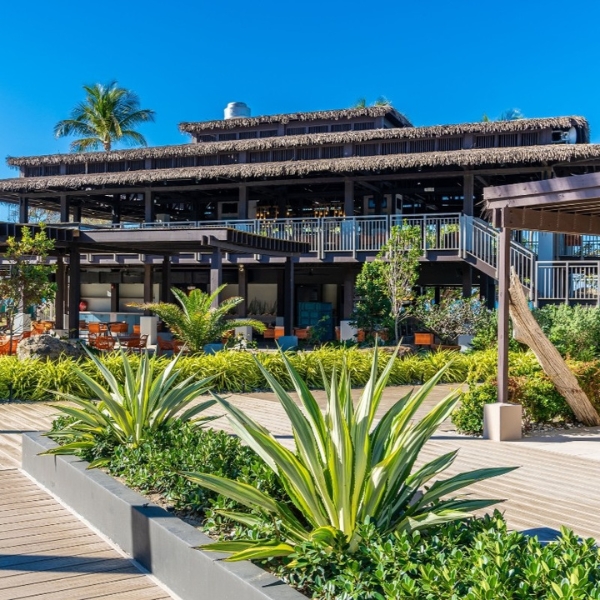 |
The gardens at Puerto Rico’s historic Midcentury Modern-style El Conquistador Resort bring lush tropical beauty into every corner of the guest experience. Set against sweeping ocean views on Puerto Rico’s northeastern coast, and woven throughout Las Vistas, Las Casitas Village, and the resort’s golf course, these gardens showcase native flora, including flamboyán and tamarind trees, along with papaya plants and fresh herbs that supply the resort’s kitchens. Guests can wander along winding pathways to explore fragrant, colorful gardens designed for relaxation and discovery, while guided tours and family-friendly activities provide an in-depth look at the plants and their importance. Carefully preserved over decades and enhanced with new plantings, the gardens balance the brilliance of the surrounding sea with the warmth and vitality of Puerto Rico’s natural landscape. Long a backdrop for weddings, celebrations, and unforgettable moments, the resort’s magnificent gardens remain an enduring symbol of paradise and hospitality. El Conquistador Resort dates to 1962 and was inducted into Historic Hotels of America in 2024. |
Rancho Bernardo Inn (1963)
San Diego, California
San Diego, California
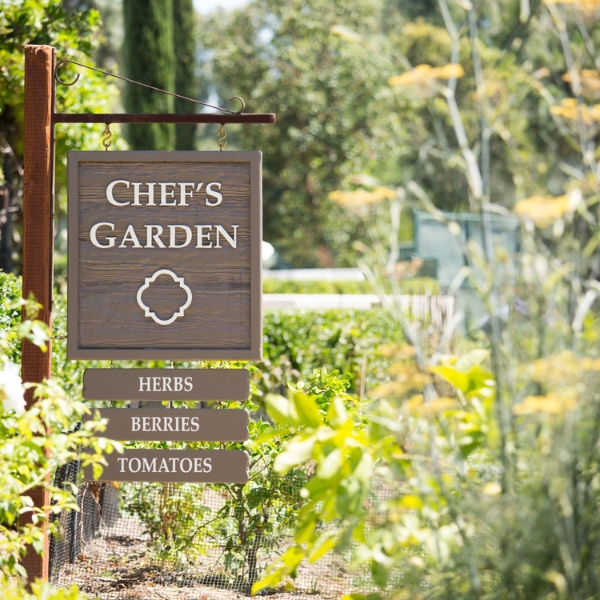 |
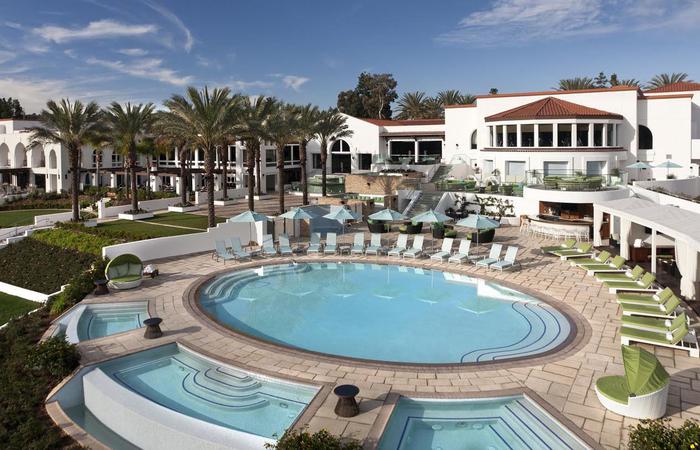
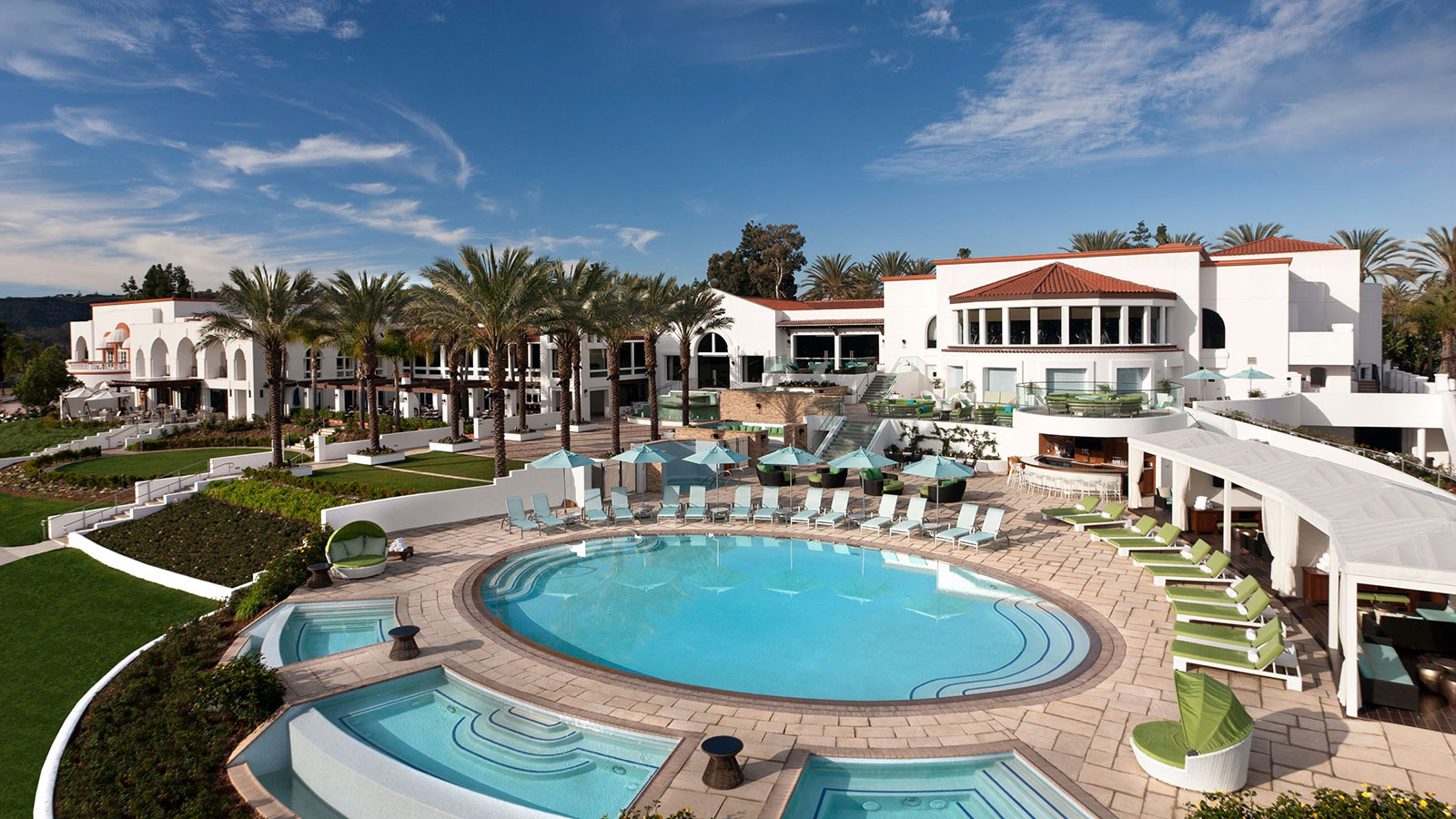
At Rancho Bernardo Inn in San Diego, California, the Chef’s Garden is a living expression of the resort’s commitment to sustainability and exceptional cuisine. Set near the tranquil Aragon Lawn and spa pool, the garden flourishes year-round with organic herbs, vegetables, fruits, and edible flowers selected for their ability to thrive in the local climate and deliver peak flavor. From fragrant rosemary and basil, to tomatoes, citrus, and stone fruits, each harvest directly informs the evolving menus at AVANT, where the chef de cuisine builds dishes around what is freshly picked that day, from cocktails and sauces, to desserts and garnishes. Maintained by Culinary Garden Manager Kristofer, the garden serves as both a working cornerstone of the resort’s farm to table philosophy and as part of the guest experience. Guests can take an immersive self-guided tour through the Chef's Garden on Saturday mornings, and receive a packet of seeds to take home with them. Deeply connected to the culinary experience, as well as a beautiful setting, the Chef’s Garden stands as a memorable reflection of Rancho Bernardo Inn’s dedication to hospitality. Rancho Bernardo Inn dates to 1963 and was inducted into Historic Hotels of America in 2021. |
“Discovering, exploring, and experiencing the gardens of Historic Hotels of America should be on everyone’s bucket list,” said Lawrence Horwitz, Executive Vice President, Historic Hotels of America and Historic Hotels Worldwide. “Whether a guest wants to walk alone, take a romantic stroll with a loved one, enjoy a perfect setting for long uninterrupted conversations, or just take a restful quiet stroll, these historic gardens are truly magnificent and create wonderful long-lasting memories that guests will want to share. Congratulations to the many wonderful gardeners, groundskeepers, and landscapers for their dedication to the beautiful grounds named to The 2026 Top 25 Historic Hotels of America Most Magnificent Gardens list.”
Read more:
The 2026 Top 25 Historic Hotels of America® for a Romantic Proposal List Is Announced
The 2025 Top 25 Historic Hotels of America® Most Haunted Hotels List Is Announced
The 2025 Top 25 Historic Hotels of America® Culinary Heritage and Traditions List Is Announced
The 2025 Top 25 Historic Hotels of America® Most Historic Bars List Is Announced
The 2025 Top 25 Historic Hotels of America® Most Magnificent Art Collections List Is Announced
The 2025 Top 25 Historic Hotels of America® Best of Adaptive Reuse List Is Announced