






Receive for Free - Discover & Explore eNewsletter monthly with advance notice of special offers, packages, and insider savings from 10% - 30% off Best Available Rates at selected hotels. 
history
Discover Domus Blanc, which was once the regal home of the Blanc family, whose influence affected numerous political figures across Victorian-era Greece.
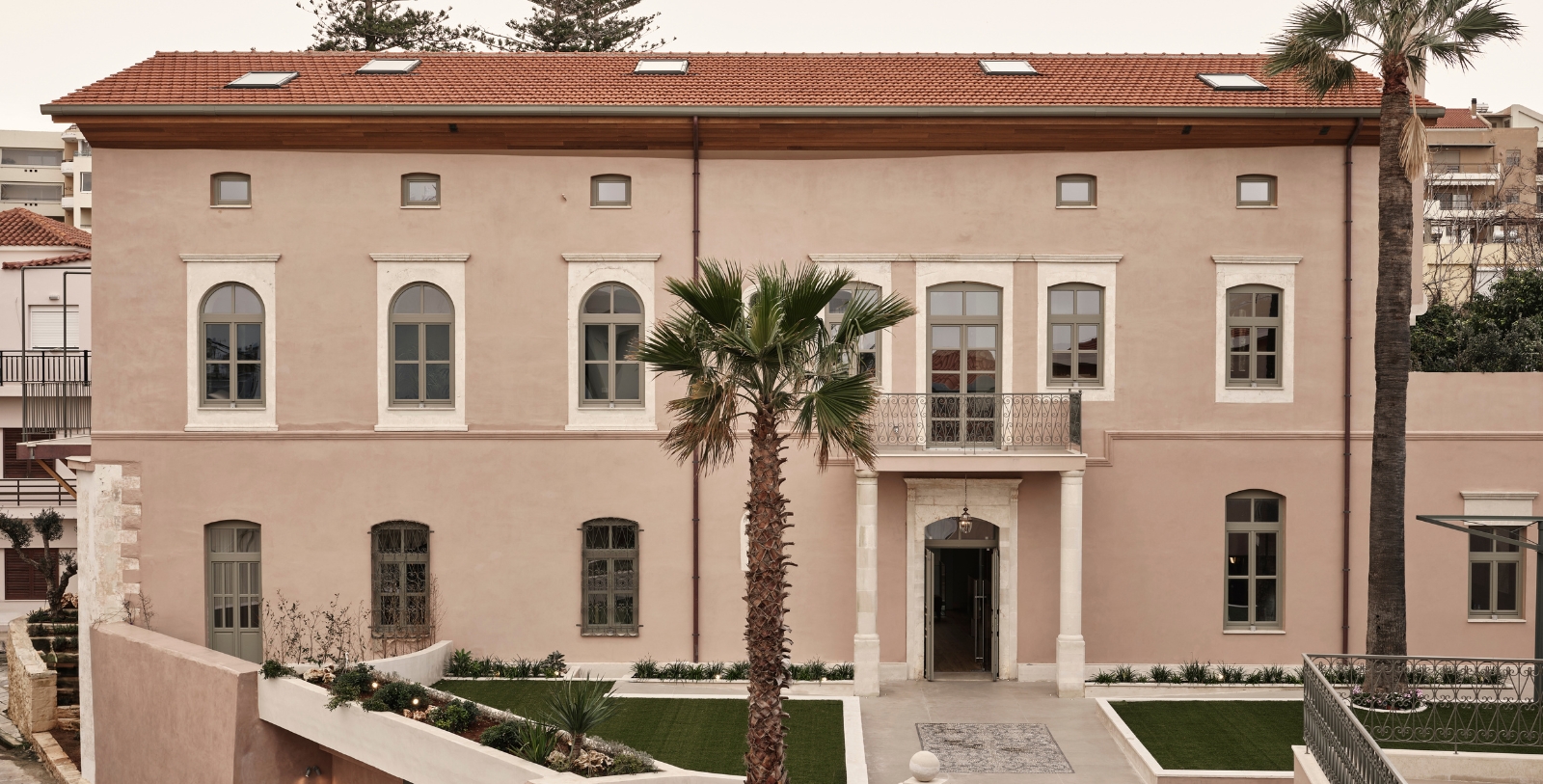
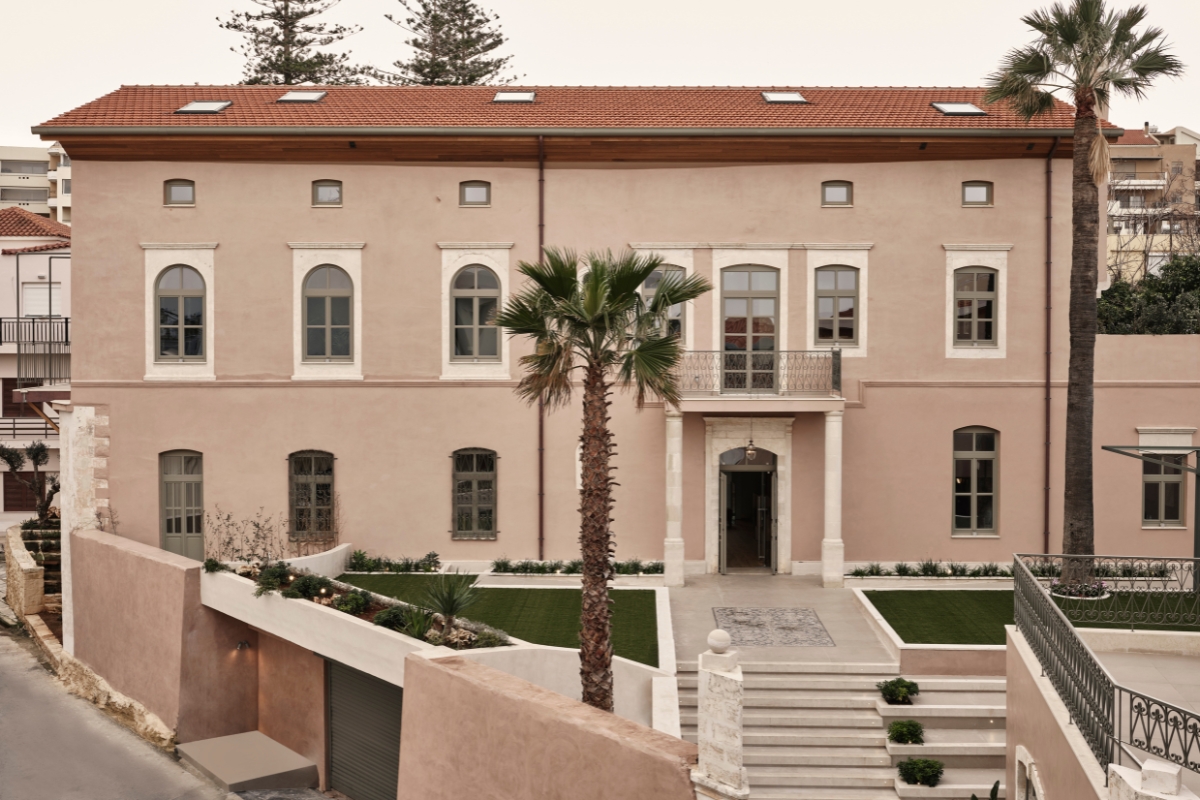
The story of Domus Blanc begins in 1870, when the gorgeous edifice that now houses the charming destination first debuted along the quiet, aristocratic streets of the city’s exclusive Halepa district. Although its creator, the French Consul Paul Blanc, built the structure to be his personal home, he also intended for it to serve as a grand gesture of love. Blanc specifically constructed the manor as part of a dowry connected to his marriage to Erasmia Ligouni, the daughter of noted Greek engineer Leonidas Ligounis. Blanc proceeded to craft a magnificent façade in neoclassical motifs that paid tribute to the area’s greater heritage. Calling the regal residence home until 1901, the Blanc family’s presence in Chania intertwined with the political and cultural currents of the era. In fact, Blanc soon became a friend (and political ally) of Eleftherios Venizelos, the influential Cretan statesman who would ascend to the office of Prime Minister of Greece. Their proximity as neighbors in Halepa fostered a companionship rooted in deeply held shared ideals. Within the walls of the Blanc residence, hospitality was not merely an obligation but a defining feature. Paul Blanc was renowned for his appreciation of gracious living, and his home reflected both his refined tastes and generous spirit.
As the 20th century dawned, the residence entered a new chapter shaped by artistic ambition. During this period, the building emerged as a center of artistic production, where the rhythm of wooden looms echoed through rooms once filled with diplomatic conversations and entertaining gatherings. More specifically, Florentine Kaloutsi, a talented painter who had studied in England, rented the Blanc home in 1912 and transformed its interior to host a vibrant workshop. She brought with her 150 looms, establishing “The Double Axe,” a weaving enterprise that rekindled historic manufacturing techniques harkening back to the ancient Minoans. Her workshop emerged as one of Europe’s earliest women-led handicraft industries, gaining recognition across Greece for the quality of its goods. (Florentine’s influence has since left a deep cultural imprint that has endured in the building’s identity, marking Domus Blanc a testament to creative resilience and female leadership).
Time inevitably altered the structure, and decades later the residence would undergo careful revitalization meant to preserve its impressive character. Through a comprehensive architectural restoration led by Hellenic Homes, the building was meticulously reimagined as a stunning boutique hotel in 2024. The restoration balanced sensitivity to heritage with the practical needs of a high-quality guest experience, incorporating energy-efficient systems, upgraded insulation, and thoughtful refinements that honored the building’s past. Respect for the structure’s heritage guided every architectural decision, which ensured that its revived appearance remained true to the spirit of the original mansion. When the mansion reopened as the “Domus Blanc” hotel, it proceeded to welcome guests into a world where historical elegance met contemporary comfort. Throughout its dozen guestrooms and suites, many of which were named after individuals connected to its past, guests saw the interplay of preserved structural elements and modern design. Fine details such as restored wood flooring, high ceilings, and exposed beams revealed the depth of care taken amid the project. Contemporary furnishings and curated décor complemented those features further, creating spaces that felt timeless and fresh. Domus Blanc is a sanctuary where centuries of stories converge. Visitors who cross its threshold today encounter a living chronicle of Chania’s cultural evolution, immersing them directly inside a history that has reached over generations.
-
About the Location +
One of the most storied cities on the island of Crete, Chania carries a history shaped by numerous civilizations whose legacies intertwine in its architecture, culture, and enduring character. The area has been inhabited since the Neolithic era, but it was during the Minoan period that Chania, then known as Kydonia, emerged as one of the island’s major centers. Archaeological evidence from the Kastelli Hill, where the Old Town sits today, reveals the presence of a prosperous Minoan settlement that thrived from roughly 3000 to 1100 BCE. Kydonia appears in Linear B tablets, indicating its role as an administrative and commercial hub, and its strategic location along Crete’s northern coast made it an active participant in regional maritime trade. Though much of its ancient grandeur remains buried beneath later layers of construction, the Minoan imprint forms the earliest foundation of Chania’s long and layered identity. Following the decline of Minoan civilization, Chania continued to evolve under successive Greek influences, particularly during the Classical and Hellenistic periods. Kydonia became a significant independent city-state, often engaging in alliances and rivalries with neighboring Cretan powers. Indeed, ancient authors such as Strabo mention Kydonia as one of the most important Cretan poleis, known for its naval strength and resourcefulness.
However, the growing power of Rome reshaped the Mediterranean political landscape. In 69 B.C., the Roman forces of Quintus Caecilius Metellus conquered Crete, bringing Kydonia and the rest of the island under Roman rule. The Roman era ushered in relative stability despite the conquest, featuring modernization in infrastructure, as well as the integration into the broader trade network of the empire. With the division of the Roman Empire though, Chania entered the Byzantine period, during which it remained an important regional center. Christianity spread throughout Crete, and Chania experienced a cycle of prosperity and disruption, particularly due to Arab raids that intensified from the seventh century onward. In 824 A.D., the island fell to Andalusian Arab forces who established the Emirate of Crete with its capital at Heraklion. While Chania itself does not figure as prominently in records of this period, it was certainly affected by the shifting political and cultural dynamics until the Byzantines reconquered Crete during the 10th century under Nikephoros Phokas. The subsequent centuries saw renewed fortification, repopulation, and religious development, with the city emerging once again as a vital center connected to greater Byzantine administrative and ecclesiastical structures.
The most transformative era for Chania began after 1204, when the Fourth Crusade led to the partitioning of Byzantine territories and Crete fell under Venetian control. The Venetians, recognizing Chania’s strategic harbor and fertile hinterland, invested heavily in fortifications and urban development. They reconstructed the city along a distinctly Venetian blueprint: narrow streets, elegant mansions, and robust defensive walls that still define much of the Old Town. Chania emerged as one of the island’s key administrative centers, and its population grew through a mix of Venetians, Greeks, and eventually Sephardic Jews, many of whom were expelled from Spain and settled in a designated Jewish quarter in 1492. The Venetian period endowed Chania with much of its architectural charm, as well as a flourishing intellectual and artistic life influenced by both Western and Eastern traditions. The city’s fortunes shifted dramatically when the Ottoman Empire launched its long campaign to conquer Crete in 1645. Under Ottoman administration, Chania, known as “Hanya,” became the island’s capital and underwent noteworthy transformations.
Though tensions between Christian and Muslim communities often simmered, the period saw economic growth tied to agriculture, trade, and the port’s strategic role in Ottoman naval logistics. By the 19th century, Crete became a focal point of nationalist aspirations, and Chania repeatedly found itself at the center of revolts against Ottoman governance. These uprisings culminated in the establishment of the autonomous Cretan State in 1898 under the nominal suzerainty of the Ottoman Empire but effectively governed by Prince George of Greece. Chania was chosen as the capital of this new political entity, and the city entered a brief but dynamic period of modernization. In 1913, following the Balkan Wars, Crete was formally united with the Kingdom of Greece, marking a decisive milestone in Chania’s modern history. Today, Chania stands as a living mosaic of its expansive past. The Old Venetian Harbor, lighthouse, Ottoman-era buildings, and remnants of ancient Kydonia coexist to form a unique tapestry of cultures that have left their imprint across millennia. The city’s history is not a sequence of eras but an ongoing dialogue between civilizations whose legacies remain visible in its streets, architecture, and cultural traditions.
-
About the Architecture +
Domus Blanc displays some of the finest preserved Classical Revival architecture in all Chaina. Also known as “Neoclassical,” Classical Revival architecture is among the most common architectural forms seen throughout the world today. This wonderful architectural style first became popular in Paris, specifically among French architectural students that studied in Rome in the late 18th century. Upon their return, the architects began emulating aspects of earlier Baroque design aesthetics into their designs, before finally settling on Greco-Roman examples. Over time, the embrace of Greco-Roman architectural themes spread across the world, reaching destinations like Germany, Spain, Great Britain, and even Scandinavia. As with the equally popular Revivalist styles of the same period, Classical Revival architects found an audience for its more formal nature. It specifically relied on stylistic design elements that incorporated such structural components, like the symmetrical placement of doors and windows, as well as a front porch crowned with a classical pediment. Architects would install a rounded front portico that possessed a balustraded flat roof. Pilasters and other sculptured ornamentations proliferated throughout the façade of the building, as well. The most striking features of buildings designed with Classical Revival-style architecture were massive columns that displayed some combination of Corinthian, Doric, or Ionic capitals. With its Greco-Roman temple-like form, Classical Revival-style architecture was considered most appropriate for municipal buildings like courthouses, libraries, and schools. But the form found its way into more commercial uses over time, such as banks, department stores, and of course, hotels. Examples of the form can be found throughout many major cities, including London, Paris, and New York City. Architects still rely on Classic Revival architecture when designing new buildings or renovating historic ones, making it among the most ubiquitous architectural styles in the world.
Domus Blanc displays some of the finest preserved Classical Revival architecture in all Chaina. Also known as “Neoclassical,” Classical Revival architecture is among the most common architectural forms seen throughout the world today. This wonderful architectural style first became popular in Paris, specifically among French architectural students that studied in Rome in the late 18th century. Upon their return, the architects began emulating aspects of earlier Baroque design aesthetics into their designs, before finally settling on Greco-Roman examples. Over time, the embrace of Greco-Roman architectural themes spread across the world, reaching destinations like Germany, Spain, Great Britain, and even Scandinavia. As with the equally popular Revivalist styles of the same period, Classical Revival architects found an audience for its more formal nature. It specifically relied on stylistic design elements that incorporated such structural components, like the symmetrical placement of doors and windows, as well as a front porch crowned with a classical pediment. Architects would install a rounded front portico that possessed a balustraded flat roof. Pilasters and other sculptured ornamentations proliferated throughout the façade of the building, as well. The most striking features of buildings designed with Classical Revival-style architecture were massive columns that displayed some combination of Corinthian, Doric, or Ionic capitals. With its Greco-Roman temple-like form, Classical Revival-style architecture was considered most appropriate for municipal buildings like courthouses, libraries, and schools. But the form found its way into more commercial uses over time, such as banks, department stores, and of course, hotels. Examples of the form can be found throughout many major cities, including London, Paris, and New York City. Architects still rely on Classic Revival architecture when designing new buildings or renovating historic ones, making it among the most ubiquitous architectural styles in the world.